‘Radical’ has become the political word of the summer
As campaigns prepare for the crucial fall stretch ahead of the midterm elections, the word “radical” is being slung against candidates on both sides of the aisle. It’s happening as both parties are pulled from the political center, and it’s being used by Republicans against Democrats and Democrats against Republicans to make the same argument:…
As campaigns prepare for the crucial fall stretch ahead of the midterm elections, the word “radical” is being slung against candidates on both sides of the aisle.
It’s happening as both parties are pulled from the political center, and it’s being used by Republicans against Democrats and Democrats against Republicans to make the same argument: My opponent has moved outside the mainstream.
Republicans, often on their heels because of negative headwinds from the economy and the war in Iran, have used the term regularly as a weapon against “radical” Democrats.
From President Trump down to congressional campaigns, the GOP is eager to shift attention to how the rise of the Democratic Socialists of America (DSA) and the left rank of the Democratic Party in general is “radical” or “extreme.”
Democrats, for their part, have used “radical” as a way to describe Trump and his MAGA movement, arguing it is time to put a curb on the GOP.
“Radical is the current word of choice in the framing battle to set the agenda for the 2026 elections,” said Tobe Berkovitz, a communications professor emeritus at Boston University who has served as a political consultant. “The Democrats and Republicans both use it to position their opponents as far out of touch with current social and political norms.
“For framing to succeed, words must be used repeatedly to sink into the minds of the voter,” Berkovitz added. “‘Radical’ certainly fits that criteria.”
For both Republicans and Democrats, “the partisan struggle to define ‘radical will be a very important part of the campaign cycle,” said Julian Zelizer, a professor of history and public affairs at Princeton University.
The race to define the meaning of the word has been at the forefront of political battles around the country.
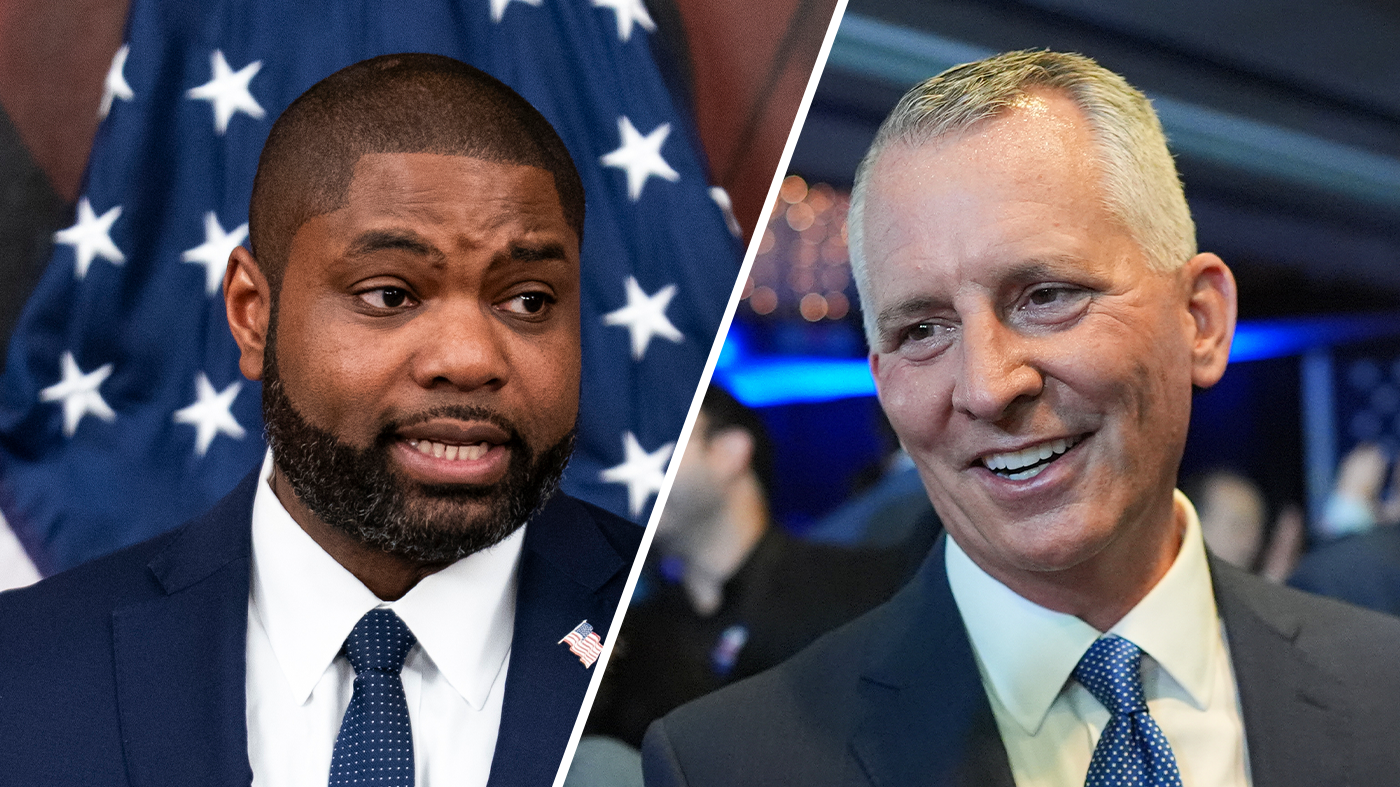
In Florida, GOP Rep. Byron Donalds, who is campaigning for governor, has been using the word in a political ad against his opponent, Democrat David Jolly, who used to be a Republican House member.
“How radical is David Jolly on the trans agenda?” the 30-second spot begins.
It continues by saying that Jolly is “radically liberal, radically wrong.”
“The only way you defeat crazy is stand up to it,” Donalds says in the conclusion of the ad.
The use of radical extended to the back-and-forth between the White House and Sen. Jon Ossoff (D-Ga.), who is up for reelection in November, after Ossoff slammed Trump for not prioritizing his job as president.
“He golfs and trades stocks. … He wants to build a ballroom and travel with Natalie on their apparently defenseless flying palace gifted by the emir of Qatar,” Ossoff said at a rally last weekend, referencing White House aide Natalie Harp and beginning a days-long feud with the White House.
White House Communications Director Steven Cheung responded by slamming Ossoff for being “a radical, extremist” Democrat.
Trump has time and again referred to Democrats as “radical” or “the radical left,” but he refrained from using the rhetoric when he was asked about Ossoff by a reporter in the Oval Office. The president simply called him “Pee-wee Herman” after the comic personality played by the late actor Paul Reubens.
Democrats — from individual campaigns to EMILY’s List, the Democratic PAC that helps elect women — have also made radical part of their regular vernacular.
Earlier this month, for example, the Democratic Governors Association released an ad highlighting Rep. Tom Tiffany’s (R-Wis.) “radical agenda.” Tiffany is facing off against David Crowley in the closely watched Wisconsin gubernatorial race.
“Pandering politician Tom Tiffany pretends he’s anything but a congressman with a MAGA agenda,” a narrator says. “The truth? Tiffany’s agenda is so radical that even Republicans say he’s part of a group of legislative terrorists in Congress.”
In Illinois, Gov. JB Pritzker, up for reelection, has been knocking his opponent Darren Bailey for being too radical. In a new ad called “Too Extreme,” Pritzker targets his opponent’s views opposing abortion, including in cases of rape and incest, as well as his loyalty to Trump and his “radical” pro-gun rhetoric.
Political observers say the word perfectly describes the polarization of the moment.
“It means more now than it ever did before,” said Susan Del Percio, the veteran Republican strategist. “It’s actually more reflective of where both parties are now.”
“It’s an exclamation point on the ideas, and it’s shorthand for out of the norm,” Del Percio added.
But Del Percio, who does not support Trump, said using the word in a broad-sweeping way is “ineffective.”
“It’s laughable in some cases because someone like David Jolly is anything but radical,” she said. “He’s a former Republican and is much more independent minded. You can’t take the DSA movement and their ideas and impose that on David Jolly.”
She suggested it’s much more effective for Republican Mike Rogers to use the label on someone like Abdul El-Sayed in the Michigan Senate race. “His policies are associated with radical ideas,” she said.
But Republican strategist Brian Seitchik said the word resonates with voters because “it transforms Democratic policy disagreements into a warning about the people proposing it.”
“It makes Democrats not just wrong but willing to remake the world with their policies that are not mainstream, that do not resonate with the American people,” Seitchik said. “We are not a socialist country. We are not Europe, despite the socialist agenda that is taking over the Democratic Party.”
Still, Seitchik cautioned, “You can’t just point and say ‘radical.’ You have to have some meat on the bones. And thankfully Democrats are giving us plenty of opportunities to do that.”
Michael Eric Dyson, the renowned historian and author, called the rhetoric the Red Scare 2.0, particularly for Republicans — and even for some moderate Democrats — who have seen the rise of candidates like Zohran Mamdani in New York, El-Sayed in Michigan, and Angie Nixon in Florida.
As the races heat up, he and others predicted, the rhetoric will only ramp up.
“It’s definitely a scare tactic,” Dyson said. “When you ain’t got much to say you got to do that. You got to play the card you got. And it’s a joker.”
Gathered from external sources. Rights to this text belong to whoever originally published it.