Congressional hearings are no longer a check on power — they’re now a circus
Unfortunately, despite a vast expansion of executive branch authority, Congress seems prepared to let partisan advantage trump comity, cooperation and the public’s right to know. And with Republicans now controlling Congress and the White House, reform seems out of reach.
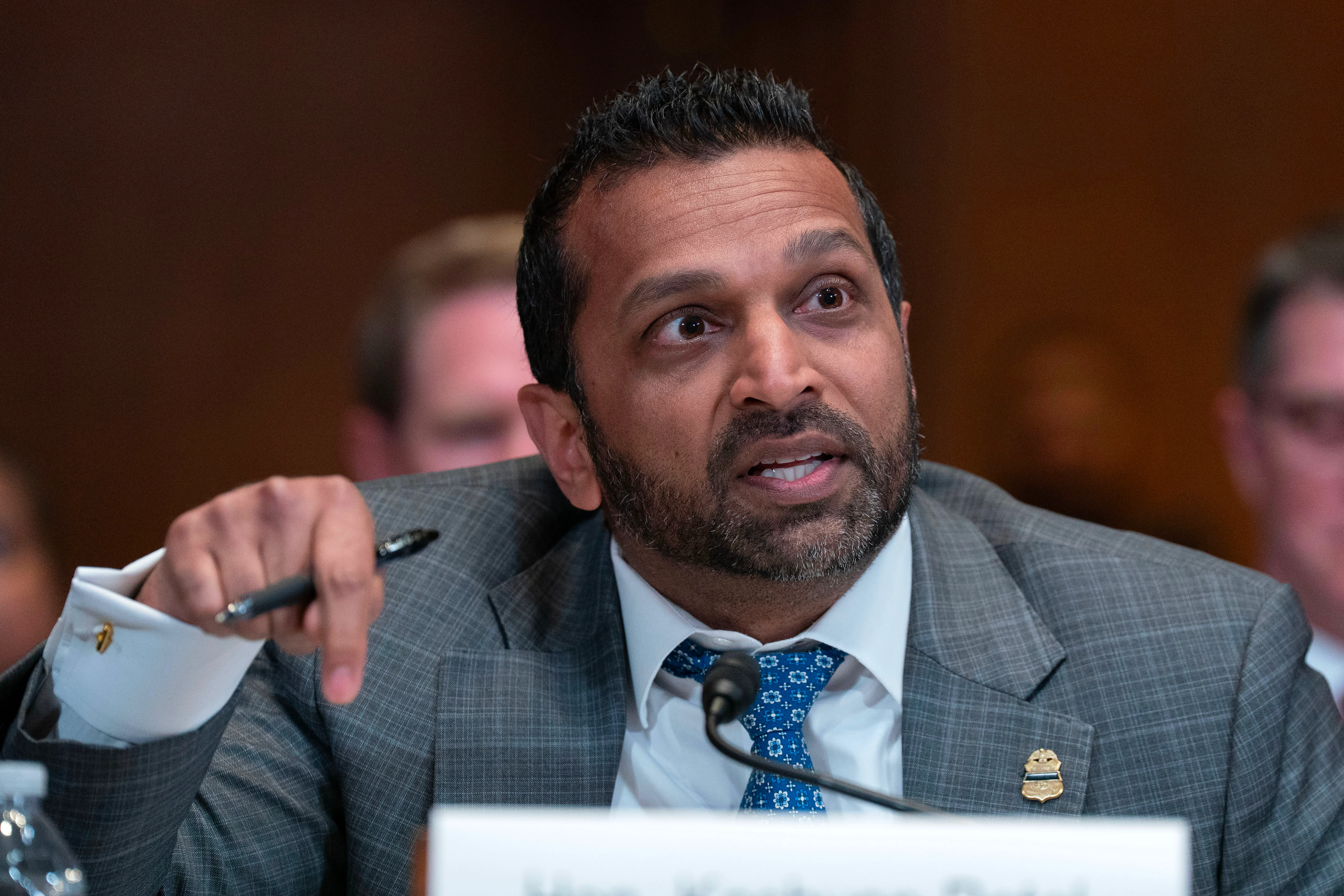
Congressional hearings are supposed to educate the public and provide information that Congress needs to legislate effectively and hold the executive branch accountable.
Members of Congress have also used oversight hearings to generate publicity and criticize administration officials of the other party, while witnesses tout their policies and dodge difficult questions.
These days, oversight hearings have degenerated into partisan brawls. Confident they will not be disciplined by committee chairs from their own party, administration witnesses often launch personal attacks instead of answering legitimate questions.
Congress need not permit its hearings to turn into a circus. It has the power to control witnesses and compel testimony. But in today’s hyperpartisan environment, it lacks the will.
FBI Director Kash Patel’s recent appearance before the Senate Judiciary Committee offers one of many cases in point.
Chairman Charles Grassley (R-Iowa) opened the hearing by praising Patel’s leadership, accusing the Obama and Biden administrations of conducting “secret, insidious, and downright evil operations,” and warning Patel that Democrats would “personally attack you, [and] question your ethics, your truthfulness and your abilities.”
Ranking Democrat Dick Durbin (Ill.) promptly blasted Patel as “the least qualified and most partisan FBI director in our nation’s history.”
Several hours of acrimony followed. When Sen. Peter Welch (D-Vt.) asked Patel reasonable, albeit partisan, questions about election integrity, Patel accused him of “lying about the men and women of the FBI.” Asked to pledge not to interfere with voting in the midterms, Patel called the question a “charade of lies,” accused Welch of staging a “campaign ad” and demanded to know why the senator’s wealth had supposedly “increased 4,000 percent” since he entered the upper chamber.
Patel’s barbs weren’t spontaneous. A Reuters’ photograph showed him holding typed bullet point attacks on at least one committee Democrat.
Appalled by the failure to answer many questions, Democrats responded with what was often, though not always, justifiable outrage. Sen. Cory Booker (D-N.J.), for example, accused Patel of “stonewalling” and called him a “thug,” an “incompetent lackey,” “an embarrassment to the agency,” “a disgrace,” and “a mockery.” Patel shot back, “you are the biggest mockery in the United States Senate.”
Offensive questions and comments from some committee members, however, do not obviate administration officials’ obligation to provide Congress with the information it needs to fulfill its legislative and oversight responsibilities. But instead of directing Patel to respond appropriately to legitimate questions, Grassley let the hearing run its course.
Evasive testimony and partisan indulgence by committee chairs are not new. During the Biden administration, former Attorney General Merrick Garland, for example, repeatedly evaded questions from Sen. Ted Cruz (R-Texas) about whether he had sought an ethics opinion concerning his son-in-law. Instead of directing Garland to answer, Durbin, then committee chair, told Cruz his time had expired .
But there is a profound difference between evading hostile questions and launching irrelevant personal attacks on the elected officials asking them.
During her October 2025 testimony to the Senate Judiciary Committee, Attorney General Pam Bondi repeatedly ducked questions on everything from the Epstein files to the decision to prosecute former FBI director James Comey. Instead, she accused Sen. Richard Blumenthal (D-Conn.) of lying about his military record, Sen. Mazie Hirono (D-Hawaii) of supporting antifa, and Sen. Sheldon Whitehouse (D-R.I.) of accepting inappropriate campaign contributions.
Like Patel, Bondi came prepared with dirt on committee Democrats. Tellingly, administration officials shared clips of Bondi’s insults in real time on social media.
At a House Judiciary Committee hearing in February, according to The Washington Post, Bondi arrived “ armed with scripted insults for Democrats .” When ranking Democrat Jamie Raskin (Md.) objected to her deliberately using up Democrats’ allotted question time, she called him a “ washed-up loser lawyer .”
Defense Secretary Pete Hegseth , Health and Human Services Secretary Robert F. Kennedy Jr ., and former Homeland Security Secretary Kristi Noem have been similarly combative.
The hostility comes as Congress hears from administration officials of either party less and less often.
The Senate Foreign Relations Committee held only 24 hearings and briefings with Biden administration witnesses in 2021; last year, it held two full committee hearings with Trump administration witnesses. Administration appearances before the House Foreign Affairs Committee fell from 47 to 12. This year, Trump administration officials are stonewalling Congress on the war in Iran.
Congress bears some responsibility for this problem. Members deliver speeches disguised as questions, trade insults with witnesses, and grandstand for social media. Committee chairs tolerate evasive and insulting responses, despite repeated complaints from members of the other party. Under Trump, committee chairs appear to treat alignment with the administration as far more important than safeguarding Congress’s institutional prerogatives and responsibilities.
Congress could claw back some of its authority if committee chairs were prepared to subpoena those who refuse to testify, direct witnesses to answer pertinent questions, and pursue contempt proceedings against uncooperative witnesses.
Unfortunately, despite a vast expansion of executive branch authority, Congress seems prepared to let partisan advantage trump comity, cooperation and the public’s right to know. And with Republicans now controlling Congress and the White House, reform seems out of reach.
If Democrats regain control of one or both houses of Congress in the midterms, they may well rein in administration witnesses. Otherwise, oversight hearings will offer only political theater, “full of sound and fury , signifying nothing.”
David Wippman is emeritus president of Hamilton College. Glenn C. Altschuler is the Thomas and Dorothy Litwin Emeritus Professor of American Studies at Cornell University.
Topics in this story
Gathered from external sources. Rights to this text belong to whoever originally published it.