Fear, fantasy, and used nuclear fuel
The Trump administration is exploring the creation of Nuclear Lifecycle Innovation Campuses across five states to modernize the management of used nuclear fuel through reprocessing and safer disposal alternatives.
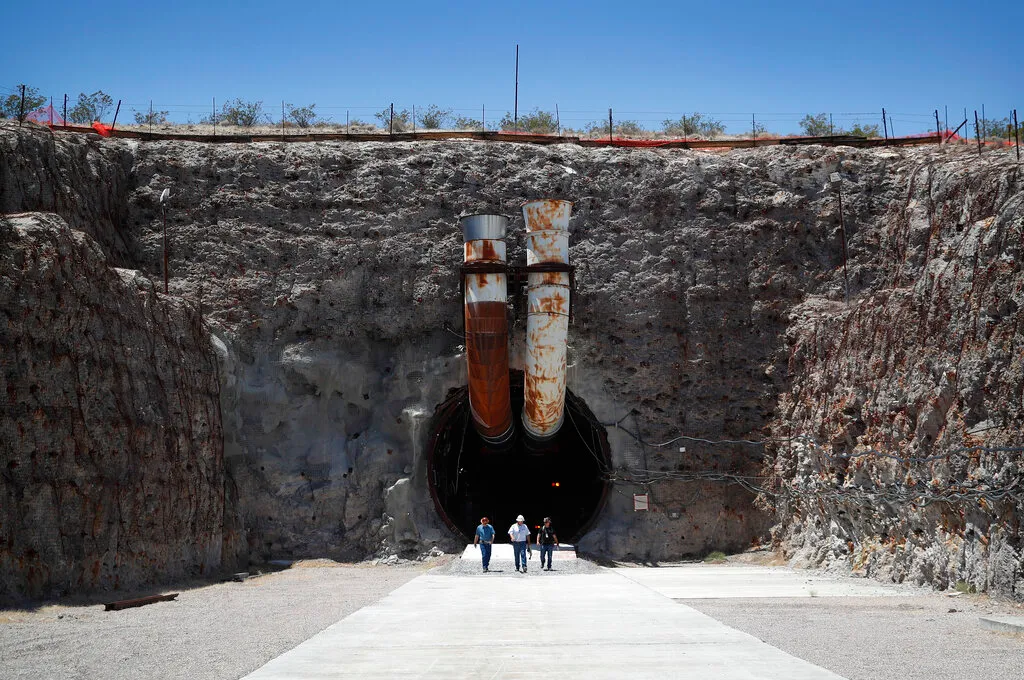
Federal law still says that used nuclear fuel will be buried at Yucca Mountain in Nevada: America’s only designated site for permanent disposal. But Yucca is a zombie project, alive on paper but dead in practice — just like America’s switch to the metric system. Both are congressional commitments from a bygone era, mothballed but still on the books.
Nuclear energy, on the other hand, is very much alive and scaling up to power a clean, secure, resilient, and prosperous future.
The used fuel is still around, too, sometimes at sites where the reactor itself was dismantled years ago. It sits in “dry casks,” robust steel and concrete containers that are good for a century and probably longer. Bottled up in these containers are materials that could make far more electricity. Meanwhile the former reactor sites have been cleaned so thoroughly that federal regulators have released them for any use, including farming. Yet because the used fuel remains, the sites sit largely idle while the casks are guarded 24/7 at taxpayers’ expense.
Now the Trump administration is trying to rethink the problem. It has signed memorandums of understanding with five states to explore hosting “Nuclear Lifecycle Innovation Campuses,” which could include factories to reprocess used fuel, extracting unburned uranium and plutonium to fabricate new fuel. The campuses could also host reactors, including advanced designs capable of using a wider variety of radioactive material as fuel. The sites could also be used for safe disposal of the remaining material that can’t economically produce more energy.
The U.S. Department of Energy estimates that selected sites could provide thousands of jobs and billions of dollars in long-term economic activity , boosting the regional economy. If a site provides disposal, the incentives could include funding from the more than $50 billion in the Nuclear Waste Fund , money collected from utilities to pay for disposal, under the law that made building a repository a federal responsibility. DOE says Congress must first change the law, which still limits permanent disposal to Yucca Mountain. Nuclear waste may not have a pretty face, but it has a generous dowry, if Congress decides to use it.
Resolving this decades-long stalemate could also relieve taxpayers of bearing the costs of storing used fuel around the country, while responsibly managing the remaining nuclear waste. When the DOE failed to begin accepting waste for disposal in 1998, as its contracts with the utilities called for, the utilities sued. Court judgements and settlements now require the government to reimburse reactor operators for their extra storage costs, payments come to about $800 million a year and will only grow if the stalemate continues.
The details of a path forward aren’t clear yet. But as Sen. Shelley Moore Capito (R-W.Va.), the chair of the Environment & Public Works Committee, noted at a recent hearing, the campus idea is “a good conversation starter.”
We need the conversation. Possibly the least-understood challenge in the energy field today is nuclear waste. The people who don’t understand include “environmentalists,” taxpayers, and, alas, members of Congress. “Nuclear waste” sounds awful, but it’s easier to handle than the waste products of other forms of energy production, including carbon dioxide.
No matter the details of the solution, there are a variety of policy decisions and scientific conclusions that must be reached first, and the American Nuclear Society and others are looking into these issues already. Among the changes we need:
Make the law recognize reality. Amend the Nuclear Waste Policy Act to allow consideration of other disposal sites.
Enable the DOE to make agreements with host states and negotiate over benefits and responsibilities.
Begin moving used fuel out of the places where it is stored least efficiently, namely the clusters of casks at sites where there is no longer a reactor.
Support research on new methods to recover usable materials from used fuel, a technology that dates from the 1940s but is surely ripe for modernization.
Establish scientifically validated standards for safe, secure disposal of the material that can’t be reused.
Political missteps in the 1970s and 1980s have handicapped our efforts to establish a sensible nuclear fuel cycle — one that recovers usable material from used fuel and provides disposal pathways for what’s left. Fifty years of experience shows that policymakers erred in favoring direct disposal as a way to avoid weapons proliferation. Weapons-seekers have typically bypassed reprocessing commercial used fuel, preferring more direct and efficient routes.
In addition, the designation of Nevada as the national site for final disposal underestimated the ability of an unwilling host to fend off an unwelcome repository. Finland, Sweden and Canada show what is possible with willing hosts. Finland just licensed the world’s first repository for used nuclear fuel , Sweden is building one, and Canada has chosen a site with local support. France is making progress, too. If they can tackle the technical and policy issues, certainly so can we.
At a time when scientists and engineers are making remarkable progress in fielding a new generation of clean, safe, secure nuclear power plants, it’s time to solve the used nuclear fuel issue as well.
Mark Peters is president and CEO of the MITRE Corporation.
Topics in this story
Gathered from external sources. Rights to this text belong to whoever originally published it.