Trump administration endangering national security with records law stance: Former archivists
Former officials with the National Archives and Records Administration (NARA) are urging a federal appeals court to reject the Trump administration’s attempts to ignore a long-standing presidential records retention requirement. In an amicus brief filed Wednesday in the U.S. Court of Appeals for the D.C. Circuit, six former archivists who worked under Republican and Democratic…
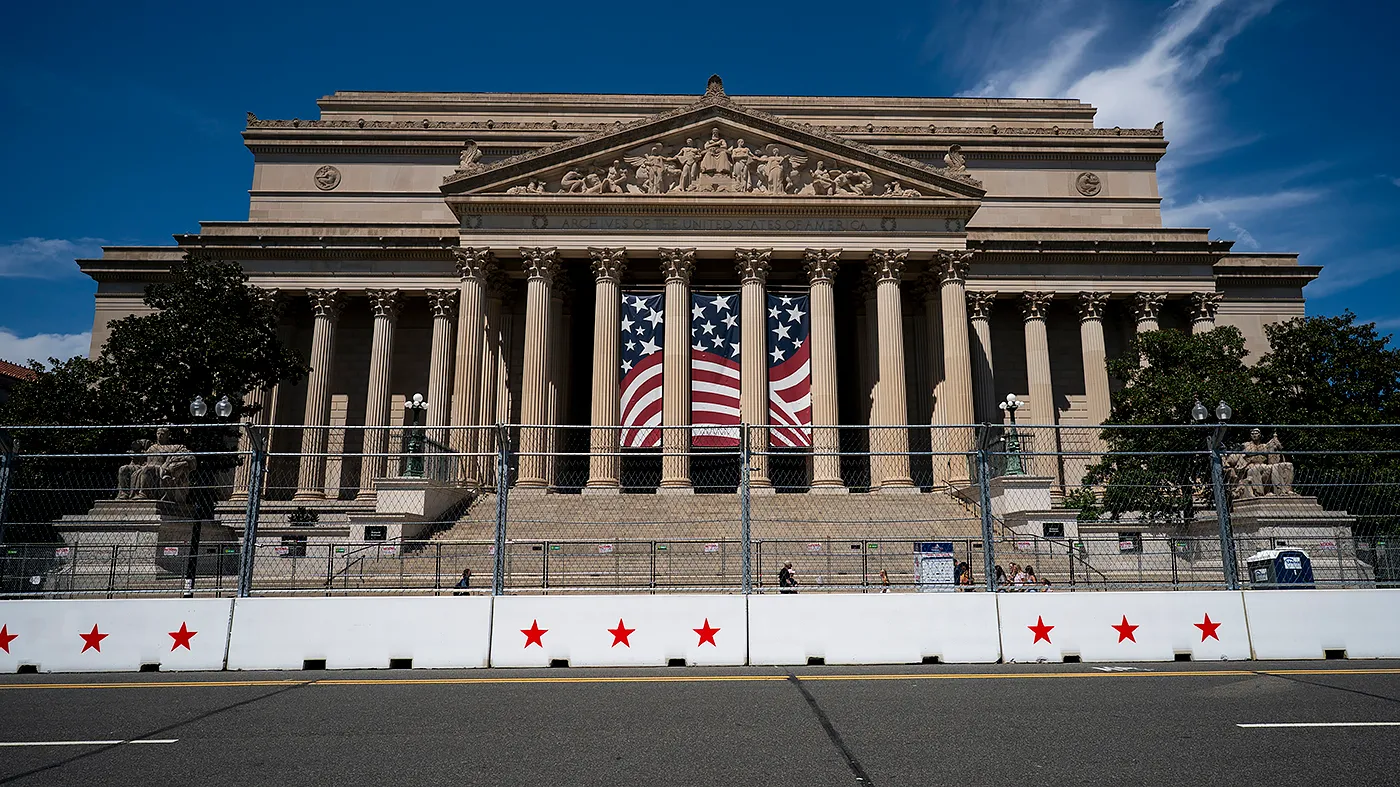
Former officials with the National Archives and Records Administration (NARA) are urging a federal appeals court to reject the Trump administration’s attempts to ignore a long-standing presidential records retention requirement.
In an amicus brief filed Wednesday in the U.S. Court of Appeals for the D.C. Circuit, six former archivists who worked under Republican and Democratic presidents pushed back on the Trump administration’s argument that the Presidential Records Act (PRA) of 1978 unconstitutionally infringes on the executive branch’s independence.
The NARA officials who signed on to the brief are former archivists Trudy Huskamp Peterson, John W. Carlin, David Ferriero, Debra Steidel Wall, Colleen Shogan and William Bosanko and former general counsel Gary M. Stern.
The filing supports an earlier lawsuit from historians and public transparency groups after the Department of Justice (DOJ) concluded in an April memo that the act “unconstitutionally intrudes on the independence and autonomy” of the executive branch and exceeds congressional authority.
U.S. District Judge John Bates ruled in May that White House staff must preserve official records amid ongoing litigation and determined the PRA was likely constitutional. The DOJ then appealed the ruling to the D.C. federal appeals court. Oral arguments are scheduled for Oct. 16.
The Hill has reached out to the White House and the DOJ for comment regarding the NARA officials’ filing.
Congress passed the law in 1978 following the Watergate scandal. It requires presidents and their staff to preserve White House records and turn them over to the National Archives when a head of state leaves office. The law applies to nonpersonal records created by the president, vice president and entities that “solely advise and assist” the executive.
The PRA played a central role in the 2023 case in which President Trump was accused of unlawfully keeping classified documents from his first term at his Florida Mar-a-Lago residence. He was indicted on 40 felony counts for alleged mishandling of these records, but the case was ultimately dropped following his reelection in 2024.
Topics in this story
Gathered from external sources. Rights to this text belong to whoever originally published it.