Hegseth ignored Centcom, cut program ahead of Iran school strike: Report
What kind of leader asks his top military commanders for advice and then ignores them because he doesn’t like the answer? Apparently Defense Secretary Pete Hegseth.
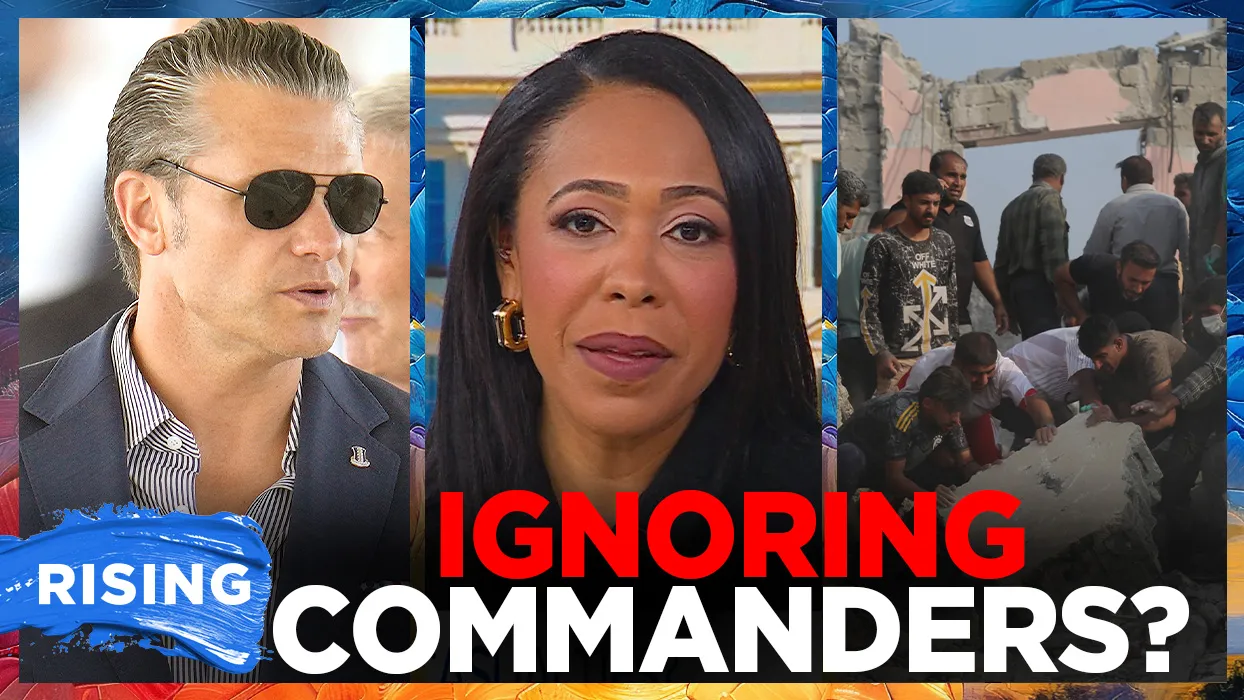
What kind of leader asks his top military commanders for advice and then ignores them because he doesn’t like the answer? Apparently Defense Secretary Pete Hegseth.
New reporting from ProPublica reveals that some of the nation’s top military commanders were polled by Hegseth about cutting a program called Civilian Harm Mitigation and Response, which was designed to reduce civilian casualties during U.S. military operations. The report notes that the top military officials overwhelmingly wanted to keep the program in place.
Central Command, which oversees U.S. military operations across much of the Middle East, specifically warned that scaling it back could increase the risk of misidentifying targets and reduce awareness on the battlefield.
The reporting shows Hegseth viewed civilian-harm mitigation as part of a culture that was too politically correct and incompatible with his vision of the Department of War.
The Civilian Harm Mitigation and Response program was designed to improve targeting, understand conditions on the ground and reduce mistakes. Central Command told Hegseth’s staff that the work enhanced precision and accuracy.
The consequences of Hegseth’s decision to dismantle that infrastructure are hard to ignore. Hegseth gutted the effort, stripping it of almost all of its funding, while the U.S. was actively launching new campaigns in Somalia, Yemen and Iran, according to the report.
You’ll remember early on in this war with Iran, a U.S. airstrike hit a school in Minab , a city near the Strait of Hormuz, killing more than 100 children and creating a firestorm of national and international outrage.
Hegseth was questioned about the strike before Congress and promised to investigate. No public reports of that investigation have been released, but it’s been reported that the Department of War blamed the incident on outdated U.S. intelligence.
Now members of Congress are asking whether the decision to gut civilian-protection capabilities played a role in the Iran school tragedy as well.
You may remember 11 senators sent a letter to Hegseth in April of this year, where they said, in part, that the school strike, as well as other deadly attacks on civilians in Iran, reflected “the administration’s broader disregard for the strategic, legal, and moral imperative to minimize civilian harm.” It went on to say, “This is a concerning pattern and raises questions about whether the administration is upholding international law and the laws of war.”
With this new reporting, we should all be asking that question, too. Real leadership isn’t about being the loudest person in the room. It’s about knowing when to listen to the people who have spent their careers understanding the consequences of getting something wrong — especially when the stakes are human lives.
Lindsey Granger is a NewsNation contributor and co-host of The Hill’s commentary show “Rising.” This column is an edited transcription of her on-air commentary.
Topics in this story
Gathered from external sources. Rights to this text belong to whoever originally published it.