Trump threatens to ‘annihilate’ Iran in UN speech
Instead of providing a real solution to end this war, during a speech at the United Nations yesterday, Donald Trump described himself as a “peacemaker,” but at the same time spoke about annihilating the Islamic Republic.
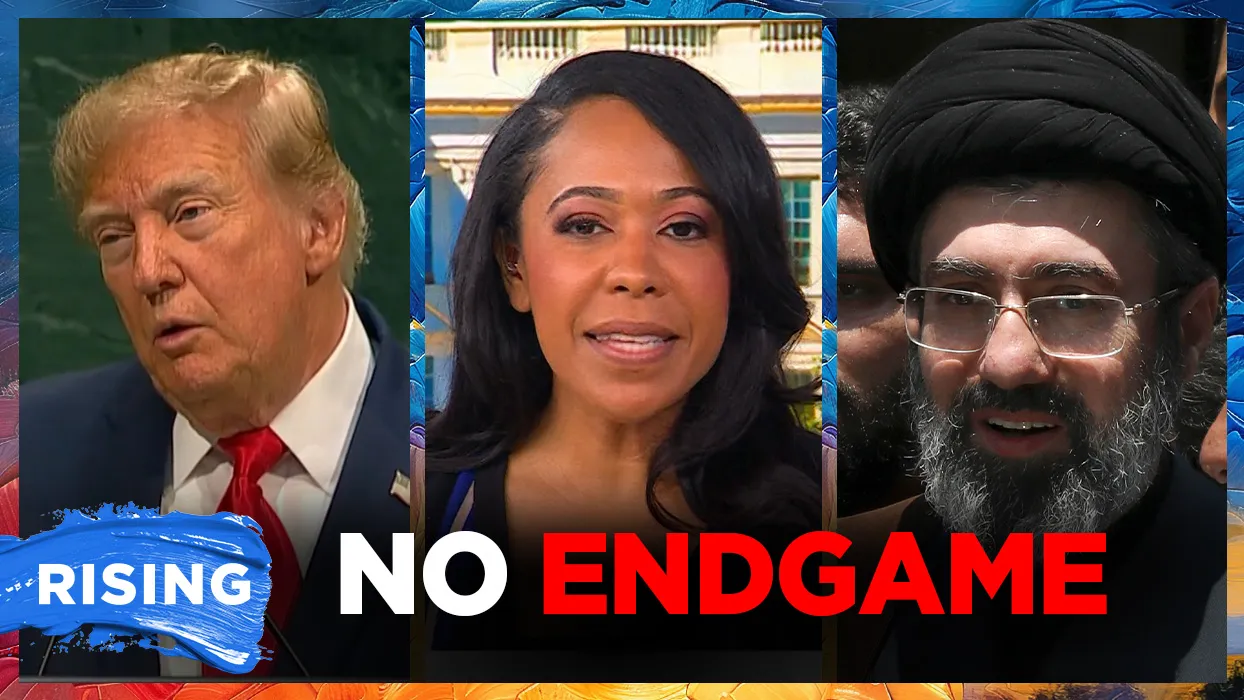
We step into Month 7 of the war with Iran next week — a conflict that the president once suggested could last a just few days.
Instead of providing a real solution to end this war, during a speech at the United Nations yesterday, Donald Trump described himself as a “peacemaker,” but at the same time spoke about annihilating the Islamic Republic.
“I have a big decision to make,” Trump said. “Will a deal be made with Iran that lets them rebuild and create a far greater country than it ever was before — maybe one of the greatest in the Middle East, or even the world? Or do I annihilate the Islamic Republic, and do it quickly, never giving them a chance to kill and destroy people and countries again? Do I drive them into hell, with no chance of survival and no hope of future greatness for generations?”
The president also used that speech to again defend his decision to launch the war, repeatedly pointing to the threat of Iran obtaining a nuclear weapon.
So I’m gonna refresh your memory: In February 2025, the administration’s stated strategy was maximum pressure: deny Iran a nuclear weapon, constrain its missile program, weaken its regional networks and squeeze the regime economically. That policy was explicitly laid out in Trump’s national security memorandum.
But the intelligence picture at the time was more complicated than simply saying Iran was building a bomb.
In March 2025, then-Director of National Intelligence Tulsi Gabbard told Congress that the intelligence community assessed that Iran was not building a nuclear weapon and that Supreme Leader Ayatollah Ali Khamenei had not authorized restarting the weapons program.
Then came Operation Midnight Hammer in June 2025, presented primarily as an attack on Iran’s nuclear infrastructure.
And then, by the time of Operation Epic Fury, which started this all-out war in February 2026, the public rationale had expanded.
Since the war began, the administration’s stated objectives included stopping Iran from obtaining a nuclear weapon (even though those aspirations were supposedly destroyed in Operation Midnight Hammer), devastating Iran’s ballistic-missile capabilities, eliminating its naval threat, disrupting support for regional militant groups and, at various points, creating conditions for the Iranian people to change their government.
Now the president is suggesting Iran may make a deal, conveniently after the November midterms, after Americans have voted on the party in power.
I don’t know whether a deal will happen after the midterms, but I do know that a war initially described as potentially lasting days is approaching the seven-month mark. Questions remain about weapons stockpiles, the cost of the conflict, the consequences for global energy markets and what exactly constitutes the administration’s endgame.
And American’s aren’t happy about it. Check out the results of this brand-new CNN poll.
“Nearly two-thirds, 64%, in our poll say no, the U.S. is not winning the war in Iran. Two-thirds of Americans say that. How is Trump handling the war in Iran? I think this is the worst number in the poll for him. Only 26% approve of how Donald Trump is handling the war in Iran.”
The president stood before the world and made another empty threat, a threat to “annihilate” an entire country, but provided not one ounce of clarity on the endgame or how to minimize the global financial implications of this war of choice. His only solution: vote red and wait until after the midterms.
Lindsey Granger is a NewsNation contributor and co-host of The Hill’s commentary show “Rising.” This column is an edited transcription of her on-air commentary.
Topics in this story
Gathered from external sources. Rights to this text belong to whoever originally published it.