Trump’s allies eye big spending cuts as part of postelection agenda
Senate conservatives allied with President Trump are laying the groundwork for substantial cuts to federal spending in the postelection, lame-duck Congress to offset tens of billions of dollars in new defense spending, including funding for the war in Iran, if Democrats pick up seats on Election Day. Senate Majority Leader John Thune (R-S.D.) announced Tuesday…
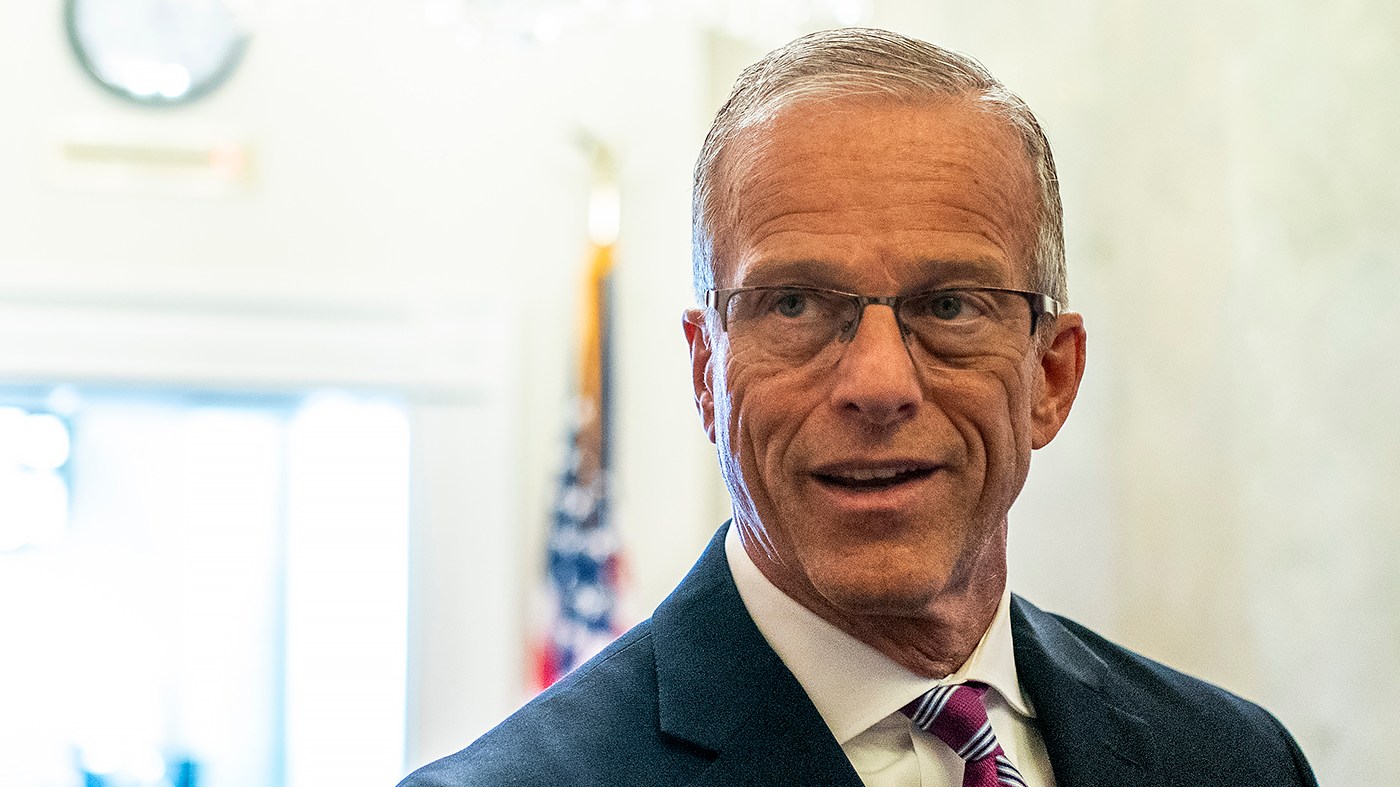
Senate conservatives allied with President Trump are laying the groundwork for substantial cuts to federal spending in the postelection, lame-duck Congress to offset tens of billions of dollars in new defense spending, including funding for the war in Iran, if Democrats pick up seats on Election Day.
Senate Majority Leader John Thune (R-S.D.) announced Tuesday that the Senate will not consider another budget resolution to unlock the reconciliation process to circumvent a Democratic filibuster until after the Nov. 3 election.
He said he would prefer to pass emergency defense funding to help cover the costs of the Iran war and a boost to the Pentagon’s base budget through the regular appropriations process.
But Thune acknowledged that Republicans will work on a third budget reconciliation package if necessary to get around a potential Democratic filibuster.
Another big priority is the president’s demand to raise the federal debt limit by another $5 trillion or so to extend the nation’s borrowing authority through the end of his term, which expires in January 2029.
Any increase in the debt limit before the end of this year would need to be done through the budget reconciliation process to avoid a Democratic filibuster in the Senate, but getting 51 votes for the proposal in the Senate and 218 votes in the House won’t be an easy task.
Conservative Republicans in both chambers are having discussions about spending reforms they would want in return for any package that increases defense spending and raises the debt limit.
“I’ve had a variety of conversations” about spending offsets to include in a budget reconciliation package, said Sen. Rick Scott (R-Fla.). “Inflation is a problem. We all understand the cost of living is a problem. The only way we’re going to get the cost of living down is if we balance the budget.”
“Whatever we spend, we’ve got to pay for it,” he added. “If we’re going to talk about debt ceiling, we’re going to have to figure out how we’re going to get spending under control or we’re not going to see lower interest rates, we’re not going to see inflation go away.”
Senate Budget Committee Chair Ron Johnson (R-Wis.), who plans to ramp up conversations with colleagues about a third budget reconciliation package, says at least $250 billion in annual wasteful spending could be cut in the lame-duck Congress.
“There will be multiple incentives. Can you thread the needle? It’s a pretty small needle,” Johnson said.
He said Senate and House conservatives have been meeting on a “weekly basis” to lay the groundwork for spending cuts to accompany a multitrillion-dollar increase in the debt limit.
“We’ve basically come to the realization if we want some fiscal controls, that’s the point in time to do it, so we need to be in favor of a debt limit and offer those types of fiscal controls,” he said. “That’s initially what reconciliation was for, deficit reduction.”
Johnson said he will push for between $250 billion and $1 trillion in annual cuts in wasteful spending to offset the costs of big increases in defense spending and other items included in the reconciliation package.
Sen. Rand Paul (R-Ky.) said any budget reconciliation package to pass emergency defense funding and raise the debt limit would need to enact substantial spending reforms to get his vote.
“I wouldn’t vote to raise the debt ceiling unless we significantly reformed how we spend money,” he said. “That would have to include sending it to the Finance Committee, it would have to include instructions to actually reduce spending. There are several Medicaid reforms that could occur, that didn’t occur [last year], that could actually reduce spending.”
It could be Republicans’ last chance to implement spending reforms if Democrats win control of the House in November, an outcome political handicappers project is likely. Democrats have a shot at winning the Senate majority as well, according to nonpartisan analysts.
Senate Armed Services Committee Chair Roger Wicker (R-Miss.) said Tuesday he expects the Senate will need to pass a third budget reconciliation package to boost defense funding and help cover the costs of the Iran war, which has depleted U.S. weapons stockpiles.
Trump asked Congress in June to provide $67 billion in emergency defense funding, including $21 billion to replenish missile stockpiles.
But defense hawks are pushing for more than $300 billion in defense funding to be included in the budget reconciliation package — a number that Democrats will balk at after Republicans refused to increase nondefense programs by similar percentages.
Thune said Tuesday he’ll punt fights over the budget resolution, emergency defense spending and raising the debt limit until after the election.
“Not before the election, no. That will probably be a postelection question,” he said.
Thune told reporters after the weekly Senate GOP policy luncheon that he would prefer to pass emergency defense spending with Democratic support through the regular appropriations process.
“The defense authorization bill at some point needs to be a bipartisan bill, it just does,” he said. “And I would argue the same thing with respect to appropriations when it comes to national security. The best way to do it is under regular order through the normal appropriations process or perhaps a supplemental.”
Still, Thune said a third budget reconciliation package would be an “option” if Democrats block defense funding.
Republican members of the Senate Appropriations Committee want the Trump administration to make more of an effort to reach out to Senate Democrats to build bipartisan support for emergency defense funding.
Sen. Jerry Moran (R-Kan.) said “Democrats who are interested in the defense of the country need to be educated and brought into the fold” to support increases in defense funding through the regular appropriations process.
“We ought to be addressing funding in a supplemental” spending bill that moves under regular order “as compared to reconciliation,” he said.
“Anything that we can do that puts Republicans and Democrats in the same room with defense experts … is important to lay the groundwork” for spending legislation, he added.
Topics in this story
Gathered from external sources. Rights to this text belong to whoever originally published it.