Judge skeptical of White House press ban on Politico, MS NOW, CNN: Due process ‘wasn’t followed’
President Trump’s decision to ban a trio of news outlets from the White House complex last week and revoke their hard press badges appeared to be on thin ice Wednesday after a key hearing where the sides presented their arguments. Due process “wasn’t followed here,” U.S. District Judge Timothy Kelly, a Trump appointee, said near the…
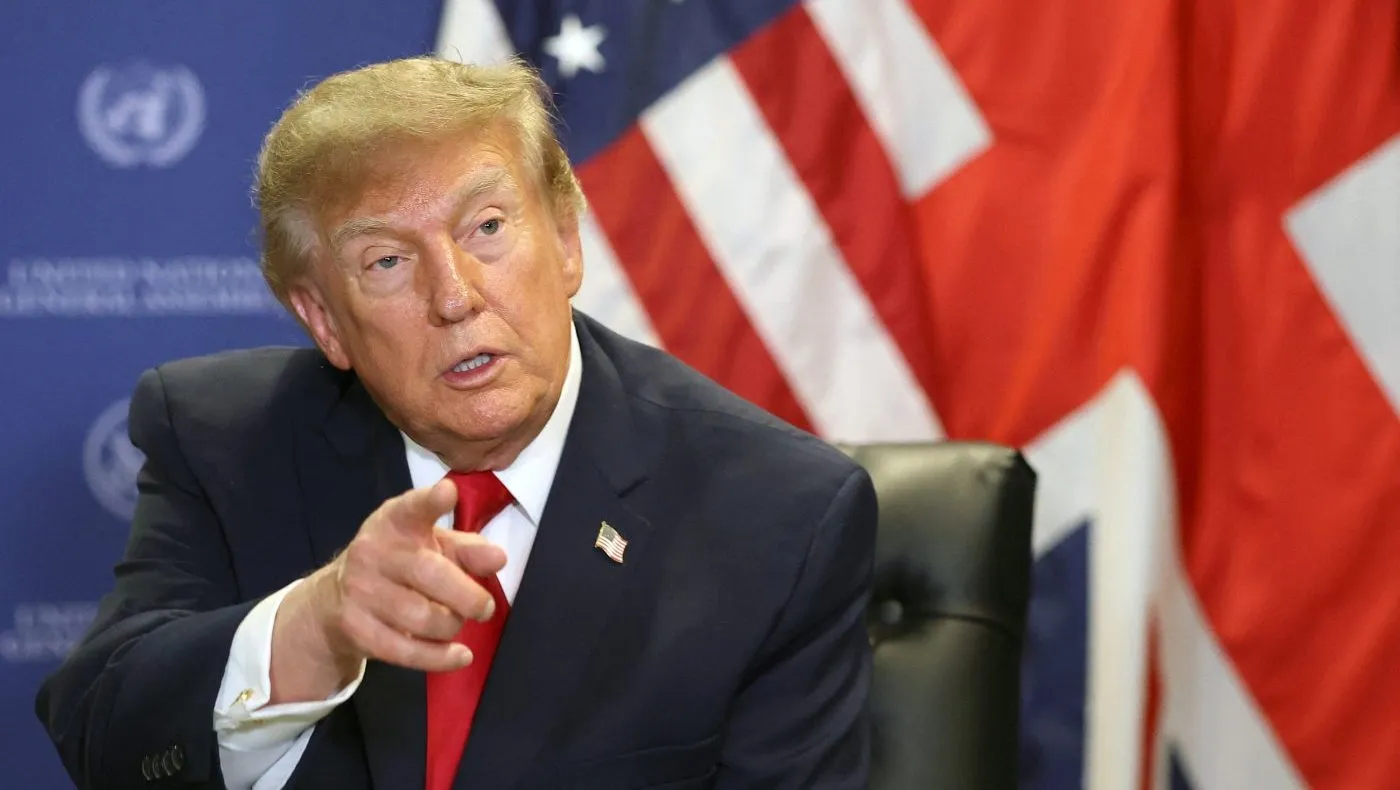
President Trump’s decision to ban a trio of news outlets from the White House complex last week and revoke their hard press badges appeared to be on thin ice Wednesday after a key hearing where the sides presented their arguments.
Due process “wasn’t followed here,” U.S. District Judge Timothy Kelly, a Trump appointee, said near the start of the afternoon hearing.
CNN, Politico and MS NOW sued on First Amendment grounds after they were denied access to the White House grounds on Saturday. The five major television networks that comprise the rotating pool covering Trump’s daily activities have since pulled out in solidarity with the banned outlets.
Wednesday’s hearing came as each of the major networks weighed how to cover Trump’s expected return to Washington from New York, where he traveled to meet with world leaders at the United Nations General Assembly.
The president is slated to greet Chinese leader Xi Jinping on Wednesday evening, an event that typically would garner a large amount of media attention and drive the news cycle for hours.
“These are urgent matters,” Theodore Boutrous, an attorney for the media outlets, told the judge. “We’re at war. World leaders are coming to Washington.”
Boutrous urged Kelly on Wednesday to immediately restore the three outlets’ credentials, arguing that Trump’s ban amounted to “viewpoint discrimination” that violates the First Amendment. He also said the decision came “completely out of the blue.”
The Department of Justice (DOJ) contends the president has a right to decide who gains “privileged access” to certain spaces, pointing in court filings to a 2025 appeals court decision that allowed the administration to temporarily bar The Associated Press from the Oval Office and Air Force One.
“Access to the White House is a privilege, not a right,” DOJ attorney Michael Velchik said, later adding that “at the very least, the president may exclude anyone he wants from the Oval Office.”
He cited national security concerns as the rationale for the current restrictions, an argument that Trump has used repeatedly to justify his more controversial initiatives, from sweeping global tariffs to the construction of the White House ballroom .
But that is a different argument from what Trump used to justify the ban on the three media organizations. The president initially said the ban was based on cumulative negative coverage by each of the outlets.
“Media Outlets shouldn’t be able to constantly write or report FICTION and LIES when they’re covering the President of the United States,” Trump wrote Friday on Truth Social .
Boutrous said of the president: “He wears his heart on his sleeve.”
Letters sent to each outlet this week identified a handful of stories the White House said “threatened national security and/or spread falsehoods,” including coverage of the Iran war, the Republican midterm convention, Russian sanctions and other military matters.
“Your organization has exhibited behavior in violation of the standards of professionalism and decorum expected of those given access to the White House Complex, including by trafficking in verifiable falsehoods about national security and other issues, and publishing sensitive or classified information,” each letter stated.
Boutrous called the cited articles “garden-variety reporting,” arguing that Trump’s use of national security as a “magic word” doesn’t hold up.
The White House Press Office has set a deadline of Friday at 5 p.m. EDT for the outlets to contest the allegations, a postdeprivation process Velchik argued is sufficient.
But Kelly wasn’t convinced, signaling that the letters may have come too late.
“I don’t know [that] a letter they got after the pass was revoked could provide them with the kind of standards that they’d have to conform their conduct to,” the judge said.
The due process argument played heavily in a 2018 decision in which Kelly found that former CNN White House correspondent Jim Acosta’s constitutional rights were likely violated when his hard press pass was revoked under the first Trump administration.
It involves a 1977 ruling from the U.S. Court of Appeals for the D.C. Circuit in which the court held that the White House could not arbitrarily deny a press access to a journalist without procedural due process.
“I was as surprised as anyone when I dug in to look at the law that in Sherrill back in the ’70s, that the D.C. Circuit held there was a due process interest in the White House hard pass for the media,” Kelly said during Wednesday’s hearing.
DOJ lawyers want that 50-year-old precedent overturned, something that could be done only by a higher court.
The Trump administration walked into court expecting a loss. Across a series of Truth Social posts and public comments, Trump referred to Kelly as “totally disloyal” and said the judge would “probably” rule against him.
But the president deflected on Tuesday when asked whether he would restore access for CNN, Politico and MS NOW if ordered to.
“I think we have a right to clean out fake news,” Trump responded to a question from Reuters during a bilateral meeting at the U.N. General Assembly.
Trump’s ban was widely panned by First Amendment groups and has sparked a rare moment of solidarity among the press corps, including conservative media outlets with an audience that is more supportive of the president.
A number of major media companies filed an amicus brief with the court in support of CNN, MS NOW and Politico, writing the ban “injures the public interest, and that unassailable First Amendment law makes any viewpoint-based decision to bar reporters from a nonpublic forum constitutionally repugnant.”
Kelly did not issue a ruling from the bench Wednesday, saying he would have one “as soon as I can.”
In the Acosta case, the judge’s decision came two days after the hearing.
Topics in this story
Gathered from external sources. Rights to this text belong to whoever originally published it.