Democrats won the midterms. That doesn’t mean voters like them
More than half of midterm voters said they had an unfavorable view of the Democratic Party, even as it won decisively.
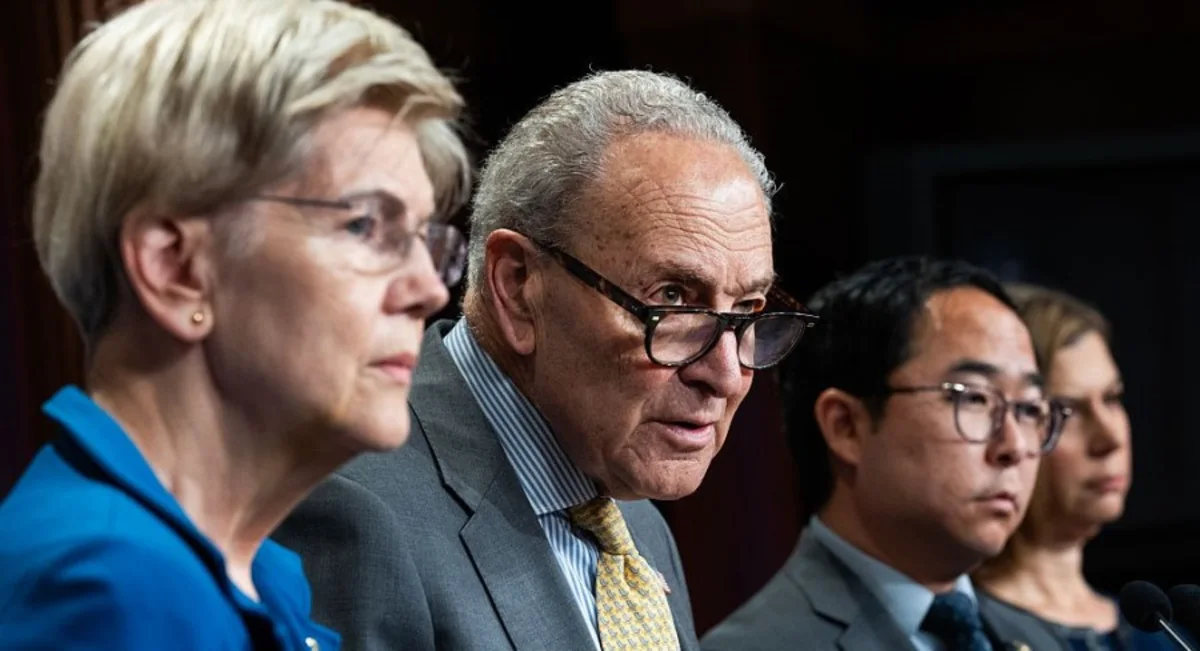
( NewsNation ) — Democrats won the 2026 midterms by a landslide, but that doesn't mean voters are happy with the party.
More than half of midterm voters — 52% — viewed the Democratic Party unfavorably, while 60% felt the same way about Republicans, according to NBC News exit polling .
Among those who backed Democratic candidates, roughly one in five had a negative view of the party as a whole, according to the AP Voter Poll .
The findings suggest Democrats have reason to be cautious after winning their biggest House majority since at least 2008 and flipping Senate seats in Republican strongholds like Kansas, South Carolina and Texas.
"This was a repudiation of MAGA, not a vote for the Democrats," NewsNation's Chris Cuomo said Wednesday.
President Donald Trump had urged Americans to vote as if he were on the ballot, and many did, but not in the way he intended.
Just under half of voters — 44% — said opposing Trump was a reason for their House vote, versus just 16% who said it was to support him, according to NBC News.
Nearly two-thirds said Trump prioritizes his own interests over the country's, and a similar share blamed his policies for higher-than-usual prices.
"Midterm elections are primarily a referendum on the party in power," Sen. Chris Van Hollen, a progressive Maryland Democrat, told The Associated Press . "But we should be clear that that doesn't translate automatically into support for Democrats. We need to earn the support of voters."
Democrats have vowed to tackle the cost-of-living concerns that drove voters to the polls, but what that looks like remains to be seen.
Sen. Elizabeth Warren called for a "bold" agenda in a Thursday op-ed , urging Democrats to pursue economic populist policies that challenge corporate power and a "rigged system."
"Now it's time to act," Warren wrote. "Donald Trump says he wants to work with Democrats. We should force him to do that on the affordability and corruption issues that drove this election — or call his bluff."
Warren said Democrats should use the budget reconciliation process to "reverse Republican health care cuts, expand health care coverage and fund universal child care." She also pushed for a vote to ban stock trading by federal officials.
Sen. Bernie Sanders wants sweeping changes as well. He called on Democrats Thursday to pass "Medicare for All" when they take control of the Senate in January.
Other Democrats favor a more measured approach.
"I do not think it is time to propose things that the President of the United States is guaranteed to veto," Sen. Brian Schatz of Hawaii said in an interview before the midterms.
Schatz said Democrats need to win the White House and both chambers of Congress in 2028 to pursue a bolder agenda.
For now, he said, "I think people want to see us do, not everything, but a few things that will take the pain out of what they're experiencing."
Schumer faces questions about his plan to lead
Van Hollen told Bloomberg this week that Democrats should demand a "bold agenda" before backing Chuck Schumer or any other aspiring leader.
"No one should be committing to anybody as the next Democratic leader without having that conversation," Van Hollen said. "We need commitments."
Schumer expects to remain Senate Democratic leader, even though several incoming senators have said they won't vote for him, including Adam Hamilton in Kansas, Troy Jackson in Maine and Abdul El-Sayed in Michigan.
"The issue is not me. I'll be reelected as majority leader. But the issue is focusing on the American people and what they want," Schumer said Wednesday when asked about the opposition within his own party.
El-Sayed said Thursday he would back Van Hollen for the role, but a source close to the Maryland senator told NewsNation that Van Hollen isn't running.
Schumer acknowledged Wednesday that Democrats still have work to do to win over voters.
"Many of the folks who voted for us yesterday, of course, are still skeptical. That's okay," Schumer said. "These voters did not give us the majority so we can do whatever we want. They entrusted us with the majority to do what they, the American people want."
Topics in this story
Gathered from external sources. Rights to this text belong to whoever originally published it.