A fool-proof blueprint for the new Democratic majority
With millions of ex-Trump voters backing its candidates, the Democratic Party is a much bigger tent today than it was on Monday. But that doesn’t mean it has to be a circus.
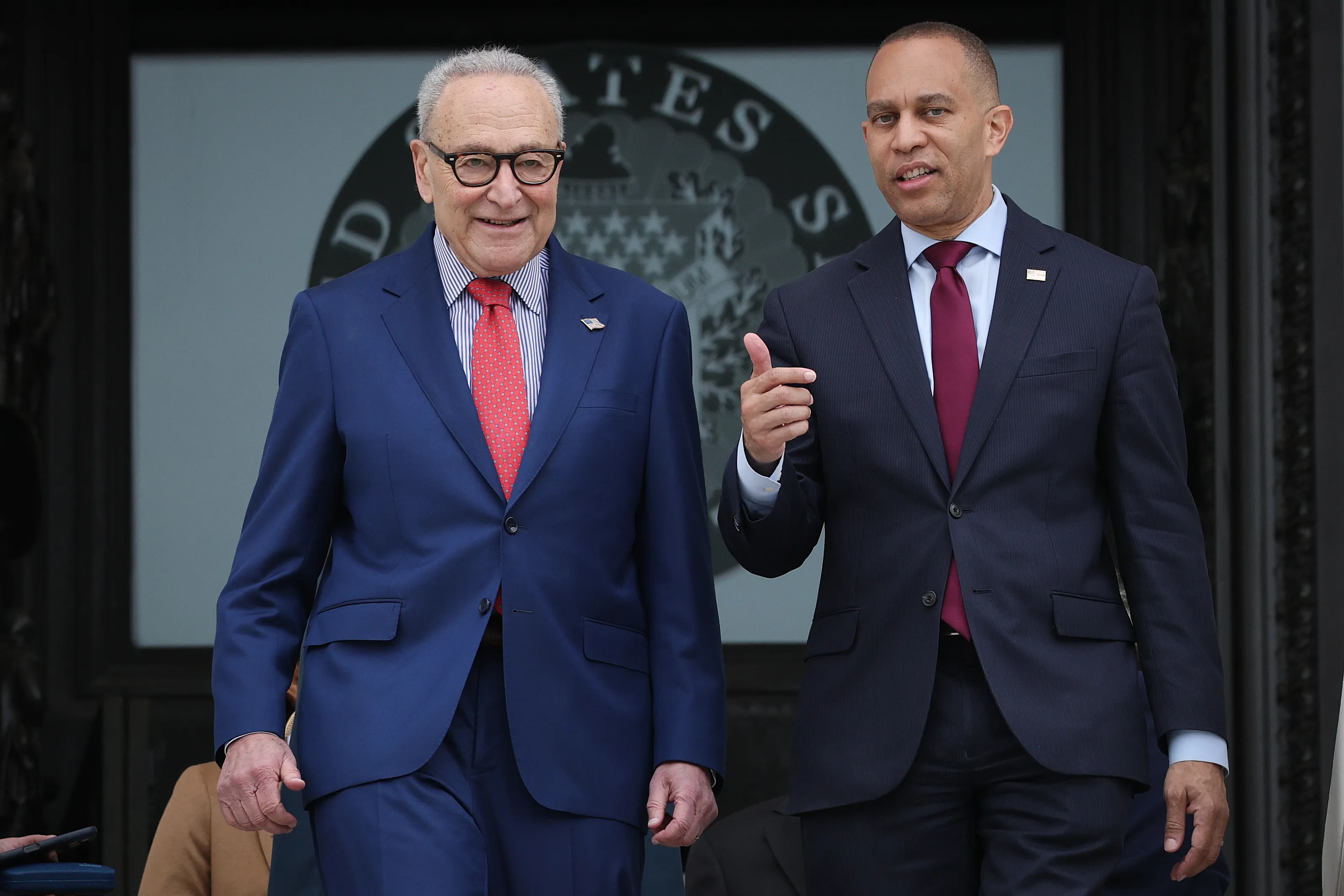
Democrats are still celebrating their sweeping victory from Tuesday night, and they have every right to. More than just a wave, it was an extinction-level event for MAGA Republicans caused by the impact of President Trump’s policies, insanities and corruption over the last two years.
Forget Kansas and South Carolina — Mississippi looks like it may end up with its first Black senator in 150 years.
Democrats will have a 1960s-style House majority and a comfortable, Fetterman-proof working majority in the Senate of as many as 56 seats. This means that Democratic congressional leaders can devote less energy to wrangling their caucus and more energy to wrangling Trump. But with that flexibility comes a lot of responsibility.
What should Democrats do with their newfound power? The first thing to do is to recognize that they really do have power. The founders intended Congress be a check on the executive branch. We are about to test that vision as never before.
The second rule should be that, because Democrats have real power, they should keep messaging bills to a minimum. Americans have had a bellyful of such performative politics over the last few years.
That includes impeachment. Unless you’ve got a deal with a dozen or so Republican senators, impeaching Trump is the worst kind of performative politics. Not to mention, if they were to succeed in getting rid of Trump, they’d be letting JD Vance run as an incumbent president in 2028, which would be the single most effective thing they could do to revive the Republican Party. (They might yet want to have a go at Pete Hegseth, though, if he survives .)
The third rule is that Democrats cannot be bound by tradition for the next two years. One of the unfortunate revelations of the Trump White House has been that he “can just do stuff” even if it has never been done before. But that applies to Congress, too.
We often talk about Congress having “ the power of the purse ” and the possibilities of using that power to limit presidential action by denying funding. But Congress also has another method of creating leverage.
Federal agencies have only the legal authority that Congress grants them . Congress can condition that authority on the occurrence of specific events. This most often comes up in the context of legislation that grants an agency the authority to take certain actions in the case of a declared emergency. But there is no constitutional reason why that can’t work the other way as well.
In other words, Congress can pass a law prohibiting an agency from taking certain actions unless a specific condition has been met. Given Trump’s unique psychology, there is no better way to prod the president into taking specific actions.
Suppose Congress passed a law making it impossible for Trump to build or operate his ballroom until he ends the trade war with Canada . Or what about forbidding the Secret Service from providing any presidential security outside the White House grounds until Volodymyr Zelensky sends Congress a letter certifying that Ukraine has received a billion dollars’ worth of Patriot missiles, and the plans and permissions necessary to build them for themselves? That would mean no golf and no visits to Mar-a-Lago until Trump learns to play nice with Ukraine.
Yes, grounding Trump like a misbehaving 10-year-old would be incredibly petty, but that is exactly the point. The more petty these restrictions are, the better, as long as they are attached to must-pass laws like appropriations bills. If Trump wants to throw a tantrum and shut down the government because he wants to play golf, let him — either Democrats find enough Republican votes to override his veto, or Republicans can explain to America why federal workers aren’t getting paid because Trump wants to be able to sneak out for a quick nine holes.
Of course, investigations should be a top Democratic priority. The problem will be narrowing the list.
My suggestion is that Congress concentrate on corruption, graft and influence peddling. Investigating, say, whether attacks on civilian ships in the Caribbean constituted war crimes is going to run head-on into claims of executive privilege that will slow the investigation to a snail’s pace. While investigating corruption, however, Democrats can pick off the non-governmental players first — and subpoena their records — and Trump can’t say a word.
In fact, the Senate and the House should each set up special committees on corruption that coordinate their investigations and share information. America is going to be stunned by what these committees discover. Just the story of how Jared Kushner’s brother tried to buy the World Cup would be worth at least a mini-series.
Tuesday’s results are not just a victory. They are an opportunity to show America how Democrats would govern in 2029. That means demonstrating political maturity, fixing the figurative potholes and keeping their eyes on the prize.
With millions of former rump voters backing its candidates, the Democratic Party is a much bigger tent today than it was on Monday. But that doesn’t mean it has to be a circus.
Chris Truax is an appellate attorney who served as Southern California chair for John McCain’s primary campaign in 2008.
Topics in this story
Gathered from external sources. Rights to this text belong to whoever originally published it.