Trump’s polls sink further in warning sign for GOP
President Trump’s approval ratings have sunk to new lows in several recent polls, driven by declining GOP support and souring views on the economy in a possible warning sign for Republicans just weeks out from the midterms. In the latest Reuters/Ipsos poll, Trump’s overall approval fell three points from the previous week to an all-time…
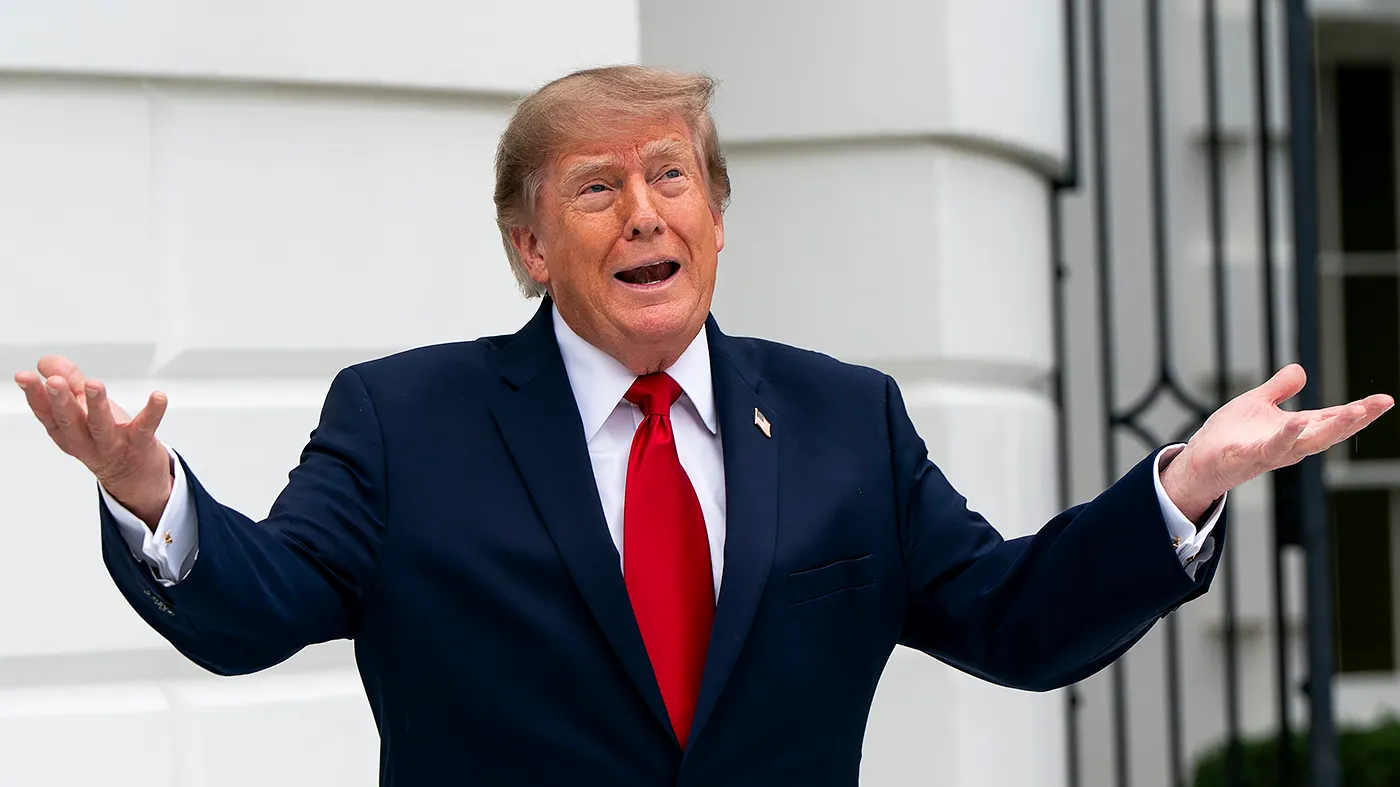
President Trump’s approval ratings have sunk to new lows in several recent polls, driven by declining GOP support and souring views on the economy in a possible warning sign for Republicans just weeks out from the midterms.
In the latest Reuters/Ipsos poll, Trump’s overall approval fell three points from the previous week to an all-time low of 32 percent. Among Republicans, approval of his job performance dropped from 82 percent to 73 percent in a week, down from 86 percent in January 2026 and 91 percent just after his second inauguration.
“For really his entire political career, the president has enjoyed very strong support among the Republican Party and among his base, and that’s still true today, but it’s a bit less true,” Alec Tyson, senior vice president and lead pollster at Ipsos Public Affairs, told The Hill.
Trump has seen a decline in his polling numbers since the Iran war started, according to Tyson, but the latest polling shows a clear dip in recent weeks, which the pollster said tracks with the “striking” drop in how Republicans view the president on economic issues.
Since January, Republicans’ approval of Trump’s handling of the economy has dropped 24 percentage points to 56 percent, while their approval of his handling of the cost of living has fallen 26 points to 44 percent.
“Those are striking numbers,” Tyson said. “Numbers that we hadn’t seen until recent weeks here in our Ipsos polling.”
A recent Quinnipiac poll similarly found Trump at his lowest approval to date on the economy, with only 32 percent approving his handling of the issue. Overall, 33 percent approved of his handling of his job, near the 32 percent record notched in July.
The polls also point to a difficult national environment for Republicans ahead of November, though the outcome in Congress will depend on individual races.
In the Quinnipiac poll, voters favored Democrats by 11 points when asked which party they want to see control the House, 49 percent to 38 percent — a four-point shift from July, when Democrats led 48 percent to 41 percent.
Republican strategists differ on how candidates should respond, but some warn that dissatisfaction with Trump’s handling of the economy could depress turnout.
“There’s a major risk that a lot of Republicans will be staying home in November, while Democrats turn out in droves,” Republican strategist Bill F. B. O’Reilly told The Hill.
“The dissatisfaction with the Iran war strategy and rising gas prices are sapping enthusiasm on the right at the worst possible time,” he added. “We have one month to turn that around.”
The latest NPR/PBS News/Marist Poll suggests Trump is weighing on voters’ choices for Congress, with only 30 percent saying the president is not much of a factor in their vote for Congress.
Anti-Trump sentiment also appears to be more motivating for registered voters, with 45 percent saying their congressional vote is mostly a vote against Trump, and 24 percent saying it’s mostly a vote for Trump.
Democrats held an advantage on several issues in the Marist poll. Voters trusted Democrats over Republicans to handle the economy, 42 percent to 34 percent, and to handle gas prices, 40 percent to 27 percent. The gap between the parties was tighter on immigration, though voters have grown more confident in the Democratic Party’s ability to handle the issue since 2024.
Tyson noted that Democrats also held a six-point advantage over Republicans on which party would better handle the economy in the latest Reuters/Ipsos poll. He called that “unusual” for an issue that has typically been among Republicans’ strongest.
He noted that Democrats’ improving numbers over the past year have “run in parallel with the president’s declining rating.”
“Absolutely, that has implications for the midterms when folks are comparing the two parties or the candidates for the two parties, if the Democratic Party has opened up an advantage on the economy, in part due to the drag of the president’s performance for his own party on the issue,” Tyson said.
Republican political analyst Ford O’Connell said GOP candidates need to counter those numbers by going on offense over the economy, and making the case that conditions have improved under Trump and will continue to do so if Republicans retain control of Congress.
He also pushed back on Democrats’ messaging on gas prices, saying they have “spent the last 15 years trying to kill oil and natural gas production, so the notion that they care about gas prices is nonsense.”
“Republicans have not made the case that when Trump came into office, the Biden economy was far worse than anyone imagined, and it was not going to be fixed overnight. That’s the problem: is they’re playing defense versus offense,” O’Connell told The Hill.
O’Connell cautioned against treating national polling as a prediction of the election outcome, noting some results have been inconsistent. He also doesn’t believe the public is sufficiently factoring in the effect of mid-decade redistricting pushes in several states.
“Republicans are definitely facing strong headwinds, but that does not mean that the game is over. And if they stop pushing right now, they will certainly lose both the House and the Senate,” he said. “And they should hold onto the Senate and could conceivably have a very narrow loss in the House, or, if something totally breaks their way, could actually hold the House by basically the status quo that they have now.”
Alan Abramowitz, a political scientist at Emory University, said the generic congressional ballot is “usually a very good indicator” of the midterm landscape, along with the president’s approval rating, though he said there are other mitigating factors that can affect the outcome.
“In general, the president’s party tends to lose more seats when the president’s approval rating is underwater, when the president is unpopular,” Abramowitz said, adding, however, “It’s not a perfect relationship by any means.”
He cited the strong economy under former President Clinton in 1998 and former President Bush’s high approval ratings after 9/11 in 2002 as factors that helped their parties in those midterms. Abramowitz pointed to the Supreme Court’s decision to overturn Roe v. Wade as a significant factor in 2022, when Republicans won the House but secured only a slim majority despite former President Biden’s low approval ratings.
Tyson noted while the economy will likely matter more than Trump’s approval ratings in November, the two issues are closely related, especially if voters don’t see the president as responding to their concerns. The pollster said he sees the last four years as an era that could be “defined by the politics of household affordability.”
“These are the same concerns that powered the president to a popular-vote election two years ago,” Tyson said. “But now, two years later, these same frustrations that Americans have been having for some time are increasingly directed at the president and, to some extent the Republican Party.”
Topics in this story
Gathered from external sources. Rights to this text belong to whoever originally published it.