President Trump is bringing healthy food from harvest to hallways
The Trump administration is launching initiatives to improve school nutrition by increasing farm-to-school grant funding and investing in cafeteria equipment upgrades.
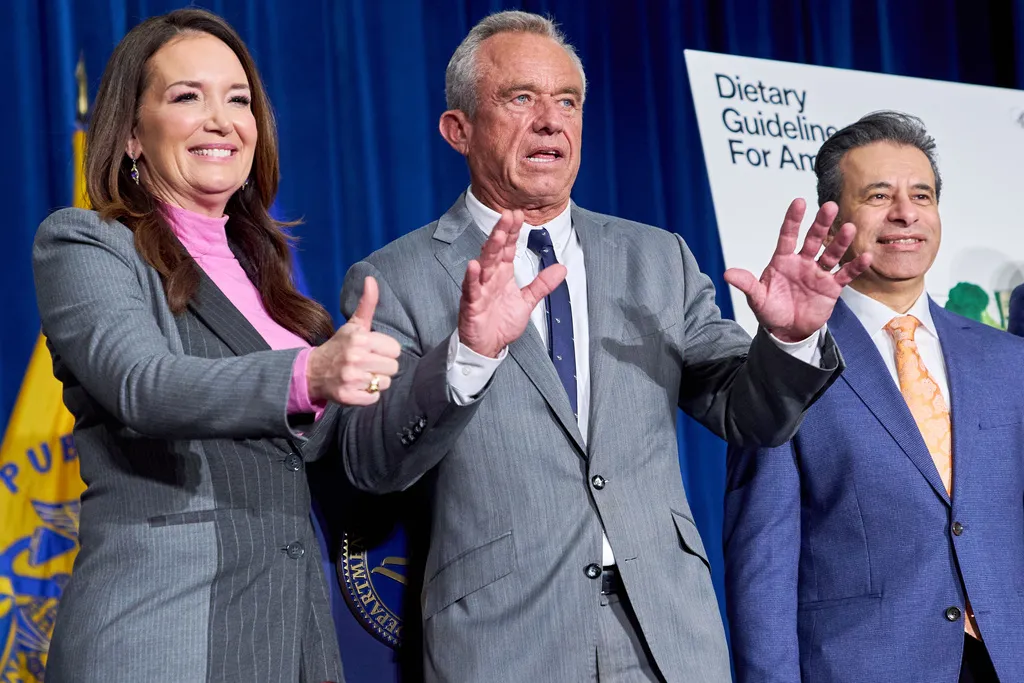
As a new school year kicks into gear, the Trump administration is celebrating the start of a new era of school nutrition — one that will bring even more real food from America’s farms into school cafeterias.
America’s schools are vital partners in helping children receive the nutrients they need for their learning and development. And for many students, schools are where they get most of their meals and the healthiest food they eat all day. Each school day, the National School Lunch Program serves about 30 million students, while the School Breakfast Program serves approximately 15 million. That’s over 4.8 billion lunches and 2.5 billion breakfasts a year — making schools one of the few places where we can consistently influence lifelong eating habits.
Through these programs, many schools are already providing students with whole, nutrient-dense food, which feature prominently in the 2025–2030 Dietary Guidelines for Americans we released earlier this year. The message is simple: eat real food. By aligning school meals with these evidence-based recommendations, schools use the healthy food made by America’s farmers and ranchers to help solve our national chronic disease epidemic.
To facilitate this alignment, the U.S. Department of Agriculture is working to finalize a proposed school meals rule, which will ensure the Dietary Guidelines are reflected on breakfast and lunch trays in schools across America. Among other MAHA-inspired solutions, the rule will promote whole food breakfast options, healthy cooking methods, 100 percent whole grains, whole fruit and whole milk. Without a doubt, this will be the most transformative action we have taken to date for our children, and for the future of America.
The next step in our mission to Make America Healthy Again is to get even more of the great bounty of America’s harvest into America’s schools. For the upcoming school year, USDA is providing up to $25 million in additional Patrick Leahy Farm to School Grant Program funding, which leverages the healthy food grown by our farmers and ranchers to support local communities. The department already awarded two cohorts a total of $20 million in April 2026 — the largest investment in the history of the program. One recipient of that funding was the Pennsylvania Beef Council, which is partnering with 175 local schools across the Keystone State to serve nearly 300,000 students, who will now enjoy a delicious source of protein in their school cafeteria, right from their own backyard.
In practice, the concept of “farm to table” — or in this case, “harvest to hallways” — also involves a few intermediary steps. Once healthy local food arrives in the school kitchen, it needs to be stored, cooked and served. Unfortunately, much of the basic infrastructure this requires is sorely out of date, if not altogether absent in some locations. That’s why USDA is stepping up to invest up to $70 million for schools to use in upgrading cafeteria cold storage, stoves and other equipment. This includes $20 million in National School Lunch Program Assistance Grants awarded to states this month, giving schools across America access to the equipment they need to prepare more meals from scratch.
Thanks to President Trump’s unprecedented leadership, our effort to make school meals healthier is also attracting support from the private sector. For example, Tyson Foods is committing $1 million over the next two years to strengthen childhood access to food and nutrition resources, especially in rural communities. Sysco and Aramark have also pledged support, including through school district partnerships, nutrition education and menu development services. We are also working to secure partnerships from other companies, as this investing in the health of our nation is truly a team effort.
At the end of the day, putting America First means putting America’s children first. A healthier future is within reach, but only if we lean into the nutritious food grown by America’s farmers, ranchers and producers. By connecting that food with schools across America, we are investing in the health of the next generation, one child at a time.
Brooke L. Rollins is U.S. secretary of Agriculture and Robert F. Kennedy Jr. is U.S. secretary of Health and Human Services.
Topics in this story
Gathered from external sources. Rights to this text belong to whoever originally published it.