The Senate races that will define the Democratic Party
Primaries have trended progressive, and whether that proves to be a winning formula at the statewide level will be among the defining questions of this cycle.
Now that primary season has nearly come to a close, the Democratic Party has a better sense of where things stand ahead of the general election, and, in most cases, the next few months ought to be a highly competitive sprint to November’s finish line.
Indeed, a number of key Senate races are shaping up to be toss-ups, for better or for worse.
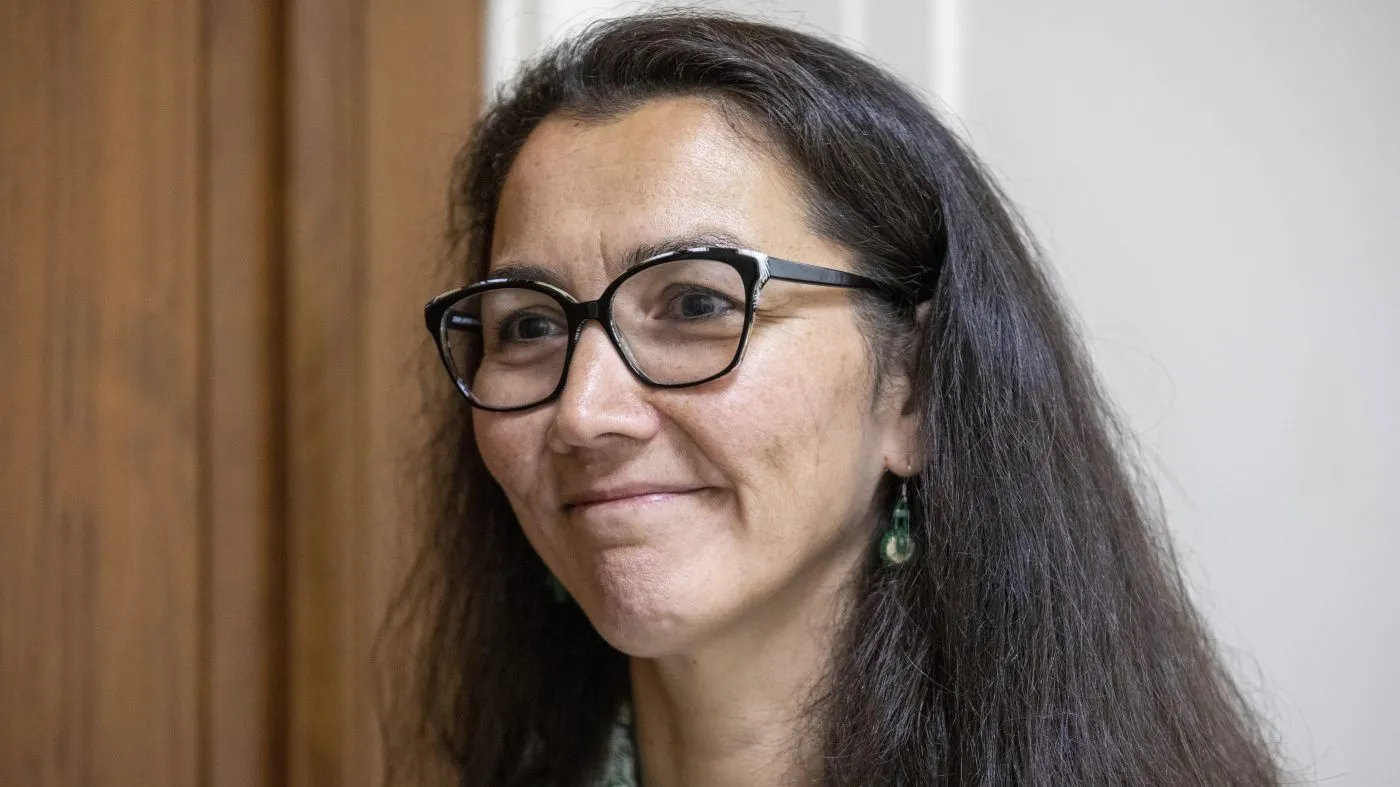
For the better, Democrat Mary Peltola advanced to the general election for Alaska’s highly coveted Senate seat, which both parties agree is crucial to winning control of the upper chamber.
Notably, with 80 percent of votes counted, Peltola is more than 5 points ahead of Republican Dan Sullivan (approximately 48 percent to 43 percent), providing a glimpse of hope for Democrats who believe Peltola is the only Democratic candidate who could pose a true threat to two-term incumbent Sullivan.
Unlike the progressives emerging from primaries in Texas and Minnesota, Peltola has taken a much less partisan approach, distancing herself from former Vice President Kamala Harris specifically and the national Democratic brand generally — a strategy that may prove to be a defining test for how Democrats can compete in a red-leaning terrain.
While her approach has come under fire from her Republican opponent — who has repeatedly emphasized Peltola’s funding from “Lower 48 liberals” — it may do just enough to make inwards with independents and unaffiliated voters tired of partisan politics as usual.
In a Data for Progress general election poll conducted one day before the primary, Peltola led Sullivan by 6 points (53 percent to 47 percent), largely mirroring her winning margin in the actual primary election.
That said, both candidates have significant resources at their disposal, and a 5-point lead in the primary — where other candidates are snagging a few crucial percentage points — isn’t enough for Alaska Democrats to get too comfortable before the general.
Elsewhere, the primaries have trended progressive, and whether that proves to be a winning formula at the statewide level will be among the defining questions of this cycle.
In Texas, Democrat James Talarico is currently neck-and-neck with Republican Ken Paxton, the Trump-endorsed Attorney General who handily defeated incumbent Senator John Cornyn (R-Texas) in May’s Republican runoff.
Despite President Trump’s backing of Paxton in a state he won by nearly 14 points in 2024, Talarico has either led or tied Paxton in all major polling since the runoff, except for the latest Emerson poll , where Paxton leads by 1 point (47 percent to 46 percent).
Even with Talarico’s potential to appeal to independents and Republicans disaffected by Paxton, it is hard to imagine a majority of voters in the Lone Star State electing a progressive Democrat, who had publicly argued that “God is nonbinary” and believes in the complete dismantling of Immigration and Customs Enforcement. A Democratic win in Texas would be a significant upset regardless of who the nominee is, but Talarico’s profile makes that already steep climb steeper still.
Nonetheless, Talarico’s ability to keep up with Paxton is a step in the right direction for the larger party, despite recent internal divisions.
In Minnesota, progressive Lt. Gov. Peggy Flanagan (D) advanced to the general election after defeating moderate Angie Craig by 20 points earlier this month. Now, Flanagan battles Republican Michele Tafoya for the Senate seat, leading by 5 points (46 percent to 41 percent) in the latest poll conducted since the August 11 primary.
Flanagan’s margin is the least surprising of these progressive primary wins — Minnesota’s electorate has long leaned left, and the state’s charged atmosphere around immigration enforcement has buoyed candidates with strong anti-ICE positions. Still, the race is far from settled.
Michigan Democrats are in a similar boat. Abdul El-Sayed, Michigan’s uber-progressive Democratic nominee for Senate, has a long, uphill battle ahead of November, when he will go head-to-head with uncontested Republican Mike Rogers. El-Sayed won the Democratic primary by 1 point against moderate Rep. Haley Stevens, 47.5 percent to 48.5 percent. He now faces one of the nation’s most contentious races this cycle.
Unlike Texas — where a Democrat winning would be a striking upset regardless of ideology — Michigan is a true purple state. El-Sayed’s general election performance will serve as a referendum on whether the far-left flank is strong enough to win a swing state that’s key to 2028.
Recent polling also indicates quite the toss-up: A Fox News poll has Rogers up by 4 points (51 percent to 47 percent), whereas a Susquehanna poll has El-Sayed ahead by 7 points (46 percent to 39 percent). Other polls have shown El-Sayed up, but by smaller margins.
Taken together, it is clear that the fight to succeed Sen. Gary Peters (D-Mich.) remains the race to watch. And whether El-Sayed can flip the party on its head and secure a win in a critical swing state will give national Democrats enough to know which way the party should turn ahead of 2028.
Douglas E. Schoen and Carly Cooperman are pollsters and partners with the public opinion company Schoen Cooperman Research based in New York. They are co-authors of the book “ America: Unite or Die. “
Topics in this story
Gathered from external sources. Rights to this text belong to whoever originally published it.