Never mind vaccines — America can’t even track dangerous diseases
A country that needed 2,900 cases and two deaths to register a disease it eliminated a generation ago is not prepared.
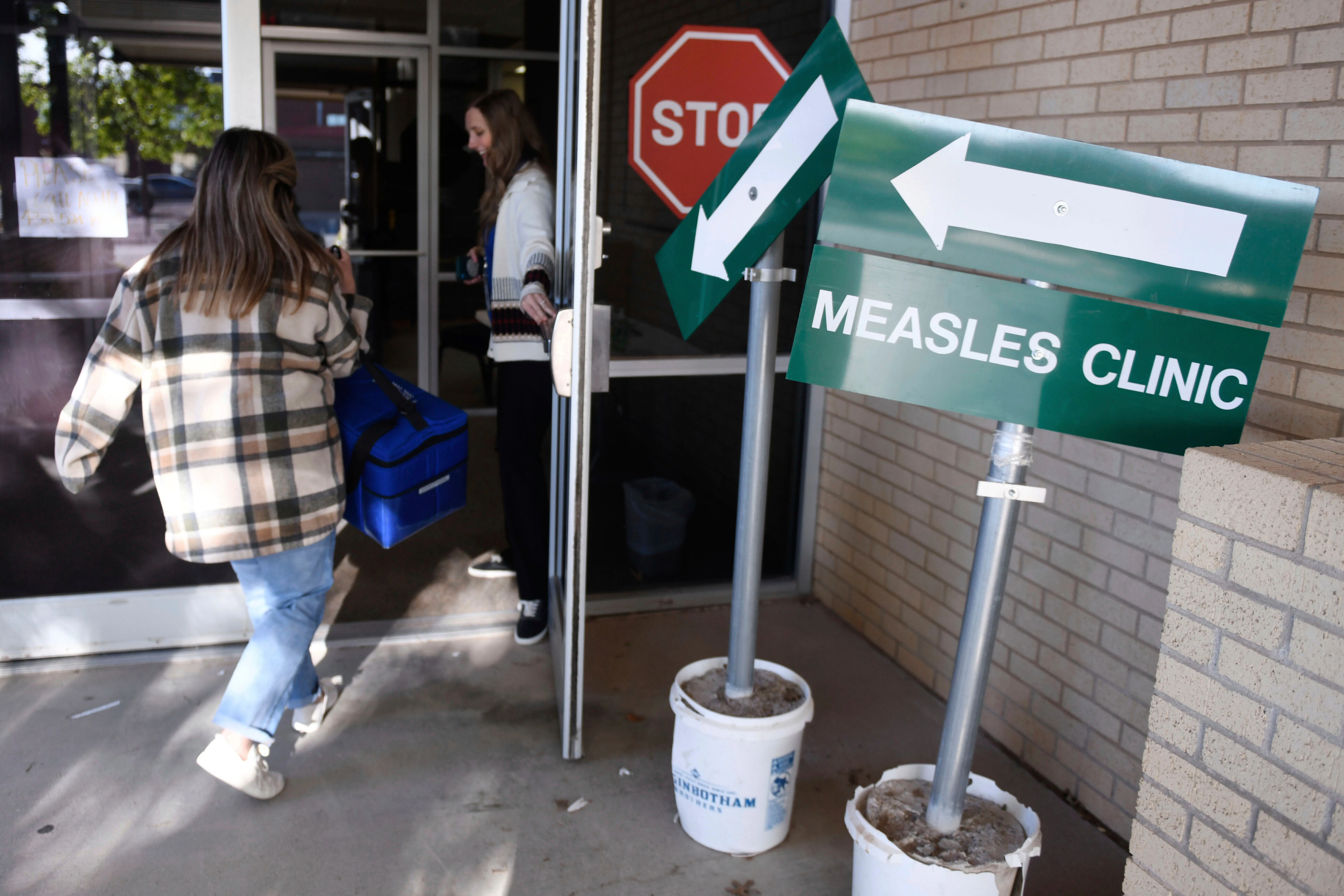
Pennsylvania recorded its first measles deaths in 35 years this week, and the national count of cases has passed 2,900 — more than in any year since the disease was declared eliminated in 2000 .
The argument that followed was about vaccines, and they do matter, but that is yesterday’s fight. The failure that should keep Congress up at night is quieter: the U.S. still cannot see, in one place and in near real-time, what is happening biologically inside its own borders.
I built disease detection systems for the Defense Threat Reduction Agency , ran hospital epidemiology at Michigan State University, and worked on national security problems at Sandia National Laboratories. The hardest problem was never the sequencing or the software. It was that no two data sources described the same disease the same way.
Each state keeps its own list of reportable conditions and its own case definitions. Each laboratory and hospital keeps its own data format. Before a single alert can fire, someone must build a translation layer that aligns those schemas and vocabularies into one picture. In the Army, we called that a common operating picture. American public health does not have one, and no one oversees building it.
This is not an attack on the Centers for Disease Control and Prevention — in fact, the agency says so itself. It “ does not have direct authority to require data reporting, ” according to its website, and receives data from 50 states and more than 3,000 local jurisdictions, each with its own data-sharing agreement.
Case notification to the national system is voluntary , and national counts are provisional and revised weekly . Jurisdictions still send case reports in several technical standards; the CDC is still working toward a single one . The picture is scattered across the the Food and Drug Administration and the Departments of Health and Human Services, Homeland Security, Agriculture and Defense, as well as the states. No one is assigned to assemble it.
We know what works, because we have watched it work. When Medicare made weekly reporting of respiratory illness and bed capacity a condition of participation in November 2024 , the requirement reached essentially every hospital in the country.
When bird flu spread through dairy herds in 2024, voluntary testing enrolled 75 of the nation’s roughly 36,000 dairy farms , while influenza virus turned up in 36 percent of retail milk samples , including in five states with no reported outbreak. A federal order requiring milk silo testing then brought 45 states into surveillance . Authority plus a federally built system produced in months what persuasion had failed to produce in years.
We also know what does not work: coordination without authority.
Congress created the National Biosurveillance Integration Center at the Department of Homeland Security in 2007 to fuse human, animal, food and environmental data. By 2015, eight of 11 federal partners said its products helped them little or not at all, and only 5 of 19 shared data with it , citing legal restrictions. In 2023 it still lacked performance measures . The intelligence community’s biosecurity center was ordered terminated in December 2025.
NBIC’s mission was to integrate, and only to integrate. An integrator that cannot compel data, controls no budget, and commands no one writes reports.
Washington’s current answer is a slogan. In September 2025, the secretary of Health and Human Services wrote that CDC’s Biothreat Radar Detection System “ can spot pathogens like H5N1 or MERS early enough to prevent catastrophe. ” His department’s budget request called it “proposed.” Congress provided about $7 million of a roughly $100 million request . The 2027 request asks for funds again, while proposing to cut state and local preparedness grants from $735 million to $350 million; Health and Human Services has already terminated $11.4 billion in grants to the state and local departments that feed it.
The fix is structural, and the government already runs the model. The Joint Interagency Task Force South in Key West, which tracks drug trafficking across two oceans, is widely regarded as the gold standard for interagency operations: Five armed services, 13 law enforcement and intelligence agencies, and liaison officers from 20 nations work under one director who controls assets assigned to the mission while home agencies keep paying and promoting them.
Biosurveillance needs that — not another coordinating council.
Congress should charter a National Biosurveillance Task Force, housed at Health and Human Services and led by a civilian, with operational control of the people, systems and budgets that do federal biosurveillance today, matrixed from all the agencies named above, plus the Department of Veterans Affairs. It needs a single appropriation, so that the money follows the mission, and authority to set data standards enforced through the levers that already work, including Medicare conditions of participation, federal health IT certification, and Department of Agriculture orders.
States that want in can put their National Guard civil support teams, with mobile laboratories that identify biological agents , on the task force’s missions with federal funding, exactly as governors did for COVID testing in 2020 . The task force should build the system once, at federal expense, and give it to states, counties, tribes, hospitals, laboratories and companies for free with technical support, offering a simple bargain: contribute your data and get the integrated picture back within hours, plus preference in federal funding. Its charter should be de-identified data only. This is standards and reciprocity, not surveillance of citizens.
Start with food. Fifteen agencies administer at least 30 food safety laws ; the Government Accountability Office has called that “high risk” since 2007, and no national strategy exists. Foodborne outbreaks cross every agency line. Make them the proving ground.
A country that needed 2,900 cases and two deaths to register a disease it eliminated a generation ago is not prepared. Give the people who watch for it one picture, one budget and one commander to hold accountable.
Andrew G. Huff, Ph.D., is an epidemiologist, formerly of Michigan State University, and is affiliated with Risk Factor Research LLC. Previously he served as vice president at EcoHealth Alliance and as a senior member of the technical staff at Sandia National Laboratories. He is the author of “The Truth About Wuhan.”
Topics in this story
Gathered from external sources. Rights to this text belong to whoever originally published it.