America’s next great addiction crisis
Advances in artificial intelligence and mobile technology are intensifying America’s gambling crisis by enabling predatory platforms to exploit individual psychological vulnerabilities.
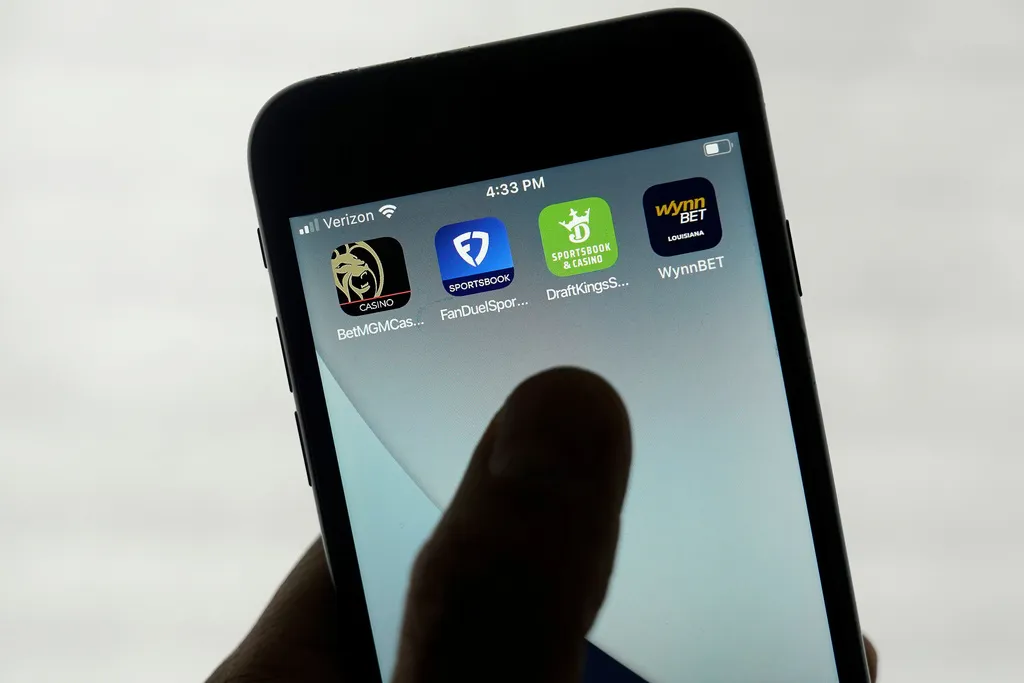
America has a gambling problem , and it’s becoming harder to see. For decades, addiction was associated with the obvious vices: drugs, alcohol and, to a lesser extent, the desperate soul sitting at a casino table.
Today, gambling can happen anywhere, at any hour, with nothing more than a phone and a bank account. You can gamble throughout an entire football game without ever leaving the sofa. And you can lose thousands of dollars without a friend or family member even knowing.
That makes gambling addiction particularly dangerous. The addict doesn’t have to look like an addict. He can be sober and successful. He can be surrounded by people he loves while privately chasing losses on his phone. Unlike drugs or booze, gambling offers its own seductive promise of salvation. After losing a month’s salary, a gambler can convince himself that one more bet will make everything all right. Instead, one loss becomes another, and another.
Now AI threatens to make this problem many times worse. Gambling companies already collect enormous amounts of information about how customers bet, when they bet and how much they lose. AI can turn that information into a detailed picture of who is most likely to keep gambling and who is most likely to lose heavily.
The troubling question is what happens when the technology becomes better at identifying a gambler’s weaknesses than the gambler is himself.
America spent decades learning to spot a ruined life. People looked for slurred speech, bloodshot eyes, needle-marks, empty vodka bottles hidden in the laundry basket or a missing wedding ring pawned for cash.
The new system, however, leaves no real physical trace. A 25-year-old financial analyst sits in a fancy conference room in Midtown Manhattan, executing a six-figure parlay on his phone between quarterly presentations. He goes home to his apartment, eats dinner with his fiancée and then loses his entire annual bonus before the fourth quarter of a Thursday night game ends.
The brick-and-mortar casino used to force a person to cross a threshold. In 1996, if a man wanted to bet his paycheck at 3 a.m., he had to put on pants, start his car and drive somewhere specific to make a terrible decision. He had to hand paper bills to a human cashier who looked him in the eyes. That journey created natural barriers. It gave the human brain a few dozen miles to ask uncomfortable questions.
The smartphone obliterated those barriers. The casino sits in the front pocket of your jeans, right next to your mother’s text messages and dozens of work emails. It stays open at a red light, at a funeral, at a child’s piano recital, and under the covers at 2:17 a.m.
Data collection turns this total access into an asymmetric war. A gambling giant like DraftKings , which in many ways functions as a tech company, doesn’t treat its millions of users as a single, uniform crowd. Every user is an individual psychological puzzle waiting for predictive modeling to solve.
The software notes that you tend to double your wager after a heartbreaking last-second field goal. It measures the precise moment you close the app in disgust, then calculates the exact dollar amount of a “bonus bet” notification required to drag you back inside ten minutes later. This brutal system is designed to identify your impulses and monetize them, over and over again.
In many ways, it’s like nothing we have seen before. A legitimate bank deploys algorithms to flag reckless spending so the customer avoids bankruptcy and continues paying interest for 30 years. A hospital uses data to catch diseases early so the patient stays alive. A sports betting platform operates under an inverted set of incentives. The most profitable customer isn’t the cautious fan who bets $10 on the Super Bowl every February. The golden goose is the user who steadily loses, loses emotionally, and has enough liquid credit to sustain those losses over a long time.
Chemical addictions eventually demand a pause. A human body can only process a finite volume of alcohol before passing out on the carpet. A cocaine binge runs up against cardiac limits and absolute exhaustion.
Gambling works differently, because the instrument of destruction doubles as the imagined tool of salvation. When a man loses $15,000 in a night, his panicked brain doesn’t view the sportsbook app as the poison but as the only available medicine capable of producing $15,000 before sunrise. The destruction feeds the desire to do it all over again.
Traditional gambling required patience. You picked a team, placed a bet, and then waited a few hours to see who won the game. Modern micro-betting turns a contest into hundreds of tiny, high-velocity dopamine hits. You can bet on whether the next pitch in a baseball game will be a strike, whether a basketball team will make its next free throw, whether a soccer player will commit a foul before halftime, or whether a fight will break out in a hockey game within the next five minutes.
The experience feels less like sports fandom and more like a psychotic slot machine.
A recovering alcoholic doesn’t receive personalized push notifications from the local liquor store offering a free bottle of bourbon if he walks through the door before midnight. A former heroin user doesn’t open his email inbox to find a customized message offering a 20 percent discount on his next purchase because the dealer noticed he hasn’t bought anything in three weeks.
Sportsbook platforms do this continuously. With the help of AI, one should expect predation to become even more pronounced.
America has deregulated a multi-billion-dollar parasitic industry and handed it the most advanced system of psychological manipulation in human history. The consequences could be financially and socially ruinous.
John Mac Ghlionn is a writer and researcher who explores culture, society and the impact of technology on daily life.
Topics in this story
Gathered from external sources. Rights to this text belong to whoever originally published it.