Trump, Xi and Putin plan an unprecedented joint meeting on the sidelines of APEC, White House says
<body><p>STORY: Leaders from across Asia-Pacific will gather in the Chinese city of Shenzhen next week for the APEC summit.</p><p>And all eyes are on a possible trilateral meeting between US President Donald Trump, Chinese President Xi Jinping and Russian President Vladimir Putin.</p><p>So what is APEC, and what does it do?</p><p>:: What is APEC?</p><p>APEC, or the Asia-Pacific Economic Cooperation forum, has 21 members.</p><p>Together, they make up about 62 percent of the global economy and around half of world trade.</p><p>It operates on non-binding commitments reached by consensus, with commitments made on a voluntary basis.</p><p>APEC calls its members "economies," not nations.</p><p>That lets Chinese-ruled Hong Kong and democratically governed Taiwan, which Beijing claims as its own territory, take part.</p><p>:: Why Shenzhen?</p><p>It's the third time China has hosted the summit, after Shanghai in 2001 and Beijing in 2014.</p><p>Shenzhen is China's tech hub, home to giants like BYD, Huawei and Tencent.</p><p>Analysts say the choice lets Beijing show off its vision for development and trade, and the city's resilience amid global turmoil.</p><p>:: Who is attending?</p><p>China hasn't officially said who's coming.</p><p>But Trump, Putin and the leaders of Canada, Australia, Mexico and Indonesia are also due to attend, among others.</p><p>:: What are the key issues?</p><p>The possible meeting between Trump, Xi and Putin could produce some sticking points.</p><p>According to analysts, China is reluctant to discuss nuclear disarmament because it has fewer such weapons than the other two.</p><p>The US and Russia will also be keen to discuss the Ukraine war, but not necessarily China, they said.</p><p>Then there's US-China relations.</p><p>A trade truce has been extended, but analysts say both sides are falling short on their promises.</p><p>Rare earths, artificial intelligence, tariffs and US arms sales to Taiwan are likely on the agenda.</p><p>The Middle East conflict is also expected to feature, with its toll on energy supplies, trade and prices.</p><p>And China's strained ties with Japan and the Philippines over Taiwan and the South China Sea.</p><p>The leaders' meeting runs November 18th and 19th, preceded by an annual summit of CEOs on the 17th and 18th.</p></body>
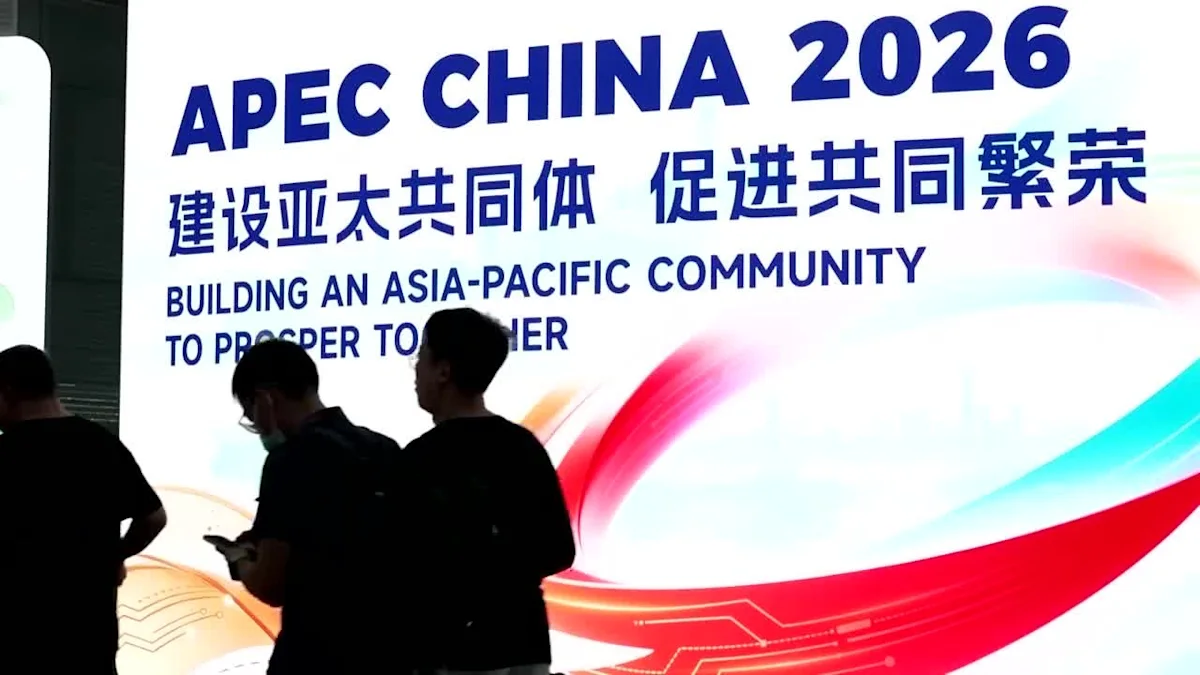
WASHINGTON (AP) — The leaders of the United States, China and Russia plan to meet Thursday on the sidelines of next week's Asia-Pacific Economic Cooperation summit in China's tech hub of Shenzhen — an unprecedented gathering of the heads of the world's biggest nuclear powers.
While the leaders gathering for joint talks will mark a singular moment, analysts say expectations are low that the talks will lead to major breakthroughs and say they will be heavier in symbolism than substance.
Plans for the three-way summit with Donald Trump , Xi Jinping and Vladimir Putin were confirmed Friday by the White House. It comes at a complicated moment in relations between the three countries.
Trump has warmly embraced Xi after coming to a truce in their short-lived trade war last year and in spite of differences over the U.S. war with Iran and other tensions between the world's foremost economic powers.
Similarly, Trump has sought to build his relationship with Putin, even as the Russian leader has persisted in his nearly 5-year-old war with Ukraine and as Moscow has deepened its military, intelligence and diplomatic partnership with Iran .
The U.S. president has insisted that such a meeting would provide an opportunity for the three leaders to discuss the U.S. war with Iran and his goal of reaching a three-way agreement on their nuclear arms stockpiles.
Trump does plan on discussing the Iran war with Xi and Putin, but will steer away from discussing Ukraine, according to a senior U.S. official who briefed reporters on the condition of anonymity.
The last nuclear arms pact between Russia and the United States expired in February, removing caps on the two largest atomic arsenals for the first time in more than a half-century. When that treaty — known as New START — expired, Trump rejected a call by Russia to extend the two-country deal for another year and called for "a new, improved and modernized" deal that includes China .
The trilateral meeting is intended to serve as the "beginning of hopefully a conversation" on nuclear disarmament "that can be productive going forward," said the U.S. official, who added that no agreements are expected to be announced.
But Beijing's arsenal of more than 600 warheads, according to Pentagon estimates, is far smaller than inventories held by the U.S. and Russia, each estimated to have more than 5,000 warheads. With U.S. and Russian arsenals dwarfing its stockpile, China has shown little interest in developing a nuclear pact.
Trump administration officials acknowledge that the nuclear stockpile issue is a difficult one for Beijing to engage on, but the U.S. official characterized the meeting as the moment for China to "step up ... to the adult table" on a matter of international importance.
Beijing was least certain about the value of the summit
By agreeing to host the meeting, Xi may be calculating that the moment offers him an opportunity to flex China's growing clout and prestige.
For the Kremlin, the planned trilateral meeting is a coveted chance to posture as a superpower on par with Washington and Beijing.
"I think the key for Putin was that this was very much about signaling a desire to talk to the president and talk to Chairman Xi in a way that suggests that they're making decisions on Ukraine, which obviously the Ukrainians and the Europeans don't like," said Edgard Kagan, a former U.S. ambassador to Malaysia who is now at the Center for Strategic and International Studies.
The trilateral could very well overshadow the APEC summit. The summit, which is bringing 21 economies to Shenzhen, marks a big moment for China to show off its fast-growing, ultramodern coastal metropolis that transformed from a small fishing village into a global technology and economic hub in just a few decades.
More substantively, such a gathering could also muddy China's argument that a Cold War mentality in the West was a contributing factor that led to Russia's war on Ukraine and its pointed criticism that the U.S. has undermined international institutions and treaties with how it has executed its war against Iran.
The trilateral meeting could undercut China's push to portray itself as a defender of free trade at APEC, said Hoo Tiang Boon, a professor of Chinese foreign policy at Nanyang Technological University.
"You sort of run counter to Chinese support of multilateralism," he said.
The leaders have met in pairs plenty of times over the years
Putin and Xi are no strangers. They've fostered a close personal relationship, meeting more than 40 times since Xi became president in 2013 and addressing each other as "dear friend."
Trump and Putin have met face-to-face on seven different occasions, most recently in Alaska in August 2025. Xi and Trump have held face-to-face talks on eight occasions, including a September state visit to Washington by Xi .
Beijing is the No. 1 trading partner for Moscow, a relationship that has strengthened since Putin sent troops into Ukraine in 2022.
As the EU and the West sought to economically isolate Russia, China increased its purchases of Russia's energy resources and became Moscow's principal supplier of key technologies, including high-tech components for Russian weapons industries. Beijing has ignored Western demands to cut those supplies.
In the lead-up to Russia's war on Ukraine, Xi and Putin declared their countries had a "no-limits friendship." China officially has said it is neutral on the conflict, while charging that Kyiv's Western allies played a part in provoking Russia's military action in Ukraine.
Moscow, in turn, has repeatedly declared its support for Beijing's policy on issues related to Taiwan.
Trump recently struck a diesel deal with Russia , waiving sanctions against Moscow and allowing for the sale of millions of tons of the fuel. The U.S. leader has blamed surging energy prices on Ukraine's attacks on Russian oil refineries. Analysts, however, say the rise in global crude prices is due mostly to the Iran war .
Ukrainian President Volodymyr Zelenskyy has expressed concern that the trilateral meeting could serve as a platform for discussing a possible Ukraine deal behind Kyiv's back.
Planning for the summit has drawn comparisons to the Yalta Conference, the 1945 gathering at which the leaders of the U.S., Britain and the Soviet Union agreed to divide Germany and Berlin into four military occupation zones and finalized plans for establishing the United Nations.
Kremlin spokesman Dmitry Peskov has dismissed the Yalta comparisons, noting that any potential agreements reached in Shenzhen can't be enforced on others.
"It's clear that a meeting between the leaders of countries such as Russia, China and the United States is extremely significant," Peskov said. "However, let's not forget that the vision for a global order is that no one tries to impose any particular view of global order, and it should be based entirely on mutual benefit and mutual respect."
Wu reported from Bangkok and Isachenkov from Moscow.
Topics in this story
Gathered from external sources. Rights to this text belong to whoever originally published it.