The next wave of Trump cases headed toward the Supreme Court
The Supreme Court is already confronting President Trump’s agenda this term, but a lot more is still coming. The administration is petitioning the justices to take up 13 additional cases, The Hill’s analysis of the court’s docket shows. Unlike lower courts, the justices choose which cases they hear. They’re still taking up cases for…
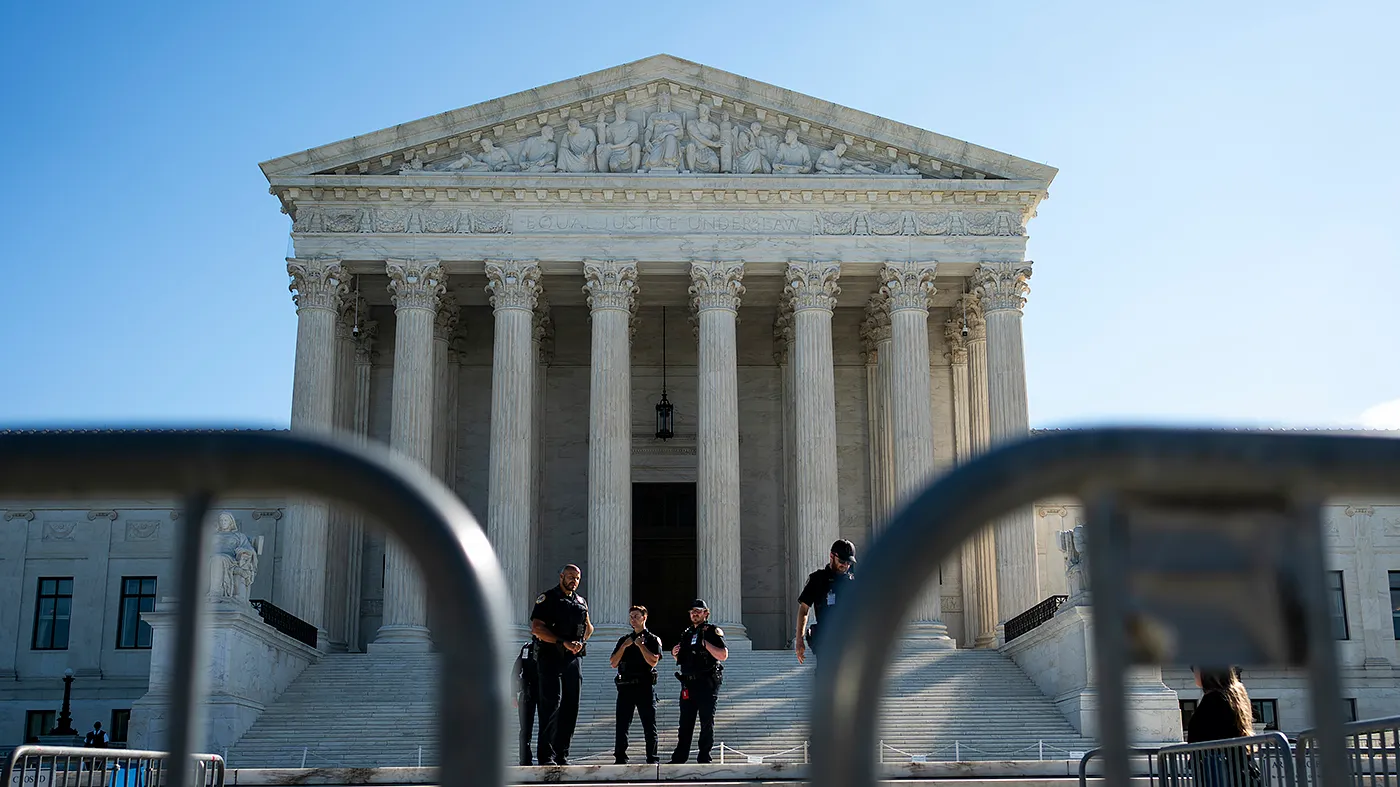
The Supreme Court is already confronting President Trump’s agenda this term, but a lot more is still coming.
The administration is petitioning the justices to take up 13 additional cases, The Hill’s analysis of the court’s docket shows.
Unlike lower courts, the justices choose which cases they hear. They’re still taking up cases for this term, meaning the battles could be resolved as soon as next year.
From transgender troops to an asylum ban, from foreign student deportations to horseracing, here’s where the Supreme Court could soon get involved.
Most immediately, the Supreme Court will turn to Trump’s Day 1 proclamation shutting down asylum processing at the southern border.
The American Civil Liberties Union convinced lower courts that Trump has exceeded federal law.
The administration’s appeal is on the justices’ list for their closed-door meeting on Friday. Trump’s proclamation remains in effect until they announce whether they’re taking it up.
Solicitor General D. John Sauer called it one of Trump’s “most important policy initiatives.”
The Trump administration’s ban on transgender troops serving openly in the military is back before the justices.
Last year, the Supreme Court issued an emergency ruling temporarily lifting a Seattle-based judge’s block on the ban. The battle has now returned for a final ruling, this time in a separate lawsuit filed in the nation’s capital.
A lower court told the Pentagon it can only enforce its ban against new recruits, not anyone already serving.
“That gravely erroneous holding warrants this Court’s review,” Sauer wrote to the justices. “The authority of the U.S. military to determine who may serve in the Nation’s armed forces is a matter of exceptional importance.”
The administration’s crackdown on pro-Palestinian foreign college students has arrived at the Supreme Court’s doorstep.
The Justice Department had already been urging the justices to take up its appeal concerning Badar Khan Suri , an Indian national and Georgetown University postdoctoral scholar whom the administration has tried to deport, when Mahmoud Khalil brought an appeal to the court this past week .
Khalil became a flashpoint in the crackdown as the administration looked to similarly deport the Columbia University demonstrator.
Lower courts have split on whether people in Suri and Khalil’s circumstances must wait for their immigration proceedings to conclude before trying to press a First Amendment defense in federal court.
The Trump administration contends that’s what federal law requires, but the duo say that unfairly leaves them open to mistreatment. In the lower courts, Suri won and Khalil lost.
“That is all practically disastrous,” Sauer told the justices. “The existing circuit conflict threatens intolerable disuniformity.”
The administration has appealed a decision siding with six University of California (UC) faculty and researchers, who sued after the administration terminated their federal grants.
The terminations came as part of Trump’s executive orders targeting diversity programs. The researchers say targeting them in that way violates their First Amendment free speech rights. Lower courts agreed, leading Sauer to petition the justices to get involved. He said the case is much bigger than the millions of dollars at stake for UC.
Sauer said it sets a “dangerous precedent that will hamstring every future administration when seeking to subsidize private projects that promote viewpoints aligned with government policy.”
The Trump administration has brought its attempts to install top federal prosecutors in offices across the country without Senate approval to the Supreme Court in two separate cases.
The first involves Sigal Chattah, whom the president wants to lead the U.S. attorney’s office in Nevada. The second involves John Sarcone, designated for the Northern District of New York.
After Trump took office, the Justice Department appointed them to lead the offices in an interim capacity. Federal law only allowed them to do so for 120 days, however.
At issue is what happened when the clock expired. The Justice Department has tried to keep Chattah and Sarcone atop their offices by designating them as their offices’ No. 2 official — called the “first assistant.”
Since no one is in the No. 1 spot, they automatically assumed the leadership responsibilities. Lower courts found that improperly sidestepped the confirmation process.
“Those holdings misconstrue the text and structure of the statute,” Sauer wrote to the justices. “They upend a quarter-century of practice. They threaten chaos for the next presidential transition.”
In 2025, the Supreme Court voted 6-3 to claw back judges’ ability to block the president’s policies nationwide. However, that decision left the door open to nationwide rulings in certain circumstances.
The administration now wants the justices to slam it shut.
At issue is the Administrative Procedure Act (APA), a federal law that tells judges to “set aside” an agency’s action when found to be arbitrary and capricious, unconstitutional or otherwise defective.
Judges have long interpreted that language to mean they should strike down a policy nationwide, not just grant relief to the plaintiffs before them.
“This Court should return the lower courts to their proper role,” Sauer wrote in the administration’s petition .
But this round, the president faces a steeper climb .
When the Biden administration tried advancing the argument several years ago, Chief Justice John Roberts slapped it down as “fairly radical.” Justice Brett Kavanaugh called it “far-reaching.”
This month, the Supreme Court was set to hear a case over whether it’s unconstitutional to deny a migrant a bond hearing when their detention becomes prolonged.
The argument never happened. New York Gov. Kathy Hochul (D) pardoned the individual at the center of the case, and it became moot.
The same issue is back again at the Supreme Court with a different person’s case.
“The Court should likewise grant certiorari before judgment in this case as a replacement,” Sauer wrote in the government’s new petition .
The remainder of the administrations’ petitions don’t relate to Trump’s second-term agenda.
The justices are set to confront a bipartisan law Congress passed in 2020 overhauling horse track regulations, an attempt to implement national anti-doping standards to replace a patchwork of state rules.
Some Republican-led states and industry groups have challenged the scheme. They say it unconstitutionally hands over power to a private organization to help create those new standards.
At a previous stage of the case, the Supreme Court sided with the federal government . Justice Ketanji Brown Jackson was the only one to publicly dissent.
Now, the case has now returned to the justices’ normal docket.
Administrations in both parties have defended the law by emphasizing the government can reject the private group’s decisions.
“The Constitution allows executive agencies to receive such advice from private actors,” Sauer wrote .
The administration seeks review of a ruling that it illegally traded land formerly part of the Fort Hall Reservation to an agriculture company.
A lower court agreed it violated a 126-year-old law restricting the land, located in southeastern Idaho, siding with the tribes that live in the area.
“The decision below also needlessly complicates all federal land disposals,” Sauer warned .
Already, the court this term will hear a case asking whether federal law allows an immigrant to collect attorney’s fees when they successfully contested their immigration detention via what is known as a habeas petition.
The Trump administration, which argues they can’t, raises the same issue in two new cases . It told the justices they should just hold them until reaching their decision.
A similar dynamic is playing out in a man’s excessive force suit against federal agents who arrested him in a New Hampshire parking lot in 2016.
Fifty-five years ago, the Supreme Court ruled that someone whose constitutional rights are violated can, in certain circumstances, put the individual federal official on the hook for damages. It’s known as a Bivens claim.
Ever since, the justices have sharply limited when those suits are allowed.
They’ll hear arguments on the latest attempt next month. Now, the administration is bringing yet another case.
“At a minimum, the Court should hold the petition,” Sauer wrote.
Topics in this story
Gathered from external sources. Rights to this text belong to whoever originally published it.