The midterms haven’t changed the Supreme Court
Supreme Court picks have political consequences.
Since President Trump retook office in January 2025, hundreds of millions of people across the globe have watched helplessly as the U.S. system of government succumbed to cruelty, corruption, chaos and incompetence. The midterm elections operated as a sort of defibrillator for democracy, sending a much-needed message that individual agency still exists in America. Voters reminded elected officials that they have power to decide the terms under which American society is governed.
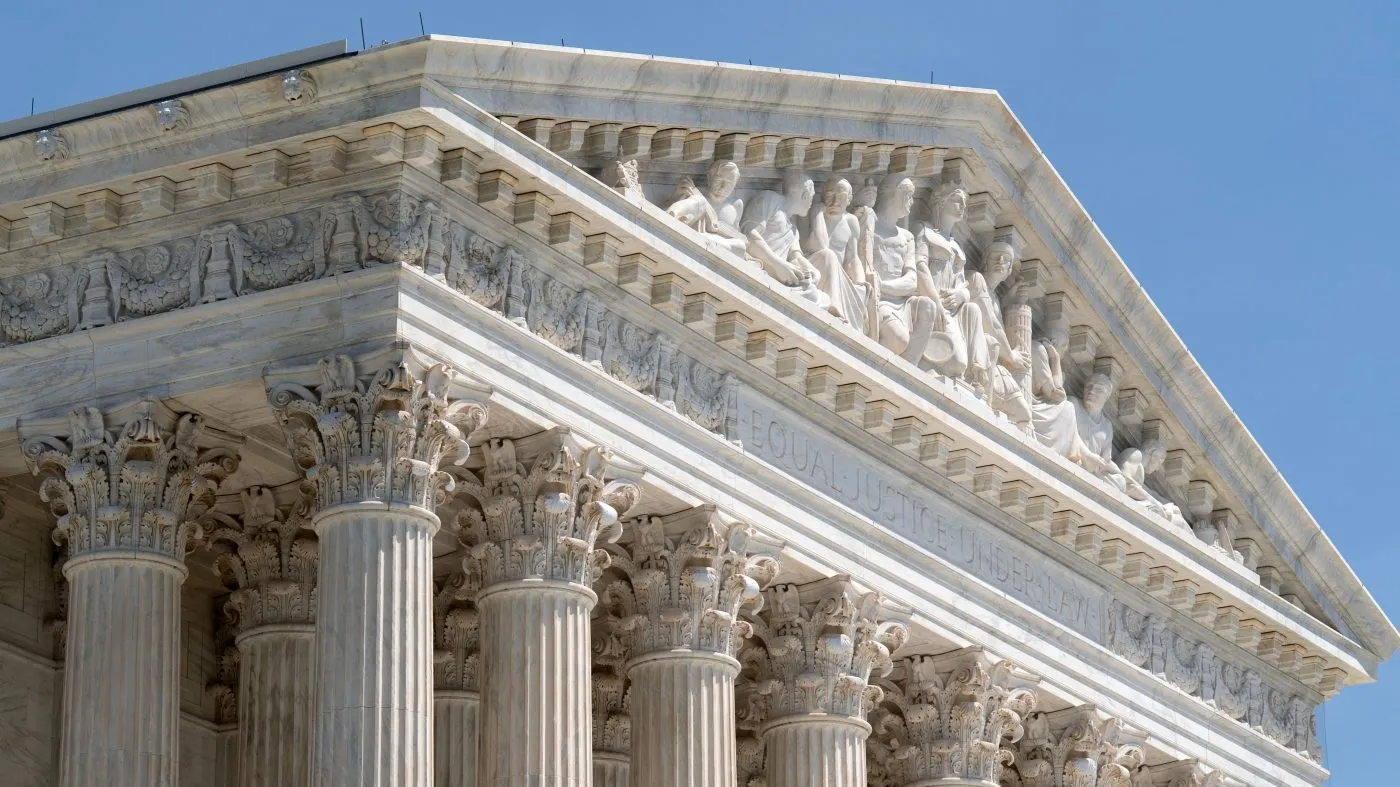
But one thing the midterms did not and could not do was change the U.S. Supreme Court, which has revealed itself to be a dangerously anti-democratic institution. This, of course, is by design. The court itself has reiterated many times that “[a] fundamental principle of our representative democracy is … that the people should choose whom they please to govern them.”
But the Framers chose a different model for the judicial branch, which is instead appointed by the president and confirmed by the Senate. In Federalist No. 78 , Alexander Hamilton defended the configuration of what he called the “least dangerous” branch, arguing that their jobs for life would enable judges to make decisions without fearing removal by voters in retaliation for unpopular rulings. In No. 79 , he said that barring Congress from reducing their pay was also important because a “power over a man’s subsistence amounts to a power over his will.”
BestReviews is reader-supported and may earn an affiliate commission.
In theory, federal judges are nonetheless beholden to the voters through the appointment and confirmation process. Supreme Court picks have political consequences. In 2016, Trump ran for office on a promise to populate the Court with justices willing to overrule Roe v. Wade. After Dobbs v. Jackson Women’s Health Organization came down, stripping women and girls of the right to abortion, campaign strategists reportedly called the ruling a “massive vulnerability for Republicans.”
In his concurring opinion, Justice Brett Kavanaugh justified the majority’s unmistakable callousness by punting to women’s access to ballot-casting in state elections (never mind the powerlessness of girls too young to vote). The issue of abortion, he wrote, “will be resolved by the people and their representatives in the democratic process in the states or Congress.”
Yet for other issues around which Americans are deeply divided, the justices have grabbed for themselves the power to decide what’s best for rest of the 343 million who live among them. Bear in mind that when the Court rules on the meaning of the Constitution, that operates like an amendment. Every other public actor in the country, including members of Congress, state and municipal legislators, and even voters via ballot referendum, is bound by what the justices say the Constitution’s ambiguous text means.
Consider the Second Amendment, which states: “A well regulated Militia, being necessary to the security of a free State, the right of the people to keep and bear Arms, shall not be infringed.” From 1939 to 2008 , the Supreme Court interpreted this language to mean that the Constitution does not protect the right to keep and bear an unregistered short-barreled shotgun without evidence of a reasonable relationship to a well-regulated militia. It was up to voters and legislators to decide whether and how to limit individual possession of firearms for purposes of public safety.
Prior to the 2008 decision in District of Columbia v. Heller, therefore, federal gun laws gradually expanded, culminating in a federal assault weapons ban enacted in 1994. That law expired in 2004, leaving it up to members of Congress — and their constituents — to decide whether to replace it.
That choice ended when the court decided in Heller that the Second Amendment was not limited to the needs of a militia. It instead means, Justice Antonin Scalia explained for the majority, that an individual has a immutable constitutional right to possess guns in certain circumstances — in that case, a handgun in the home for self-defense — and that legislatures and voters are powerless to overstep that new boundary, even in the name of public safety.
Think about it: After reading the Second Amendment one way for nearly a century, the court shifted gears. An issue left to the democratic process became a red line established by unelected judges with jobs for life. Whether Miller or Heller is the “better” reading of the Second Amendment is beside the point. The issue that every American should think about is who should get to decide such a life-threatening question: unelected judges or the people at the ballot box?
On December 2, the justices will hear oral argument in a consolidated case in which they chose to decide whether state and local governments can ban civilian ownership of AR-15s and other semiautomatic rifles under the Second Amendment. If five justices say no, gun safety voters and their descendants will be left further out in the cold. If the high court declares constitutional protection for AR-15s, no number of mass shootings or dead school children will authorize voters to collectively decide to make America safer.
That’s not to say the new Congress is powerless to make voters heard. Through simple legislation, it can change the court’s configuration or its jurisdiction to hear these kinds of cases.
For the time being, it’s up to the people to demand the power to decide for themselves whether deadly machines have more rights in America than human beings capable of pregnancy. That means demanding that Congress remind the justices of their proper role in a democracy: No more kings.
Kimberly Wehle is currently a fellow at the Netherlands Institute for Advanced Study in the Humanities and Social Sciences and author of “How to Read the Constitution — and Why,” as well as “What You Need to Know About Voting — and Why” and “How to Think Like a Lawyer — and Why. “
Topics in this story
Gathered from external sources. Rights to this text belong to whoever originally published it.