The ‘weapon of war’ argument has backfired on AR-15 bans
The Supreme Court is scheduled to hear arguments in Viramontes v. Cook County regarding the constitutionality of state and local bans on AR-15 semiautomatic rifles.
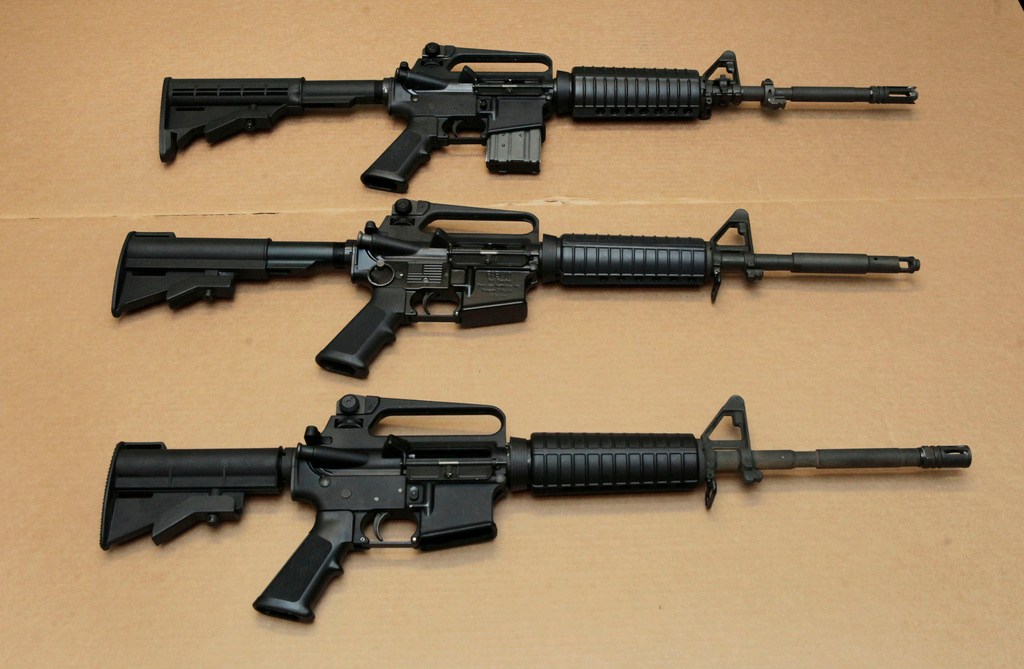
The Supreme Court will soon hear arguments in December in Viramontes v. Cook County , a challenge to state and local bans on AR-15 semiautomatic rifles. The challengers say the rifles are “in common use” for lawful purposes such as self-defense. The state governments defending their gun-bans say they are weapons better suited to war than to civilian life.
Neither side recognizes that the Second Amendment’s reference to the “militia” counts in favor of protecting AR-15s either way.
The challengers emphasize self-defense, an individually focused concern, while the governments argue that AR-15s’ military character is a reason to ban them. But AR-15s are the sort of small arms historically suited for a militia. This is actually the heart of the case, as we argued in a friend-of-the-court brief for the Cato Institute.
Small arms that an infantryman would historically have kept and borne are not marginal to the Second Amendment. Rather, they sit at its center. The amendment’s self-professed rationale for protecting the right to keep and bear arms is that a well-regulated militia is necessary to the security of a free state.
Although self-defense is also an important aspect of the right, debates about how useful AR-15s are for that purpose as compared to, say, pistols — or about how useful they are on a modern battlefield versus against a nighttime home intruder — miss the point.
The Second Amendment’s own text says it is protecting an individual right out of a recognition of the militia’s importance. The provision reads: “A well regulated Militia, being necessary to the security of a free State, the right of the people to keep and bear Arms, shall not be infringed.”
The Second Amendment is unique in spelling out both a social purpose and an individual protection. Advocates for gun-control have long argued that the purpose cabins the protection, such that the Second Amendment protects only “the right of the people of each of the several States to maintain a well-regulated militia,” in the words of Justice John Paul Stevens’s dissent from the landmark case District of Columbia v. Heller .
Stevens had a point in taking the amendment’s reference to the militia seriously. But the majority of his colleagues better understood what it means. In an opinion by Justice Antonin Scalia, they observed that historically, the militia referred to “all able-bodied men,” who would be called into duty by the government in emergency situations.
Further, the term “free State” meant “a free polity,” not the specific state governments existing within the United States. The Second Amendment’s Framers deemed an armed population a safeguard for a free society. The militia, writ large, would be “useful in repelling invasions and suppressing insurrections.” It would discourage the establishment of “large standing armies” that could threaten republican liberty. And if need be, a public “trained in arms and organized” would be “better able to resist tyranny.”
This last aim, enabling resistance to tyranny, deserves particular emphasis. The “people’s militia” could fight a tyrant and thus defend freedom. A militia controlled exclusively by the government could not. The Second Amendment guarantees an individual right for more than just individually focused purposes.
It is possible to overread the prefatory clause, and the Heller majority takes care to note that the Second Amendment does not cover dangerous and unusual weapons, nor does it guarantee that the general populace will be able to effectively fight against a modern military. The court also anticipated an objection: If “weapons that are most useful in military service — M-16 rifles and the like — may be banned, then the Second Amendment right is completely detached from the prefatory clause.” The governments in the Viramontes ruling agree.
The historical context of the Second Amendment’s reference to the militia provides the answer. At the time the Bill of Rights was enacted, men were expected to keep small arms suited to infantry service and bear them when summoned for militia duty. They were not expected to lug around artillery, much less to show up at muster with crew-manned weaponry. The AR-15, a readily portable semiautomatic rifle (indeed, this is a major feature distinguishing AR-15s from M-16s, which are capable of fully automatic fire), sits neatly within the class of arms a militia member held historically. Far from being a fatal strike against its constitutional protection, that weighs in its favor.
In deciding Viramontes,the court should decline the invitation to build an ahistorical wall between guns for self-defense that enjoy protection and what some courts call “weapons of war” that lack it.
Matthew Cavedon is the director of the Cato Institute’s Project on Criminal Justice.
Topics in this story
Gathered from external sources. Rights to this text belong to whoever originally published it.