The smart fridge hacks show food security requires trade security
Allied governments must strengthen cybersecurity without creating a patchwork of national rules that jeopardizes interoperability and leaves critical food supply chains more vulnerable.
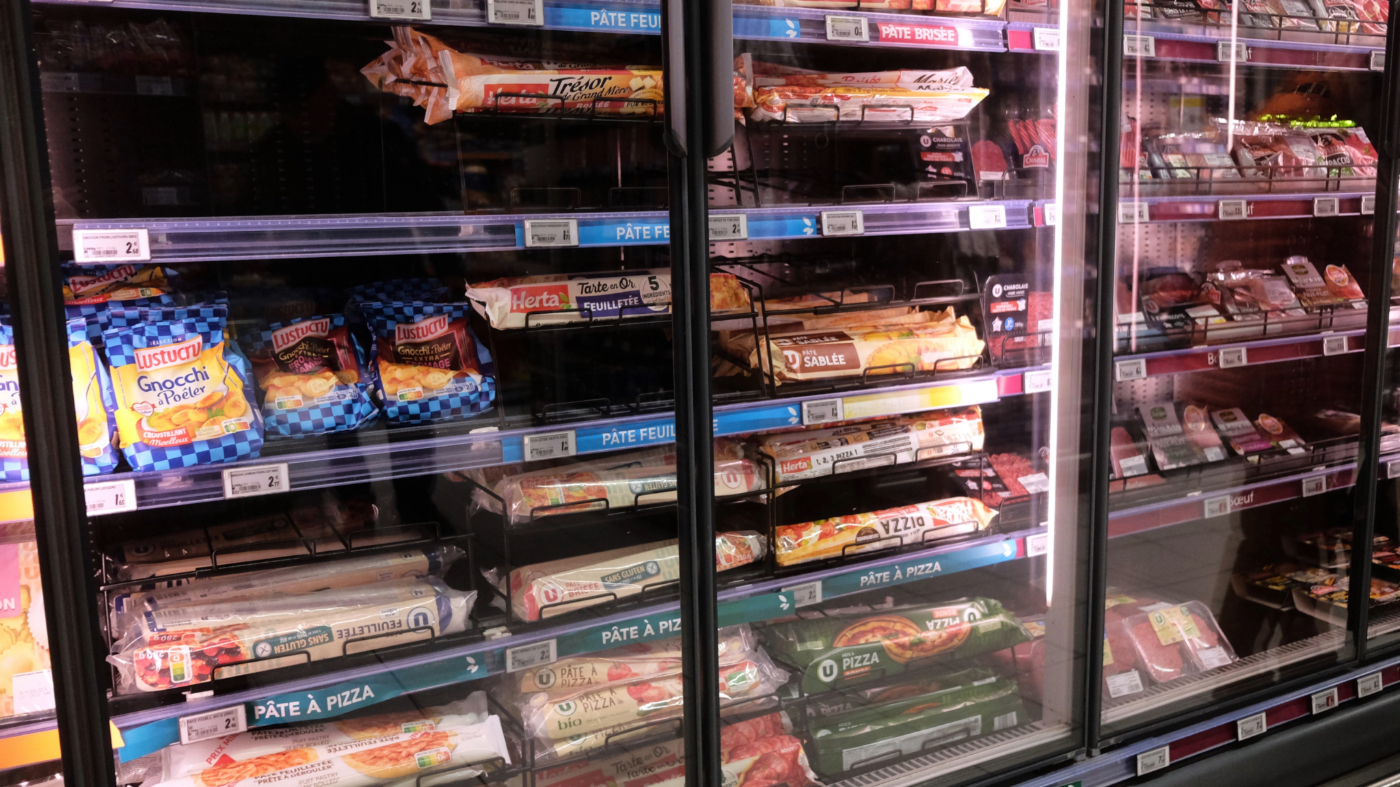
A recent wave of cyberattacks across Europe has revealed vulnerabilities in the infrastructure that keeps food moving from farms to consumers. In October, hackers infiltrated the refrigeration systems of hundreds of French grocery stores. Within hours, the systems defrosted, reaching temperatures up to 122 degrees Fahrenheit. The attack spoiled hundreds of pounds of food, and the affected companies reported losses of several million euros. By November, six additional European Union countries experienced near-identical incidents.
And so hackers can now threaten our food supply with a few keystrokes. But governments risk making matters worse if they impose cybersecurity rules that favor national solutions over interoperability, weakening the resilience of the very food supply chains they seek to protect.
The Pentagon has sounded the alarm , revealing that at least six U.S. military commissaries faced similar refrigeration outages in August. In both France and the U.S., the affected systems have been traced to the Danish company Danfoss, which claims that hackers capitalized on outdated legacy software systems.
Cybersecurity investigations reveal the relative ease by which these attacks were conducted. France’s Predicta Lab demonstrated that 2,752 Danfoss systems were accessible on the open internet. More concerningly, it took New York-based Claroty a mere 28 minutes and just $6 to identify two vulnerabilities in Danfoss systems using Anthropic’s Claude AI models.
This is the iceberg for the agribusiness sector, which is increasingly reliant on smart devices, sometimes called the Internet of Things (IoT), ranging from autonomous farming equipment to advanced supply chain management systems. Their interconnectedness carries a greater risk of cyber disruption.
Congress has acknowledged these risks. In January 2025, The Farm and Food Cybersecurity Act was introduced, directing the Department of Agriculture to evaluate vulnerabilities in food and agriculture infrastructure and coordinating annual crisis simulations with other federal agencies.
Those are sensible steps. The cybersecurity threat is real. But so, too, is the danger of Congress turning a shared security problem into a trade barrier.
Governments may be tempted to require that every imported refrigeration controller, industrial sensor and logistics platform meet new national cybersecurity rules. The United States could adopt its own technical regulations and certification processes. The EU and other trading partners might take a different tack.
In this scenario, a supplier selling the same refrigeration technology into five markets might have to maintain five compliance programs, undergo five assessments and produce five sets of documentation. Companies would face delayed equipment replacements, fewer suppliers and higher costs. Worse, manufacturers might divert resources from fixing vulnerabilities to satisfying different bureaucratic checklists.
That is not supply chain resilience. It is regulatory fragmentation masquerading as security.
This risk isn’t hypothetical. The EU’s Cyber Resilience Act already establishes cybersecurity standards, certification procedures and compliance obligations for connected products sold in Europe. These requirements serve legitimate security objectives, but they also create another layer of regulatory barriers for foreign manufacturers. Unless Washington and Brussels coordinate their approaches, manufacturers could face costly redundancies in certification requirements.
By contrast, the IoT Cybersecurity Improvement Act of 2020 , the closest U.S. equivalent to the Cyber Resilience Act, regulates those connected devices used exclusively by federal agencies, relying on procurement requirements, voluntary standards and sector specific regulation.
If the United States eventually moves toward more sweeping cybersecurity requirements, federal agencies must ensure cross-border compatibility for access controls, security updates, vulnerability disclosures and incident reporting. Where different systems achieve equivalent security outcomes, regulators should recognize that equivalence rather than insist on duplicative testing, including through mutual recognition agreements with trusted allies. The emphasis should be on performance over provenance.
Internationally developed standards offer a useful starting point. The National Institute of Standards and Technology already provides a flexible cybersecurity framework, while industrial control standards can help manufacturers and operators address risks across borders. None of this requires relaxing protections.
Governments must be free to exclude genuinely unsafe equipment or respond to specific national security threats. But requirements should target demonstrated vulnerabilities and should distinguish security benefits from preferences for domestic suppliers.
Cybersecurity standards must also reflect the realities of American agriculture. Small family farms account for 86 percent of farms and 17 percent of the value of agricultural production. Many of these farms lack the resources to replace vulnerable equipment or hire cybersecurity specialists.
To address this problem, the Cybersecurity in Agriculture Act would establish regional centers to develop security tools and train agricultural operators. Importantly, Congress should further ensure that equipment manufacturers shoulder responsibility for secure design and software updates.
Washington has spent years warning that dependence on global supply chains creates vulnerabilities. But the answer is not to divide those supply chains into national silos. A fragmented regulatory system would limit businesses’ choices, access to secure technology and capacity to respond when disruptions occur.
The refrigeration attacks are a wake-up call. Food security is trade security. Allied governments must strengthen cybersecurity without creating a patchwork of national rules that jeopardizes interoperability and leaves critical food supply chains more vulnerable.
Ella Busch is a military operations analyst at Systems Planning & Analysis. Marc L. Busch is the Karl F. Landegger Professor of International Business Diplomacy at the Walsh School of Foreign Service, Georgetown University.
Topics in this story
Gathered from external sources. Rights to this text belong to whoever originally published it.