Live audio drives trust in the Supreme Court. Visuals will, too.
Live audio’s positive effect on Supreme Court favorability shows why courtroom cameras should be the High Court’s next step.
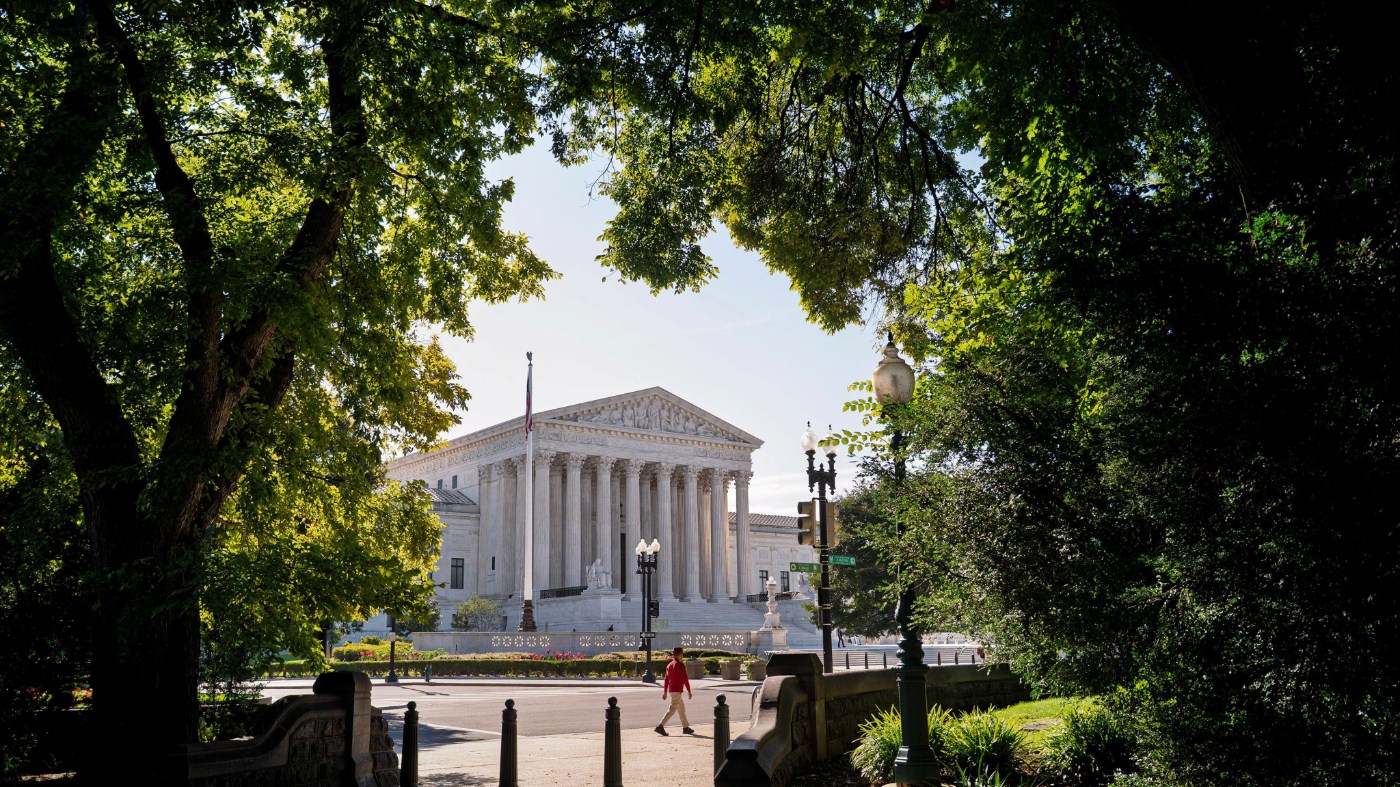
Amid heightened partisan tensions, the U.S. Supreme Court concluded one of its most contentious terms in its history at the end of June. Not surprisingly, as soon as they could, Justices Amy Coney Barrett and Elena Kagan testified to Congress on the need for better judiciary security once Congress had returned from recess.
Supreme Court justices are understandably concerned about how partisan framing shapes public perceptions of their decision-making — and not only because of risks to their safety. As Chief Justice John Roberts wrote in his 2024 annual report , courts are “peculiarly ill-suited” to counter disinformation about their decisions because judges “typically speak only through their decisions” and “do not call press conferences or generally issue rebuttals.”
Outside its rulings, the Supreme Court only speaks to the public through live audio of oral arguments during its October-June term. Live audio is a relatively recent innovation, first introduced in 2020.
For C-SPAN in 2022 , and again earlier this year under our own sponsorship, we uniquely tracked likely U.S. voters’ views of U.S. Supreme Court favorability, awareness, interest and live audio consumption.
Boomers and voters who are older haven’t noticed live audio and likely never will. Awareness of Supreme Court live oral argument audio has risen from 46 percent in 2022 to 55 percent in 2026, with Gen X, Millennial and Gen Z voters providing all the increase. Boomers and those older than 80 make up about one-third of likely voters. Gen X, Millennials and Gen Z account for the rest.
Boomers and older voters are essentially no more aware of live audio today (39 percent) than they were in 2022 (37 percent). In contrast, fully 63 percent of Gen X, Millennial, and Gen Z voters are aware of live audio today.
The John Mulaney generation has noticed live audio — and likes it. Mulaney, 43, calls himself a “Supreme Court argument nerd.” Gen X, Millennials and Gen Z are far more likely to get Supreme Court news from social media (75 percent), where oral argument audio has become common, than from older media sources.
By contrast, older voters still rely on traditional national, cable and local TV news (70 percent). Among those who have heard live audio, Gen X, Millennial and Gen Z voters say it gives them “a more positive view” of the U.S. Supreme Court by a 58-18 percent margin.
Boomers and those older than 80 rely mostly on traditional sources for Supreme Court news — including outlets where partisan framing is common. (C-SPAN is the notable exception.) As a result, they remain more dependent on what is billed as expert commentary, late-night mockery and partisan interpretations from the president or members of Congress.
Only 27 percent of Boomers say live audio makes them more likely to view the Supreme Court positively, less than half the share among Gen X, Millennial and Gen Z likely voters.
Live audio builds trust over time. Our 2022 findings, confirmed again in 2026, show that live audio improves views of the court and builds trust over time — but primarily among Gen X, Millennial and Gen Z voters who access it through digital media. This finding is striking because digital and social platforms are often associated with frivolous, misleading and sometimes dangerous falsehoods, now further amplified by artificial intelligence.
Nevertheless, digital media provides far more ways for the public to hear the Supreme Court more directly in ways both supportive and critical. For example, a listener might hear a clip from an oral argument with a justice asking a question, or a podcast featuring the back-and-forth between a lawyer and a justice, or the voices of several justices concerning a particular case via social media. By contrast, traditional media almost always filters the court through the views of journalists, legal experts, satirists or political commentators.
Comparing and contrasting how Gen X, Millennial and Gen Z voters more favorably view Supreme Court live audio versus Boomers and voters over age 80 still shackled to traditional media underscores this point. Over time, hearing the justices directly enables more people to view the court’s work more favorably, even when they disagree with a specific ruling.
Live audio’s positive effect on Supreme Court favorability shows why courtroom cameras should be the court’s next step. Like live audio, televised oral arguments would demonstrate to viewers that justices take their work seriously, even to those who disagree with the rulings.
Much more importantly, however, live video would continue to broaden the range of available viewpoints on the court, its work and its rulings, as live audio already has. This can provide the court with a force multiplier to counter misleading partisan attacks and disinformation.
Robert Green is principal and Ian Green is vice president at Pierrepont Consulting and Analytics .
Topics in this story
Gathered from external sources. Rights to this text belong to whoever originally published it.