How data centers may use forever chemicals
{beacon} Energy & Environment Energy & Environment The Big Story Forever chemicals could be another data center impact As AI data centers face intense public pushback over issues including their electricity and water use, another potential environmental impact is percolating: the proliferation of forever chemicals. © Spencer Platt, Getty Images Data centers can use these…
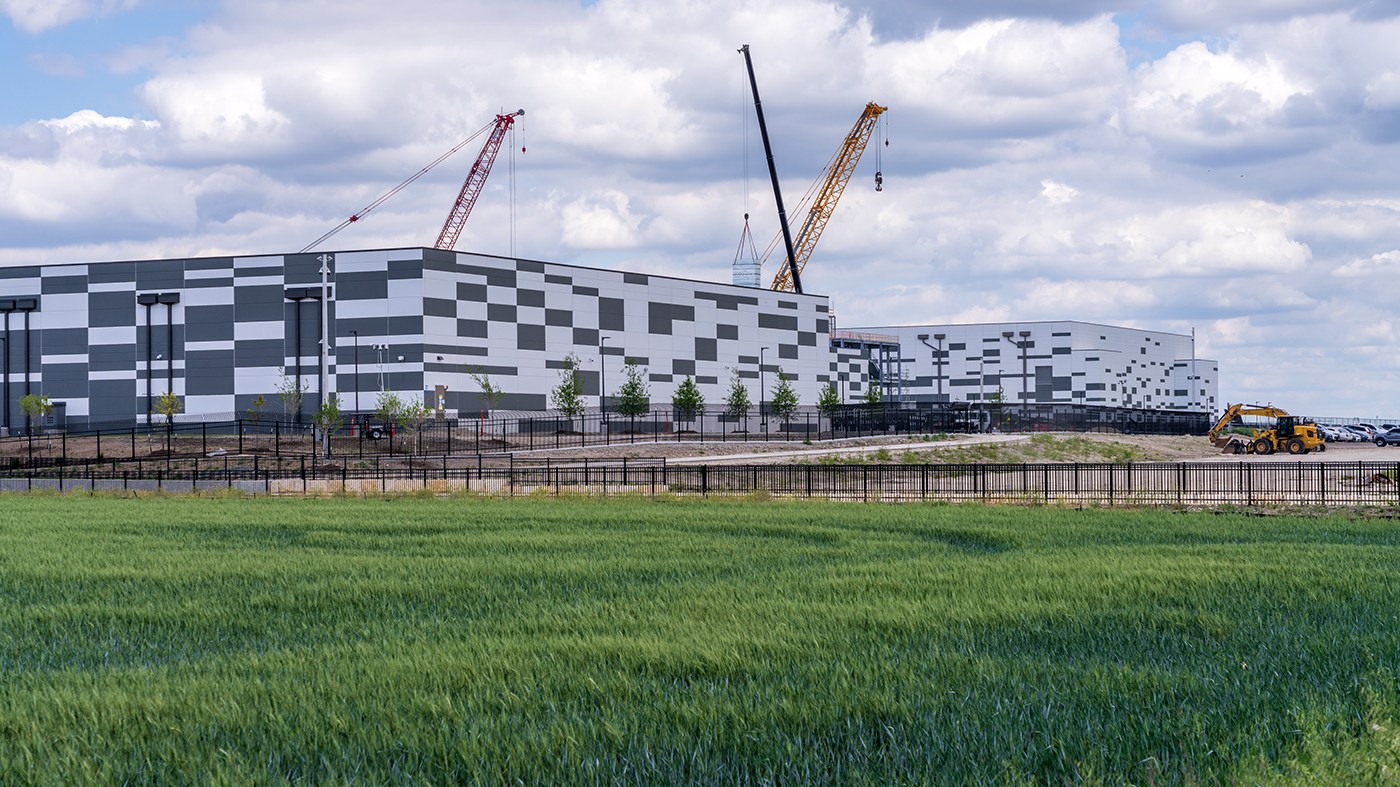
Forever chemicals could be another data center impact
As AI data centers face intense public pushback over issues including their electricity and water use, another potential environmental impact is percolating: the proliferation of forever chemicals.
Data centers can use these chemicals in at least two ways: in their cooling processes and through their more general use of semiconductors.
Supporters say that their use in cooling can reduce data centers’ significant water use, helping alleviate a major problem associated with the rapid build-out of AI infrastructure.
But critics warn that using even more forever chemicals threatens to exacerbate a massive environmental threat.
Forever chemicals are the nickname of a family of chemicals also known as PFAS that can linger in the environment for hundreds or even thousands of years. They have become widespread in both nature and humans because of pollution.
Exposure to certain PFAS has been linked to health issues including cancer, fertility issues, kidney and liver issues and immune system problems.
Both the chemical industry and outside experts say that these chemicals can be used in data centers’ cooling systems.
“A lot of these cooling systems, though, are what we call ‘closed loop,’ meaning that it’s not like you have fluorinated chemicals flowing in and out of the data center. It means you have a closed system,” said Kyle Doudrick, an environmental engineering professor at the University of Notre Dame.
“Now the worry is that no closed system is perfect and that these chemicals leak out over time, which is probably true. … Nothing is 100 percent sealed,” Doudrick added.
The American Chemistry Council, a trade group representing chemical companies, said in a statement to The Hill that “as AI workloads increase the heat generated by servers and semiconductors, some data centers are exploring liquid-based cooling systems,” including those that use PFAS.
Meanwhile, the Trump administration has been broadly supportive of AI and its associated data centers and has sought to cut red tape to speed their construction.
This has included data center chemicals. The Environmental Protection Agency (EPA) said last year that it would fast-track the approval of chemicals for data center use.
The EPA told The Hill that prioritizing these chemicals simply means they are put at the front of the line so that their review starts quickly, but the actual process for assessing their risks is unchanged. The agency said that so far, fewer than 10 chemicals have been fast-tracked, including one PFAS.
Programming note: I’ll be off Monday so there will be no newsletter. We’ll be back Tuesday.
Welcome to The Hill’s Energy & Environment newsletter, I’m Rachel Frazin — keeping you up to speed on the policies impacting everything from oil and gas to new supply chains.
Did someone forward you this newsletter? Subscribe here.
How policy will affect the energy and environment sectors now and in the future:
Virginia Gov. Abigail Spanberger (D) on Friday announced a new proposal to tighten restrictions on data center developments in the Old Dominion.
A federal court has rebuffed the Trump administration’s effort to slash a $7 billion program that seeks to provide rooftop solar power in disadvantaged communities.
President Trump signed new executive orders Thursday aimed at expanding hunting and fishing access in the U.S., rolling back restrictions on these activities.
News we’ve flagged from other outlets touching on energy issues, the environment and other topics :
Trump Is Considering More Data Centers on Public Lands Than Previously Known ( The Washington Sun )
Final turbine installed at offshore wind project off Rhode Island ( WJAR )
Upcoming news themes and events we’re watching:
The House Natural Resources Committee will hold a hearing on energy and mining on Feb. 8 at 10 a.m.
The House Transportation and Infrastructure panel will hold a hearing on impacts of the Waters of the United States rule on Feb. 8 at 10 a.m.
President Trump said Friday that the United States has entered a security agreement with Greenland and Denmark that gives America a bigger say in the Arctic territory’s affairs and expands its military presence in the country. Read more
Vice President Vance zeroed in on Iowa Democratic gubernatorial nominee Rob Sand during a rally in Council Bluffs on Friday, saying he is too far left to lead the state. Read more
Topics in this story
Gathered from external sources. Rights to this text belong to whoever originally published it.