Supreme Court hands Trump another win — a monkey wrench into voting by mail
The court has put additional Trump wins on the scoreboard, leaving the public with little confidence that it is anything other than partisan.
Justice Elena Kagan, an avowed institutionalist, has said it is a “bad rap” that the Supreme Court is in the tank for President Trump. She may have been thinking of the tariff and birthright citizenship cases, in which majorities ruled against his policy initiatives.
But in recent weeks, in the White House ballroom and vote-by-mail cases, the court has put additional Trump wins on the scoreboard, leaving the public with little confidence that it is anything other than partisan.
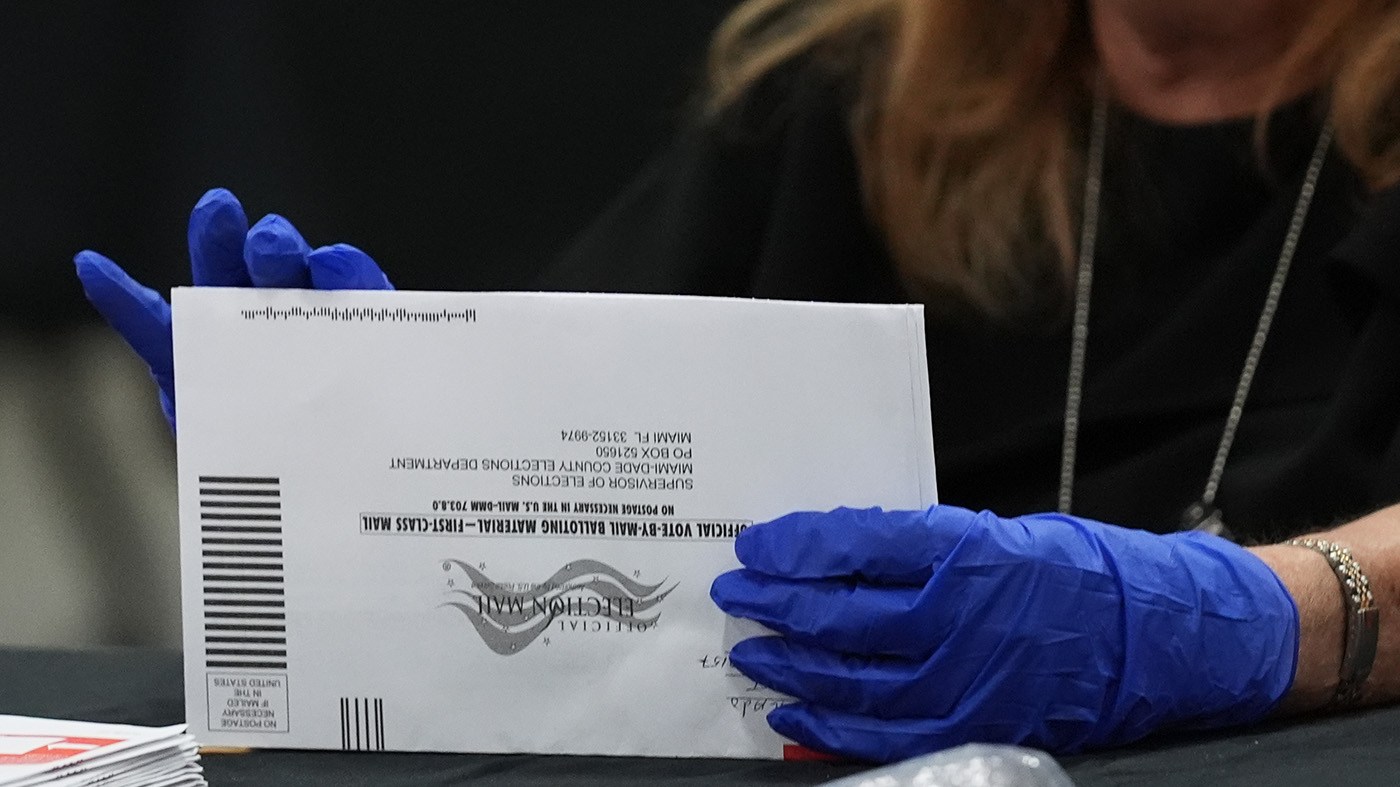
In the latest development, the court paved the way for Trump to proceed with an executive order that directs the states and the Department of Homeland Security to create “state citizenship lists” to eliminate noncitizens from voter rolls. The U.S. Postal Service will decide who gets a mail-in ballot. The problem is that under the Constitution, it is states that are supposed to decide, not the federal government.
Studies show that nearly one in three Americans voted by mail in the 2024 general election, about one in four registered Democrats and one in five registered Republicans. Trump has voted by mail on numerous occasions.
But more recently, voting by mail has become a Trump piñata.
The court’s majority held Trump was likely to “suffer irreparable harm” unless it lifted a temporary freeze imposed by lower courts. Accordingly, in a case brought by 23 blue states against Trump, it paused an injunction entered by Obama-appointed Boston Federal Judge Indira Talwani barring the federal government from applying provisions of the executive order in the November midterm elections.
A separate ruling by the same judge, in another case filed by the League of Women Voters, temporarily restrains the postal service from implementing the executive order. Whether that ruling will withstand Supreme Court scrutiny remains to be seen.
The majority opinion said it was too soon for courts to consider the states’ challenge because the Postal Service order has not yet been finalized — a legal doctrine known as “ripeness.” But a whistleblower later alleged the agency is moving forward with a “secretive, rushed” effort to carry out Trump’s order, which could lead to a “catastrophic failure” in the mail ballot system ahead of the midterms. This means that millions of voters might be unable to receive their ballots in a timely manner, or at all.
The justices stressed that the preliminary order was not a final decision about whether the administration’s order is legal if and when the plans are complete.
The court’s three Democratic appointees dissented. Justice Ketanji Brown Jackson accused the majority of “taking its eye off the ball.” The result, she said , is a “Kafkaesque nightmare.” Although the court has made clear that “even valid election-related legal claims can come too late,” she argued, the majority now indicates “that such claims can also come too early.”
Section one of Trump’s executive order instructs Homeland Security to create lists of adult U.S. citizens in each state and to send those lists to states at least 60 days before an election.
Section three requires states to give the U.S. Postal Service a curated list of voters to whom the states intend to send mail ballots (presupposing that the states will agree to furnish such lists and that the lists are complete). The Trump order directs the postal service to refuse to deliver mail-in ballots to individuals who don’t appear on the lists.
A Court of Appeals declined to pause Talwani’s order while the litigation continued. It stressed that neither the federal government nor 12 red states joining the case on Trump’s side had argued that the executive order was legal.
The majority also found that the government would suffer irreparable harm if Talwani’s order is not paused now. Even if its ruling is eventually reversed, the majority emphasized , it “would come too late for the 2026 midterms.” In contrast, the majority said, the states would not be harmed from putting Talwani’s order on hold, because the executive order doesn’t require them to do anything.
But what about the requirement to produce the lists?
In a dissenting opinion joined by Kagan, Justice Sonia Sotomayor wrote that the government was trying to “have it both ways.” On one hand, she observed, the majority “says it was speculative to think there would be a final rule at all when this suit was filed, seemingly accepting the government’s representation that it may not actually implement the Executive Order.” But the government “insists that it seeks to implement the Executive Order immediately for purposes of establishing irreparable harm.”
Jackson’s dissent brings to mind the “ Purcell principle ” — the notion that, close to election day, federal courts should do nothing rather than issue coercive orders changing the rules for who can vote.
If the court uses Purcell to allow the illegal executive order to survive, the decision, says legal scholar Stephen Vladeck , “would be as indefensible and anti-democratic a ruling as the court has handed down in a very long time.”
James D. Zirin is a former federal prosecutor in the Southern District of New York and a published legal analyst.
Topics in this story
Gathered from external sources. Rights to this text belong to whoever originally published it.