Alito will be Raskin’s biggest obstacle to Supreme Court reform
When it comes to reforms for the U.S. Supreme Court, we may soon see what happens when an irresistible force encounters an immovable object.
When it comes to reforms for the U.S. Supreme Court, we may soon see what happens when an irresistible force encounters an immovable object.
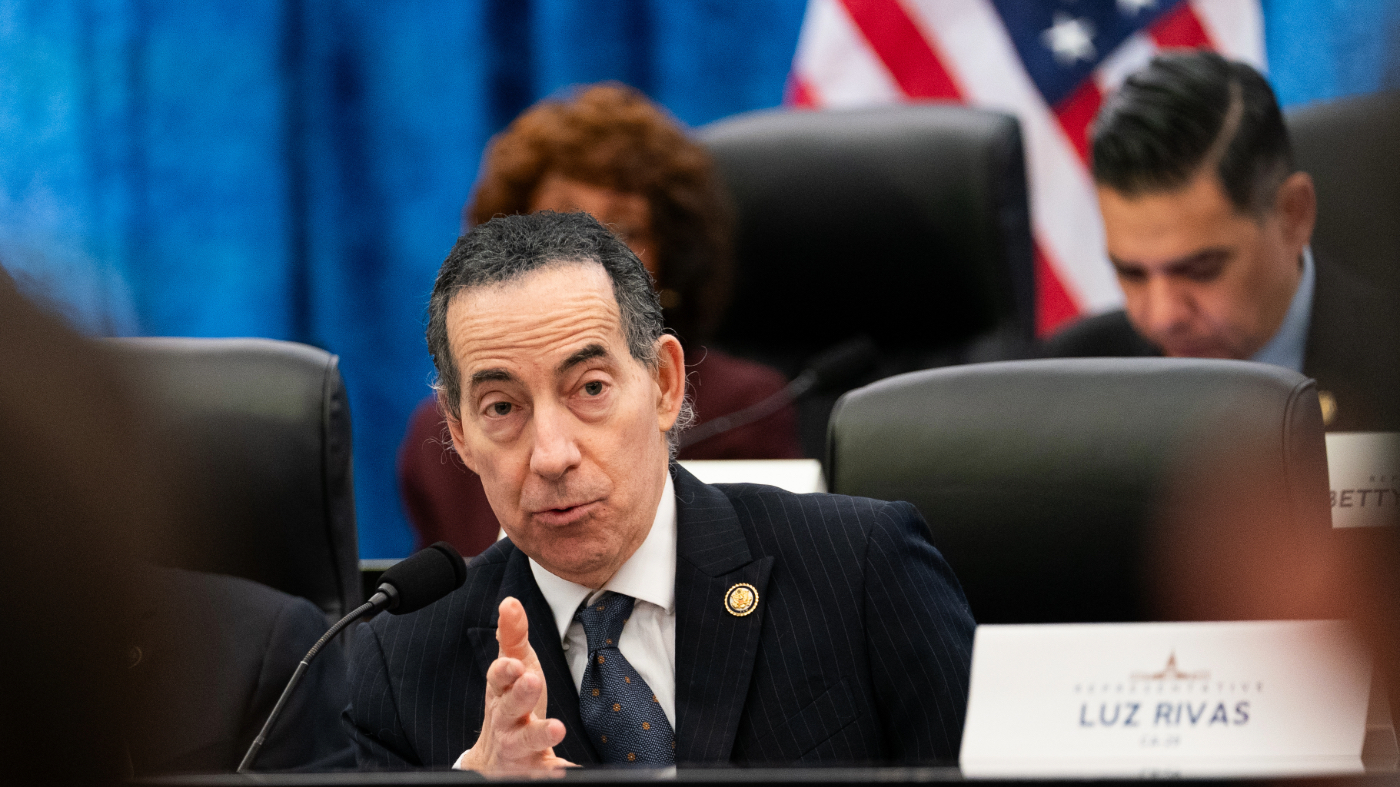
The force, propelled by public sentiment, is Rep. Jamie Raskin (D-Md.), a long-time advocate of judicial reform, who expects to chair the House Judiciary Committee when Democrats control Congress in January. The obstacle, anchored in obduracy, is Justice Samuel Alito, who sees himself as guardian of the court’s absolute authority over its own affairs.
Raskin has articulated an ambitious agenda for the Judiciary Committee, including ethics and procedural reforms for the Supreme Court. There is no shortage of good ideas . Many of them, in an ideal world, would draw bipartisan support.
BestReviews is reader-supported and may earn an affiliate commission.
The committee could begin with the court’s unprecedented use of its shadow docket , also called the interim docket, to issue major policy orders with minimal briefing and little or no explanation of the majority decision.
Under Raskin’s proposed SHADOW Act , the court’s use of the shadow docket would be restricted to cases of “specific, concrete, and irreparable injury,” with an explanation published within seven days.
Although recent shadow docket outcomes have overwhelmingly favored Republicans, often overturning carefully reasoned lower court decisions , the pattern might well be reversed in the future. Everyone would benefit from greater clarity and transparency from the court, in a reform with no actual political valence.
Under the proposed High Court Gift Ban Act , the justices and all other federal judges would be subject to the same $100 limitation per gift as members of Congress. This could be sensitive, given that it was obviously inspired by the extravagant gifts showered on Justice Clarence Thomas by billionaires.
The statute, however, includes an annual exception for “personal hospitality,” tied to the untaxed gift section of the Internal Revenue Code , set at $20,000 per person for 2027 .
The generous cap, which would apply equally to Democratic and Republican appointees, would be an improvement over the current rule , allowing nearly unlimited “ personal hospitality ,” subject only to disclosure. A leading conservative scholar, who otherwise celebrates the court, has suggested “that this lucre is unseemly” and “public servants should not be allowed to do these things.”
The Supreme Court Ethics and Investigations Act would establish the position of ethics counsel, tasked with advising “the justices of the Supreme Court, and their spouses, on matters of judicial ethics,” including financial disclosure, gift acceptance, political activity, conflicts of interest and recusal and the unauthorized disclosure of official court documents.
This statute should be acceptable to Republicans. The ethics counsel would be appointed by the chief justice, and consultations would be optional for the justices. Ethics opinions would only be advisory and would not be disclosed to the public. Limitations on firing the ethics counsel might be a sticking point, but that could be resolved during committee negotiations.
Other reform proposals for term limits or court expansion are far more contentious, and likely to be stalled by Senate filibusters or vetoed by President Trump. These three, however, should not be controversial, as they affect Democrats and Republicans alike.
Alito is against them all in principle. In a 2023 interview with the Wall Street Journal , he flatly declared that “No provision in the Constitution gives [Congress] the authority to regulate the Supreme Court — period.”
That might seem to directly contradict Article III , which establishes the court’s jurisdiction under “such regulations as the Congress shall make,” but Alito wasn’t bluffing. A short while later, he declined to recuse himself in a controversial case, issuing a statement that did not even cite, much less adhere to, the relevant federal disqualification statute.
Alito’s disdain for the authority of what he called “the other more powerful branches” is broad ranging. In a recent speech for the conservative American Enterprise Institute, he inveighed against legislative reforms, including but not limited to court expansion.
Nor does he acknowledge a public right to information about the court. In April 2023, a few months before announcing its adoption of a code of conduct , the Supreme Court unanimously issued a “ Statement of Ethics Principles and Practices ,” noting that “a Justice may provide a summary explanation of a recusal decision.”
Since that day, according to a Westlaw search, Alito has recused himself over 80 times without ever providing an explanation.
Alito’s hubris, which one scholar described as a belief that the court “isn’t, and ought not to be, accountable to any other government institution,” is important because he holds great sway with his colleagues, who evidently agree that their compliance with federal ethics laws is entirely voluntary. The court’s Republican appointees in turn hold great sway with Republicans in Congress.
By resisting even the most common-sense legislation, Republicans may ironically make it more likely that the next Democratic trifecta will pursue court expansion. Changing the court’s composition may be the only way to achieve meaningful reforms, but that is a discussion for another day.
In the meantime, Alito might paraphrase Paddy Bauler, Chicago’s legendary saloonkeeper and alderman: This court ain’t ready for reform.
Steven Lubet is the Williams Memorial Professor at the Northwestern University Pritzker School of Law. He is coauthor of Judicial Conduct and Ethics (5th edition).
Topics in this story
Gathered from external sources. Rights to this text belong to whoever originally published it.