Senators propose bipartisan changes in their chamber’s procedures
Sens. Jeff Merkley and Steve Daines proposed a four-part bipartisan agenda in a Washington Post op-ed aimed at reducing Senate dysfunction by reforming the filibuster and streamlining legislative processes.
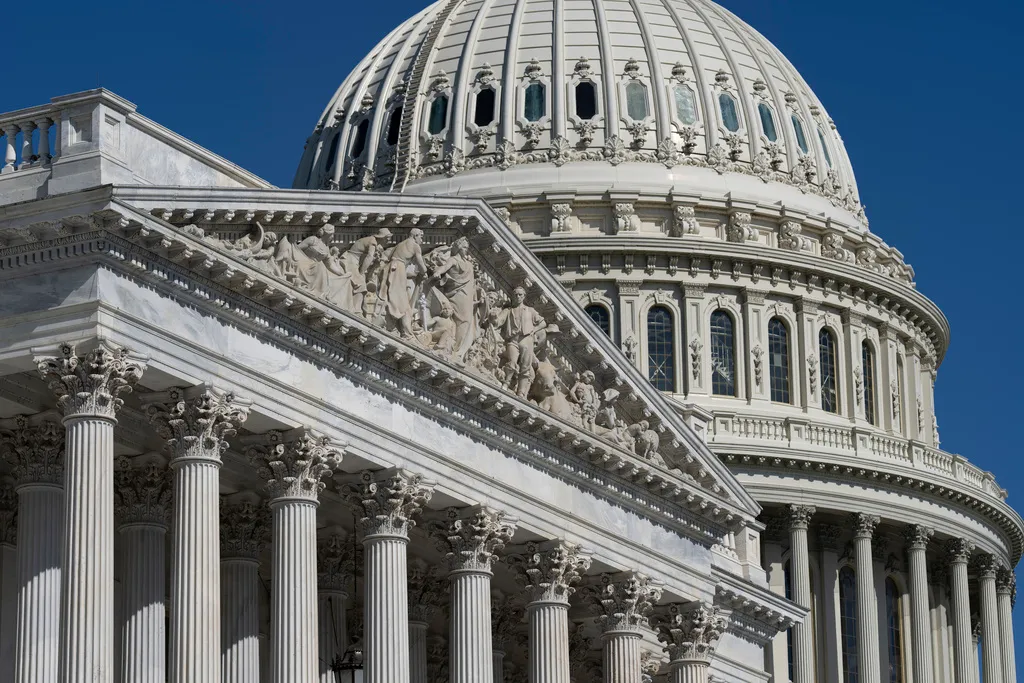
It is often repeated, especially in the House, that the U.S. Senate has only two rules: unanimous consent and exhaustion.
Never mind that the Framers intentionally designed the upper chamber to slow things down. The apocryphal story is that when Thomas Jefferson returned to the U.S. from serving as ambassador to France, he asked George Washington, who had chaired the constitutional convention, “Why the Senate?” The general responded with a question: “Why do you pour your tea into that saucer.” “Why, to cool it,” replied Jefferson. “So too,” said Washington, “do we pour the hot legislation from the House into the cooling saucer of the Senate.”
Still, the convention did not intend for the Senate to be an inert body — an ant frozen in amber. It was purposely designed to take into account the interests of the various states, which originally appointed their senators, and not simply be a porous populist sieve.
Sens. Jeff Merkley (D-Ore.) and Steve Daines (R-Mont.) recently proposed a bipartisan four-part agenda for limbering up the upper body. As they put it, “The Senate needs to be able to keep up to legislate effectively. So we have put together a plan to reward bipartisan cooperation, create more opportunities for senators to offer constructive amendments, and allow the chamber to bring more bills to the floor for public debate.”
Daines, a two-term senator who is retiring in January, would like his valedictory to be a positive contribution to making the Senate relevant again. Merkley, now in his third term, had previously served ten years in the Oregon state House of Representatives, where he rose to be Speaker. Like Daines, he is frustrated with the Senate just sitting around, “cooling it.”
Not surprisingly, at the heart of their plan is a proposal to dilute the controversial action-blocker known as the filibuster. The filibuster allows unlimited debate on the floor until three-fifths of senators vote to invoke cloture, to begin the procedure that ends the debate. Then, after 30 additional hours of talking, the pending measure comes to a final vote.
First, Merkley and Daines propose to “update” the cloture rule by eliminating the super-majority cloture requirement in certain instances, such as on routine procedural matters like the motion to proceed to consideration, and on amendments.
Secondly, they would eliminate the intervening day currently required between when a cloture motion is filed and when it is voted, and also eliminate the additional 30 hours of debate after cloture is invoked.
Third, they would create one day a week when legislation that has been “robustly” reported from a committee with the bipartisan support of at least a majority of each party, can be “fast-tracked” to floor consideration. The process would be initiated by a petition filed by the chair and ranking member of the committee, with the support of 16 senators for consideration of the measure, including specifying in the petition what amendments could be offered. Debate would be limited to six hours followed by final passage by majority vote of the Senate.
Fourth, Daines and Merkley would provide for a two-day fast-track consideration of bipartisan spending bills, allowing for just 20 relevant amendments equally divided between the parties. Again, these bills would be exempt from the 60-vote cloture requirement. This is not terribly radical, as this is already the case for 160 other categories of legislation such as budget resolutions, reconciliation bills, and joint resolutions repealing new federal regulations through the Congressional Review Act.
The Merkley-Daines agenda would enable the Senate to move on a more expedited and bipartisan basis, but it would not totally abolish of gridlock. Bipartisanship is hard to come by these days. So much depends not just on greater cooperation and consensus within committees, but also on party leaders being willing to compromise on what they are willing to give up. Partisan agendas and messaging will continue to dominate, especially in election years.
Some of the bipartisan proposals mimic House procedures already in place — for example, suspension of the rules, discharge petitions and privileged consideration of certain types of measures.
It reminds one of the musical lament in “My Fair Lady:” “ Why can’t a woman be more like a man? ” In this instance, the question is, “Why can’t the Senate be more like the House?” The resounding musical response from the American Founders’ chorus would be, “Because they are different, and you’re not going to change that!”
Ambassador Jefferson’s ghost might even concur: “Vive la difference!”
Don Wolfensberger is a 28-year congressional staff veteran culminating as chief-of-staff of the House Rules Committee. He is author of “Congress and the People: Deliberative Democracy on Trial,” and “Changing Cultures in Congress: From Fair Play to Power Plays.”
Topics in this story
Gathered from external sources. Rights to this text belong to whoever originally published it.