‘I don’t like the prospect of losing’: Supreme Court visa fine argument leaves DOJ worried
Nearly two hours of Supreme Court arguments over whether the Labor Department’s system for fining employers that break visa rules is constitutional left the government sounding concerned. “I don’t like the prospect of losing. I think that’s very obvious. I hope we don’t lose this case, because of the consequences,” Principal Deputy Solicitor General Sarah…
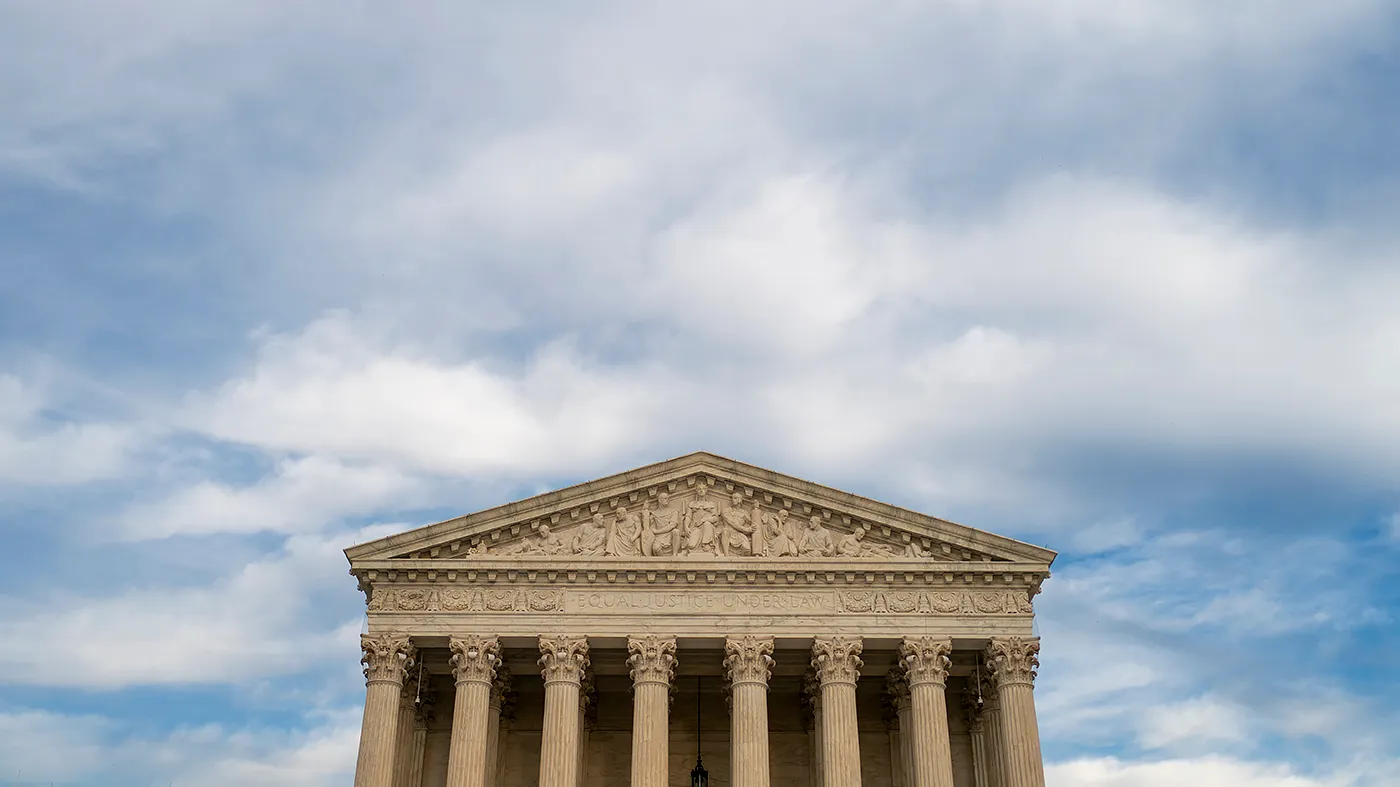
Nearly two hours of Supreme Court arguments over whether the Labor Department’s system for fining employers that break visa rules is constitutional left the government sounding concerned.
“I don’t like the prospect of losing. I think that’s very obvious. I hope we don’t lose this case, because of the consequences,” Principal Deputy Solicitor General Sarah Harris said near the end of Tuesday’s oral argument.
Acknowledging the prospect of a loss, she concluded by telling the justices, “Please tell us now if we need to get legislative affairs on it — right now.”
The Supreme Court is weighing if the executive branch can fine employers for violating the terms of the H-2A visa program , which allows foreigners to enter the country to temporarily perform agricultural work. Certified employers must agree to conditions like providing access to a kitchen or meal plan, suitable housing and transportation to the work site.
Congress has given the Labor secretary authority to initially adjudicate fines for violations, creating what is effectively an in-house court system within the executive branch. New Jersey-based Sun Valley Orchards challenges the setup as unconstitutional, saying it has the right to bring its challenge before a Senate-confirmed federal judge earlier.
Several of the Supreme Court’s conservatives expressed sympathy with those arguments during the nearly two-hour session.
“Why should we read that to actually allow you to set up a whole court system?” Justice Neil Gorsuch asked Harris at one point.
Although the Constitution assigns the judiciary the power to decide many legal claims, the government’s defense relies on Congress’s ability to constitutionally assign the executive the power to adjudicate cases involving “public rights.” Supreme Court precedent has long recognized immigration as one. But the farm says that exception is only focused on the power to control who can cross the border.
“That is a far cry from a case about labor issues at a farm in New Jersey with a mix of foreign and domestic workers,” said Rob Johnson, an attorney at the Institute for Justice who represents the farm.
As Harris defended the H-2A visa program fines as being covered by the exception, she faced tough questioning from several justices on that front.
Justice Clarence Thomas suggested early on that “you can’t really rely on immigration as a basis for this.”
Chief Justice John Roberts told her, “It seems to me you’re still trying to extend that broad authority beyond the justification for its application.”
Sun Valley Orchards challenges the Labor Department’s demand that it pay $211,800 in civil penalties and nearly $345,000 in back wages for various violation. Court documents show the investigation found the company made false promises about kitchen access, transported workers in buses driven by unlicensed drivers, failed to maintain sufficient hot water in bathrooms and attempted to unlawfully make workers’ waive their rights.
The questioning left some of the liberal justices wondering what a loss for the government would look like.
“So what’s the best way for you to lose?” Justice Sonia Sotomayor asked Harris, eliciting laugher in the courtroom. The justice insisted she wasn’t suggesting that’s how the case would fall.
“But,” she followed up, “if you were to lose, what would be the most narrow way?”
Harris repeatedly throughout the argument asked the justices to at least draw clear lines for future cases.
“It would be a big deal for the government to lose, but an even bigger deal would be to have a mess,” she said.
Topics in this story
Gathered from external sources. Rights to this text belong to whoever originally published it.