The 6 House races that will determine Democrats’ final majority
Democrats got their dream of the House majority in the midterms, but their exact numbers in the lower chamber are still in flux with recounts and runoffs underway in some of the country’s closest contests. The party has already hit 257 seats in the House, and recounts rarely change results — but the runoff races…
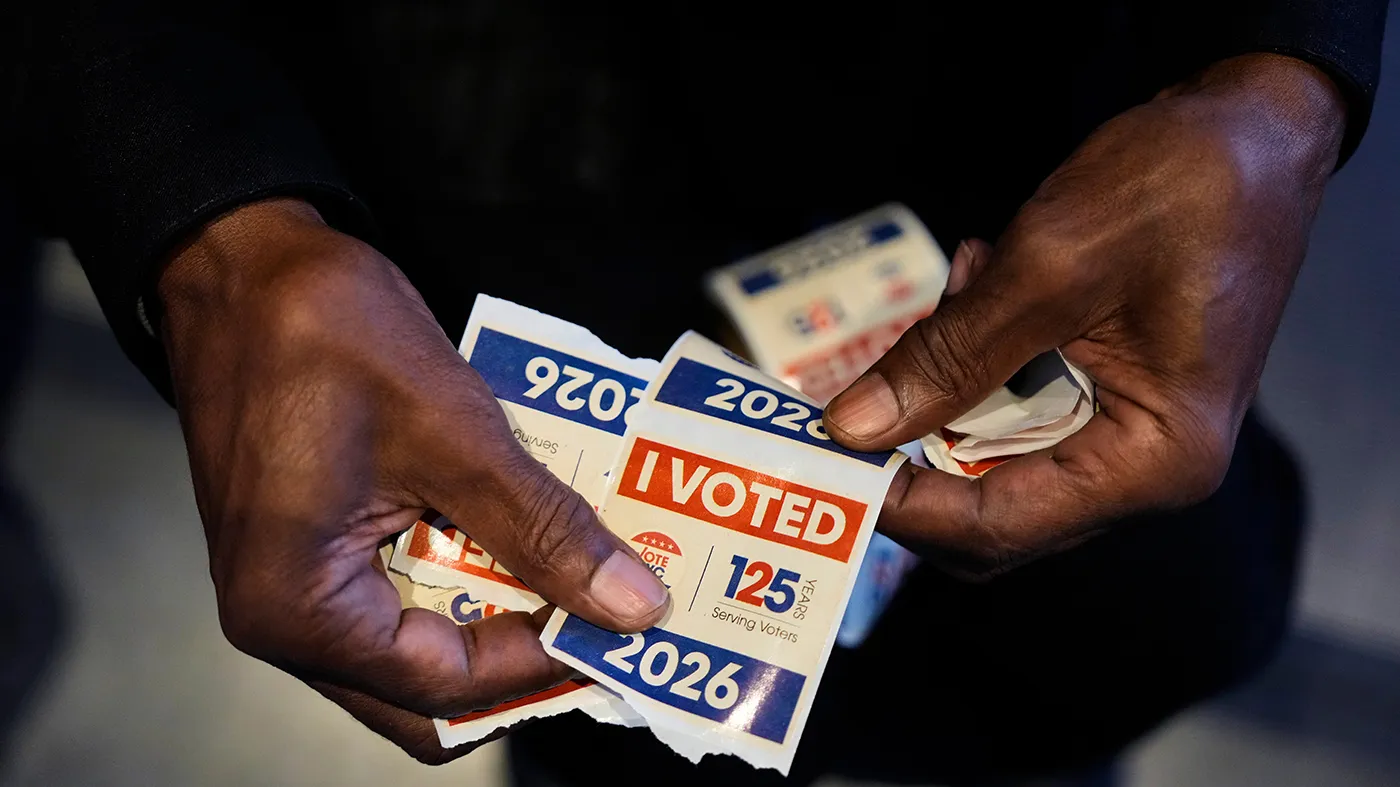
Democrats got their dream of the House majority in the midterms, but their exact numbers in the lower chamber are still in flux with recounts and runoffs underway in some of the country’s closest contests.
The party has already hit 257 seats in the House, and recounts rarely change results — but the runoff races and uncalled contests could push Democrats up to a 260-seat advantage.
Two recounts have been requested for House seats in North Carolina — one by incumbent Rep. Virginia Foxx (R) and another by the Democrat challenging Rep. Pat Harrigan (R). In Minnesota, Rep. Brad Finstad (R) is seeking a recount as he trails by 300 votes.
Two more House races in Louisiana are headed to December runoffs, and a trio of races in Tennessee and New York are the last House contests yet to be projected by Decision Desk HQ (DDHQ).
Here’s what to watch, with final results expected in the next few days and weeks:
Close races were no rare occurrence in this year’s highly competitive midterms, but some are tight enough that candidates are requesting recounts, extending the suspense about Democrats’ final lower chamber numbers.
Foxx filed for a recount as she trails Democratic rival Chuck Hubbard by just a few hundred votes in North Carolina’s 5th District, which she’s represented for more than 20 years.
DDHQ has yet to project the race, but state totals showed Hubbard ahead by around 300 votes with all precincts reporting.
In North Carolina’s 10th District, Democrat Ashley Bell requested a recount as she trailed incumbent Harrigan by around 2,000 votes.
DDHQ has projected the race for Harrigan, but the Republican said he respected Bell’s right to request a recount even as he expressed confidence that the outcome would hold.
Both races are within the 1 percent margin that makes them close enough for a recount under Tar Heel State law.
The North Carolina recounts are expected to be completed by Nov. 23, and the state’s Board of Elections will meet to certify the election results on Nov. 24.
In Minnesota, Rep. Brad Finstad (R) is seeking a recount after Democrat Jake Johnson declared victory in the 1st District. DDHQ has not projected the race , but Johnson leads Finstad by around 320 votes — making the state’s cutoff for a recount.
The recount is expected to take place during the week of Nov. 30-Dec. 4.
Could the recounts make a difference? Experts are skeptical.
Margins “must be exceptionally close” for a change in outcome, according to a 2024 report from FairVote . Of nearly 7,000 statewide elections analyzed from 2000-23, only 36 recounts were attempted, and only three of those — all with initial margins less than 0.06 percentage points — changed the outcome.
“The margins we’re talking about in these two close races in Minnesota, North Carolina, are actually not as close as what we usually see if a recount realistically is going to change, shift who’s leading,” said Geoffrey Skelley, chief elections analyst at DDHQ.
Skelley didn’t rule out that the recounts would change the game, but stressed it would be “very unusual.”
Primary races for the House in Louisiana were postponed this year after the Supreme Court declared the state’s congressional map unconstitutional, scrambling the redistricting fight and the political calendar.
Nonpartisan House primaries, in which all candidates appeared on the ballot regardless of party, were held on Nov. 3 , which was general Election Day for other races in the state. Candidates who got a clear majority won outright — but if not, the top two finishers were headed to a Dec. 12 runoff.
Democrat Patricia Moore and Republican Gabe Firment, both state lawmakers, were separated by less than a percentage point in the race to replace Rep. Julia Letlow (R-La.) and represent the 5th District, which includes parts of northeastern and central Louisiana. Letlow left her seat to launch her successful bid for the Senate.
In the 6th District to the northwest of Baton Rouge, Democrat Chauna Banks and Republican state Sen. Blake Miguez were also headed to a runoff, separated by some 300 votes.
Republicans are favored in both seats after redistricting dramatically reshaped the state in the GOP’s favor — but it remains to be seen whether Democrats’ blue wave could deliver a surprise in the Pelican State.
The Louisiana seats are “more Republican-leaning than anything Democrats were managing to flip” in the midterms, Skelley said.
“It would be very remarkable if a Democrat could actually win in December,” he said of the Louisiana contests. “But you know, I guess it’s a low turnout race, so I’m not going to rule it out entirely.”
A handful of House races are the last holdouts still uncalled more than two weeks after Election Day.
In addition to the uncalled races for Foxx’s North Carolina seat and Finstad’s Minnesota seat, the results are unclear in a pair of New York contests for the House.
On Long Island, Rep. Nick LaLota (R) leads Democrat Christoper Gallant for New York’s 1st District by less than 7,000 votes, with 93 percent of the vote counted as of Nov. 5. The Associated Press has called the race for LaLota, but it has yet to be projected by DDHQ.
In the Empire State’s 2nd District, Rep. Andrew Garbarino (R) was leading Democrat Patrick Halpin by almost 8,000 votes, with 85 percent of the vote counted as of Nov. 18. AP has also called this race for the incumbent, but DDHQ has yet to project.
DDHQ forecasts that both races will go to the GOP, but there are outstanding absentee ballots drawing out the wait for the race call.
One more House race remains in Tennessee, where Democrat Victoria Broderick leads Rep. Scott DesJarlais (R-Tenn.) by 277 votes for the 4th District.
DesJarlais conceded to Broderick this week, but DDHQ has yet to project the race as some counties still have to certify their results.
In a district that went to Trump by 24 points in 2024 — and where DesJarlais last won reelection by more than 40 points that same year — Broderick is poised to “pull off really the biggest upset of the election,” Skelley said.
All told, if the recounts, runoffs and other uncalled races across the country go as expected, the final tally in the House will be a 260-seat majority for Democrats and 175 seats for the GOP.
Topics in this story
Gathered from external sources. Rights to this text belong to whoever originally published it.