Why high defense spending is bad for America
Secretary of Defense Pete Hegseth recently testified before the Senate that, should Congress fail to pass the entire requested $1.5 trillion defense budget, it would put the United States in danger. Contrary to Hegseth’s testimony, however, this threat inflation and oversized defense budget only makes America weaker.
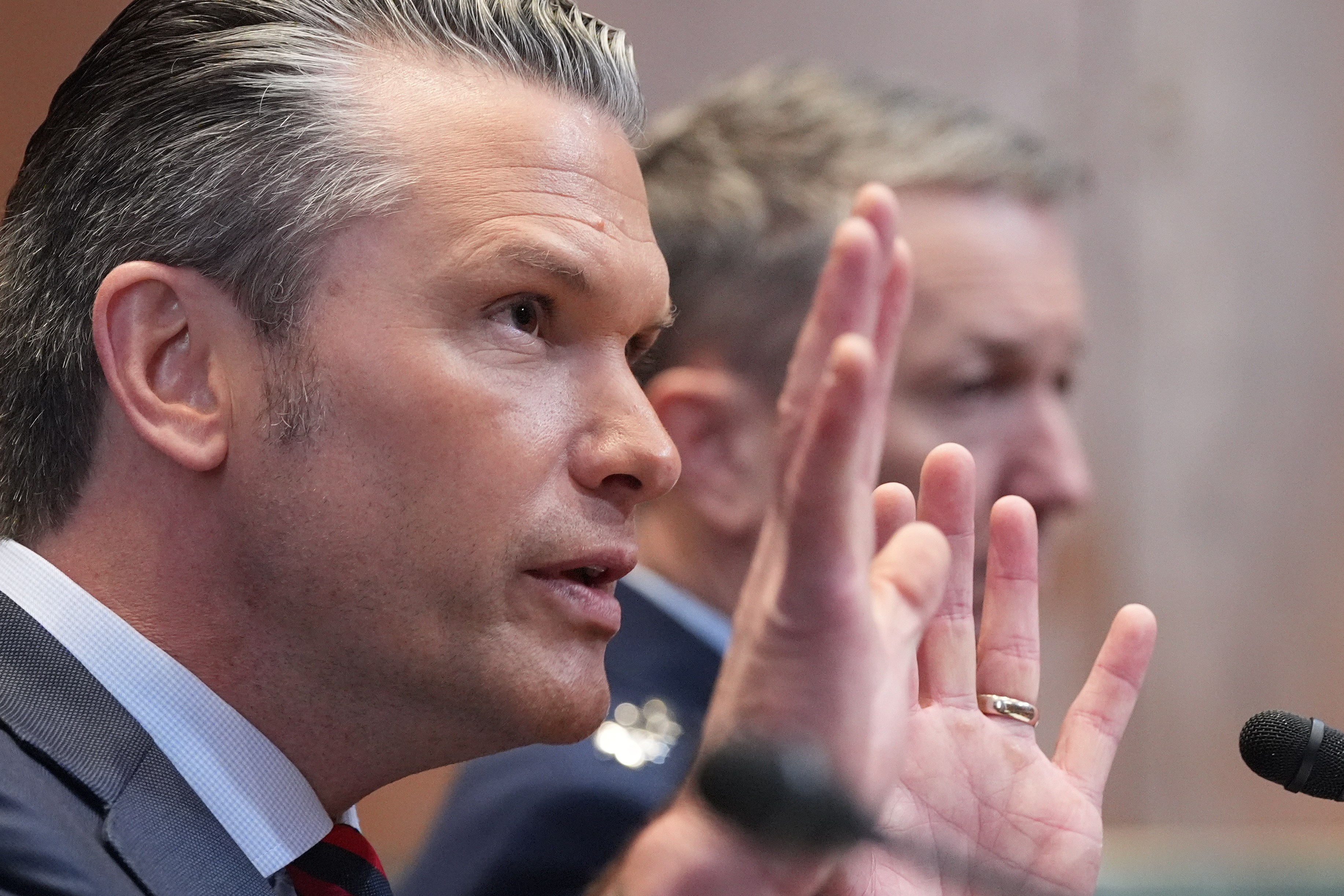
Secretary of Defense Pete Hegseth recently testified before the Senate that, should Congress fail to pass the entire requested $1.5 trillion defense budget, it would put the U.S. in danger .
Hegseth justified higher defense spending by inflating the threats America faces and presenting worst-case scenarios. That same week, the House passed the fiscal 2027 National Defense Authorization Act as well as the Trump administration’s latest reconciliation bill.
Contrary to Hegseth’s testimony, however, this threat-inflation and oversized defense budget only makes America weaker.
For starters, it fails to align spending to America’s strategic goals. Lawmakers claim that with all the threats the U.S. is up against, it cannot risk cutting any weapons or defense programs. This budget does not even cut systems like the B-1B bomber, an aircraft with no stealth capabilities and a higher operational cost than the B-52, or the Minuteman III, a nuclear missile that is decades old and increases crisis instability between nations on account of its first-strike vulnerability. This keeps the U.S. wasting money on weapons that don not strengthen the nation’s security.
On top of that, policymakers want to add even more unneeded weapons to America’s arsenal. The Pentagon seeks to build battleships , a naval vessel disused since World War II, and is pushing for development of a national missile defense that many nuclear experts deem both wasteful and dangerous , as it would incentivize America’s adversaries to launch a surprise attack in order to have a better chance at their missiles getting through. Some of these billions put toward unneeded weapons could instead be used for useful military investments, like munitions production .
The Trump administration waves off the long-term costs — namely, the interest that comes from federal borrowing. This makes it seem like an increased defense budget doesn’t affect the average American, allowing policymakers to avoid increasing taxes or making immediate cuts to social services. But this just punts the costs to future generations. The U.S. already borrowed money to pay for America’s Global War on Terror and the Iraq War ; keeping the tab running will only add to this deferred cost, eventually forcing citizens to choose between massive cuts to social programs and tax hikes or cutting defense programs to help pay it off.
President Trump’s colossal defense budget will only degrade the nation’s economic strength and wellbeing. Defense spending is the most economically wasteful of all federal spending. Advocates for higher defense spending argue that the U.S. sets aside only a small percentage of its GDP to pay for defense, making more spending possible. But this framing leaves out the fact that these billions of dollars were not needed in the first place and could have been saved for higher priorities.
So no, Hegseth and Trump’s high defense budget will not strengthen the U.S. Quite the opposite— it will weaken Americans’ economic security, weaken America’s economic power, and weaken the country’s national security. Instead, the Trump administration and Congress should cut the defense budget, and with it, America’s wars and overseas commitments.
This would avoid costly conflicts and commitments, keep the U.S. secure and strengthen its economic power. And economic strength is important for a country’s security . In the event of a conflict, money is needed to build weapons, and decent roads and railways are required to transport military equipment and supplies across the country. Rather than waste money on unnecessary programs, the U.S. government must get America’s house in order and serve the people.
Benjamin D. Giltner is a defense and foreign policy analyst at the Cato Institute .
Topics in this story
Gathered from external sources. Rights to this text belong to whoever originally published it.