Prediction markets’ regulation draws closer to Supreme Court
Prediction markets have arrived at the Supreme Court’s doorstep. New Jersey this past week urged the justices to settle how prediction markets should be regulated, and a split among the nation’s appeals courts is increasing expectations that they may be inclined to get involved. The Trump administration is trying to push states out, hoping to keep prediction markets under…
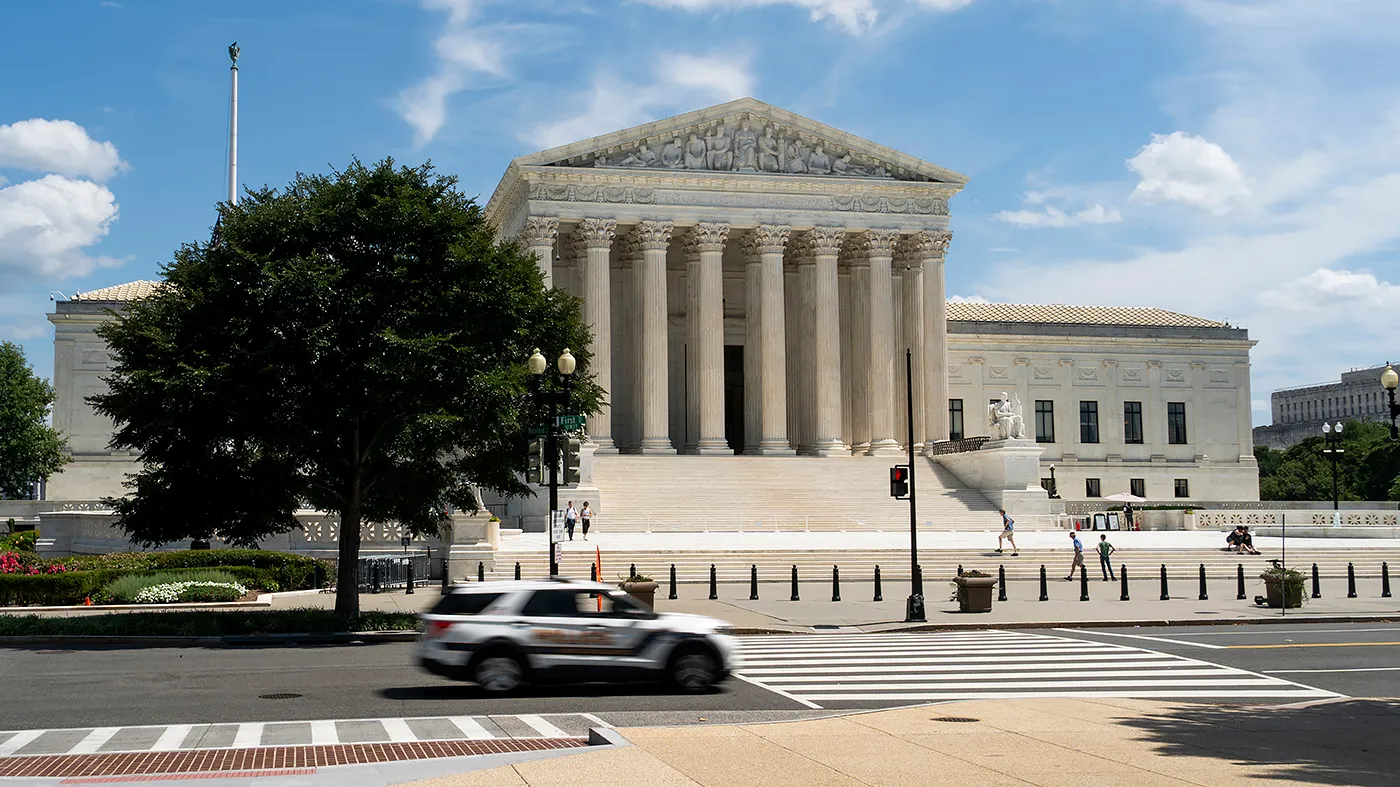
Prediction markets have arrived at the Supreme Court’s doorstep.
New Jersey this past week urged the justices to settle how prediction markets should be regulated, and a split among the nation’s appeals courts is increasing expectations that they may be inclined to get involved.
The Trump administration is trying to push states out, hoping to keep prediction markets under federal control. Leading platforms like Kalshi and Polymarket agree.
But a bipartisan group of states wants to be the overseers. They say the new platforms are no different from regular gambling, which they regulate with broad control.
“It’s not just blue states or Democrats who are being opposed by the Trump administration. It’s really a states’ issue,” said Dylan Hedtler-Gaudette, acting vice president of policy and government affairs at the Project on Government Oversight.
As trading volume on prediction markets explodes, it has created a massive battle among casino industry players, states, Native American tribes and federal regulators.
New Jersey has now teed up the issue for the Supreme Court for the first time after the U.S. Court of Appeals for the 3rd Circuit, in a 2-1 vote, blocked the state from enforcing its sports gambling laws against Kalshi, finding it was likely under the control of the federal Commodity Futures Trading Commission (CFTC).
The Supreme Court receives thousands of requests to take up cases annually, and it rejects the vast majority. But in its choosiness, the court looks to see whether appeals courts have entered decisions in conflict with one another on important matters.
A split is already emerging in the prediction markets’ fight as judges mull cases set to impact operations in Atlantic City and Las Vegas.
Breaking with the appeals panel in New Jersey’s case, the U.S. Court of Appeals for the 9th Circuit sided last week with Nevada regulators. It ruled the state can regulate Kalshi’s sports contracts.
One source close to the litigation told The Hill that together, the two decisions mean the issue will “probably” head to the Supreme Court.
“But it’s more of a mess than it ever was because they’re agreeing on some things and they’re disagreeing on others,” the source said.
Many legal observers agree the justices at some point will feel compelled to get involved. But some aren’t so sure New Jersey’s case is the right one, suggesting the court may want the issue to percolate more in lower courts.
“I think, ultimately, the Supreme Court will probably want to see a little bit more of the social impact of this,” said Howard Fischer, a partner at Moses Singer and a former Securities and Exchange Commission prosecutor.
At the center of the battle is whether Congress preempted states from regulating prediction markets by giving the CFTC exclusive jurisdiction to regulate “swaps” on its registered markets. Kalshi and other platforms say their sports wagers are exactly that.
But New Jersey and other states say that the platforms are just like the brick-and-mortar gambling businesses they have long had legal authority to regulate.
“Different States have made different choices on that score,” New Jersey wrote in its petition. “But Kalshi insists on a different approach—one where federalism has no place, and where the sports gambling laws must be the same in New Jersey as in Utah, so long as the company self-certifies its sports bets with the CFTC.”
Fischer said states are more equipped to regulate prediction markets, as they’ll deploy more personnel.
“Rather than have dedicated departments in every state with 10, 20, 30 or more people, you’re going to have one, or two, maybe, people at the federal level who may or may not be former employees of the prediction markets,” he said.
New Jersey’s efforts have bipartisan support. Forty-four state attorneys general sent a comment letter to the CFTC this summer saying it lacked authority to assert control over sports bets on prediction markets.
“The CFTC has long understood that States are best positioned to regulate gambling. But today, the CFTC has changed course at breakneck speed,” the letter reads.
It puts a broad swath of Republican states at odds with the Trump administration. The president has publicly called for the CFTC to regulate prediction markets. Donald Trump Jr., the president’s son, has a financial stake in Kalshi and last year joined the platform as a strategic adviser .
Only six states did not join the letter: Florida, Georgia, Missouri, New Hampshire, North Dakota and Texas.
Fischer pointed to how states gain significant tax revenues from gambling.
“If that is going to be taken away from the states, no state attorney general or governor — no matter what their political leanings — wants to lose some component of their budget,” Fischer said.
As New Jersey heads to the Supreme Court, Kalshi is not allowing customers to place wagers on its case. A source familiar with the decision said it was a voluntary move by the company and not done to comply with any legal requirements.
Polymarket, however, allows people to place wagers on whether the high court will take up a sports event contract case by the end of the year.
The court is set to consider New Jersey’s request to take up the issue at a closed-door conference once the justices return for their new term in a matter of weeks.
The legal battle does not directly concern insider trading. But as it inches closer to the Supreme Court, the issue has dominated.
On Aug. 31, Kalshi announced it was issuing its first lifetime ban , sanctioning former Rep. George Santos (R-N.Y.), who was also fined after placing bets on whether he would attend Trump’s State of the Union address while posting on social media about it.
The CFTC recently announced the White House teleprompter operator who placed online bets on Trump’s speeches would pay roughly $172,000. And in April, a U.S. Army soldier was charged for allegedly using his knowledge of the top-secret operation to capture former Venezuelan President Nicolás Maduro to place bets on Polymarket .
Hedtler-Gaudette said he was glad that platforms have begun taking action, but it isn’t appropriate to leave those decisions to self-policing.
“You want to know that the people who are on taxpayers’ dimes — essentially, government officials — are doing their job in the public interest, and they’re not using their privileged positions to enrich themselves and their friends and family,” he said.
“I think the model of trying to self-police just isn’t really effective and never has been effective in any industry,” he said.
Topics in this story
Gathered from external sources. Rights to this text belong to whoever originally published it.