Surprise Russia diesel deal spurned by growing number of GOP senators
A growing number of Senate Republicans are criticizing President Trump’s surprise deal with Russian President Vladimir Putin to import 2.2 million tons of Russian diesel into the U.S. market. At least eight Republican senators have expressed public concerns over the deal, which would pave the way for the United States to import hundreds of thousands…
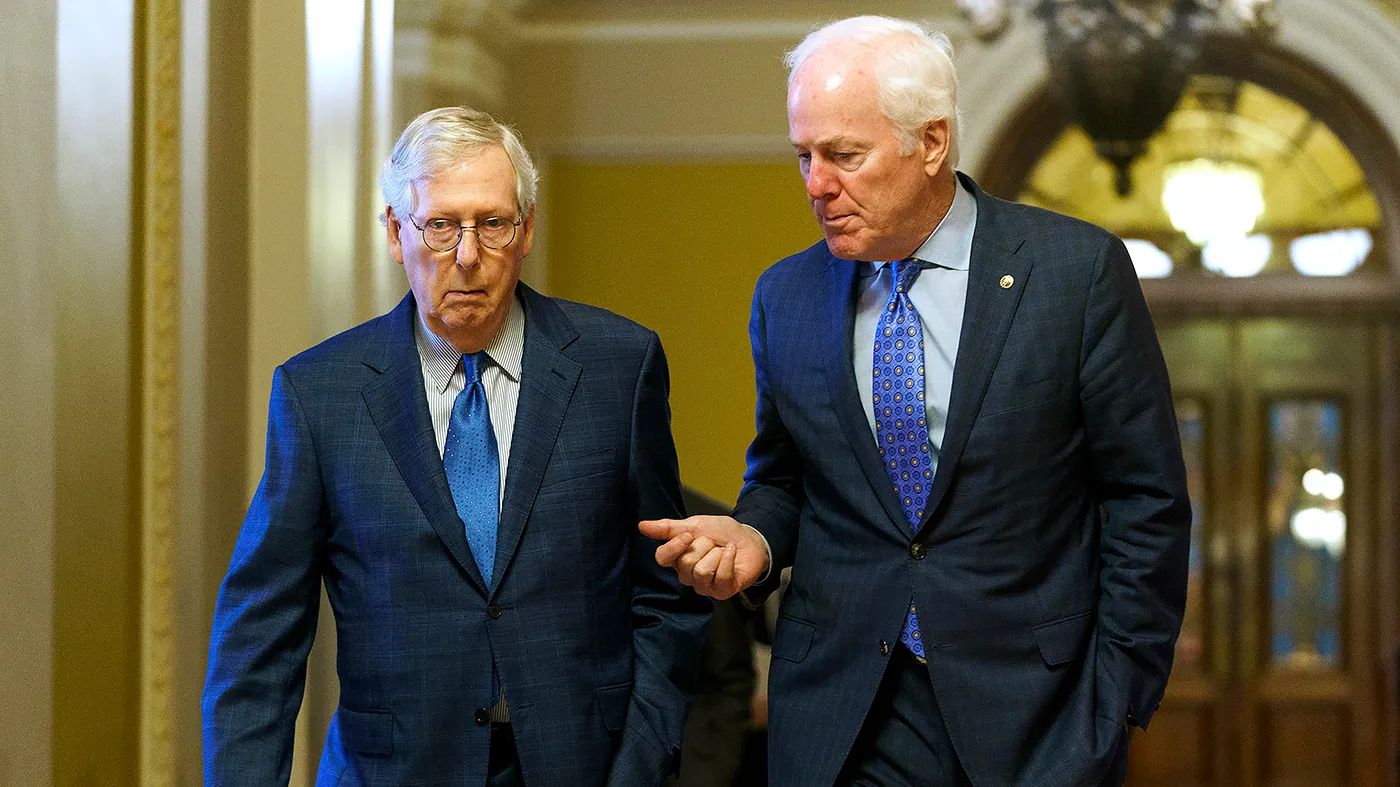
A growing number of Senate Republicans are criticizing President Trump’s surprise deal with Russian President Vladimir Putin to import 2.2 million tons of Russian diesel into the U.S. market.
At least eight Republican senators have expressed public concerns over the deal, which would pave the way for the United States to import hundreds of thousands of metric tons of Russian diesel over the next two months.
Trump declared on Truth Social that the “highly successful discussion” with Putin will result in rapidly falling diesel prices, but Republican senators are warning the impact on the economy will be “negligible” while voicing skepticism about whether it will materialize at all.
GOP Sens. Mitch McConnell (Ky.), John Cornyn (Texas) and Alan Armstrong (Okla.) on Tuesday joined other GOP senators critical of the diesel deal by signing a letter to Trump calling it “a gift to our adversary and a betrayal of our allies.”
The bipartisan letter, which Sens. Thom Tillis (N.C.), Susan Collins (Maine) and Lisa Murkowski (Alaska) also signed, urged Trump to rescind the deal and predicted it would have a “negligible” impact on fuel prices.
“The deal you struck with President Vladimir Putin on October 9th will not achieve just ends, nor will it benefit Americans,” they warned, predicting that lifting sanctions on Russian diesel “only provides Putin with more fuel to finance his war machine and enables Russia to continue its brutal attacks on Ukrainian civilians.”
Democratic Sens. Richard Blumenthal (Conn.), Jeanne Shaheen (N.H.), Dick Durbin (Ill.), Sheldon Whitehouse (R.I.), Jack Reed (R.I.) and Chris Coons (Del.) also signed the letter.
The lawmakers warned that allowing U.S. dollars to flow to Russia would “undoubtedly finance its desired war of attrition and advance its security cooperation with China, Iran and North Korea.”
They said the funding could even “endanger servicemembers operating overseas in support of Operation Epic Fury,” referring to the military conflict with Iran.
The Middle East Institute in June reported that Moscow has provided Tehran with satellite targeting data for strikes on U.S. forces. Russia also has provided Iran with fiber-optic drone technology and amplified Iranian propaganda, it said.
“I wasn’t overly delighted with the deal on diesel, and I think there’s not a very high likelihood that it will actually be consummated and be enacted,” Senate Armed Services Committee Chair Roger Wicker (R-Miss.) said at the Warsaw Security Forum. “I think there’s a much better way in the near term to lower energy prices and also to provide some security.”
Economic experts say Trump’s deal to immediately import 2.2 million tons of Russian diesel would supply less than a day’s worth of the nation’s diesel consumption.
“The announced release of fuel is a drop in the bucket in terms of U.S. domestic demand and even less in terms of global demand. It may not even be new supply on the global market. Russian product often gets out,” said Neale Mahoney, an economics professor at Stanford University.
“Any energy economist would agree that it would have a negligible impact on the prices we face domestically and we’re seeing that right now in the markets. Prices for diesel haven’t really noticeably decreased since the announcement,” he said.
The national average price of diesel is now $6.28 per gallon, about 25 cents lower than the high mark of $6.53 per gallon in September.
A former senior Republican Senate staffer said the deal came as a shocking development without a clear strategic gain for the United States.
“The Russia diesel deal makes no sense politically. It won’t bring down fuel prices before the midterms and only reminds voters that Trump hasn’t ended the Ukraine war as he said he would on Day 1,” the former senior GOP aide said.
The aide said Republican senators are now paying a political price for not pushing back harder against Trump earlier this year when he launched the conflict against Iran without prior consultation or advance notification with members of Congress.
“The Iran war is what sent fuel prices soaring, and they are toxic for the Republican brand going into the midterms,” the former senior GOP aide said.
“Senate Republicans have only themselves to blame for failing to ask questions back in February about the war and about who the hell convinced the president it was a good idea to go in there with no endgame,” the source added.
A White House spokesperson said the president’s diesel deal will “help lower prices for farmers, truckers, and families across the nation.”
“President Trump is always willing to look anyone in the eye to deliver wins for the American people – which has resulted in historic trade agreements with countries around the world and major investments into our economy,” said Anna Kelly, the White House spokesperson.
She said the president is “simultaneously” urging “both sides of the Russia-Ukraine conflict to stop strikes against refineries, which are driving up costs and hurting American consumers.”
Collins, Murkowski, Tillis and Sen. John Curtis (R-Utah) issued a joint statement with Democratic colleagues on Sunday notifying Trump that Congress “explicitly banned Russian energy imports in 2022 to prevent American dollars from financing Putin’s brutal war against Ukraine.”
The senators argued that Trump’s decision to allow Russian diesel imports into the United States ran “directly counter” to the 2022 law because the president “failed to consult with Congress or submit any explanation to justify its decision as required by statute.”
Few Republican senators are speaking up to defend the deal, though one Trump ally, Sen. Bill Hagerty (Tenn.), told reporters Tuesday at the Capitol that Trump is putting the nation first.
“I think that the president’s got energy security and economic security front-of-mind right now. He’s focused on Americans first,” Hagerty said.
Pressed on whether the decision to allow an estimated $400 million in new revenue to flow to Russia is wise at a time when Russian forces continue to strike Ukrainian energy infrastructure and civilian targets, Hagerty noted other sanctions remain in place.
“Certainly, we’ve got a number of sanctions in place and a number of efforts to bring Putin into alignment,” he said.
Ukrainian President Volodymyr Zelensky on Monday said Russia violated a ceasefire by striking at least six energy targets across Ukraine.
He warned that allowing Russia to collect more revenue from energy sales would fund “its war machine.”
The Republican senators who signed the bipartisan letter to Trump on Tuesday urged him to withdraw the Treasury Department’s general license to allow Russian diesel imports into the country and instead use the authorities under the Lindsey O. Graham Sanctioning Russia and Iran Act to tighten sanctions on countries that buy Russian energy products.
“These authorities require you to apply economic pressure on Russia and the chief enablers of its war, in particular China, and thereby enhance your negotiating position to bring a swift end to this ruinous conflict,” they wrote.
Topics in this story
Gathered from external sources. Rights to this text belong to whoever originally published it.