The cameras are already everywhere, but no one wrote the rules
No federal legislative framework governs law enforcement’s use of these systems.
I spent 20 years in law enforcement. I commanded the Investigative Services Division, worked narcotics and served on the Organized Crime Drug Enforcement Task Force with the FBI and DEA.
I’ll begin where my fellow skeptics usually will not: an automated license plate reader is a good tool. It does quickly what detectives once did slowly or never manage to do at all. It places a specific vehicle at a specific place at a specific time, and has recovered stolen cars, located missing children and put shooters in handcuffs.
The tool is not the problem. The absence of any national rule governing it is.
In September, the Congressional Research Service stated the situation plainly . No federal legislative framework governs law enforcement’s use of these systems. Instead, a patchwork of state law and agency policy exists.
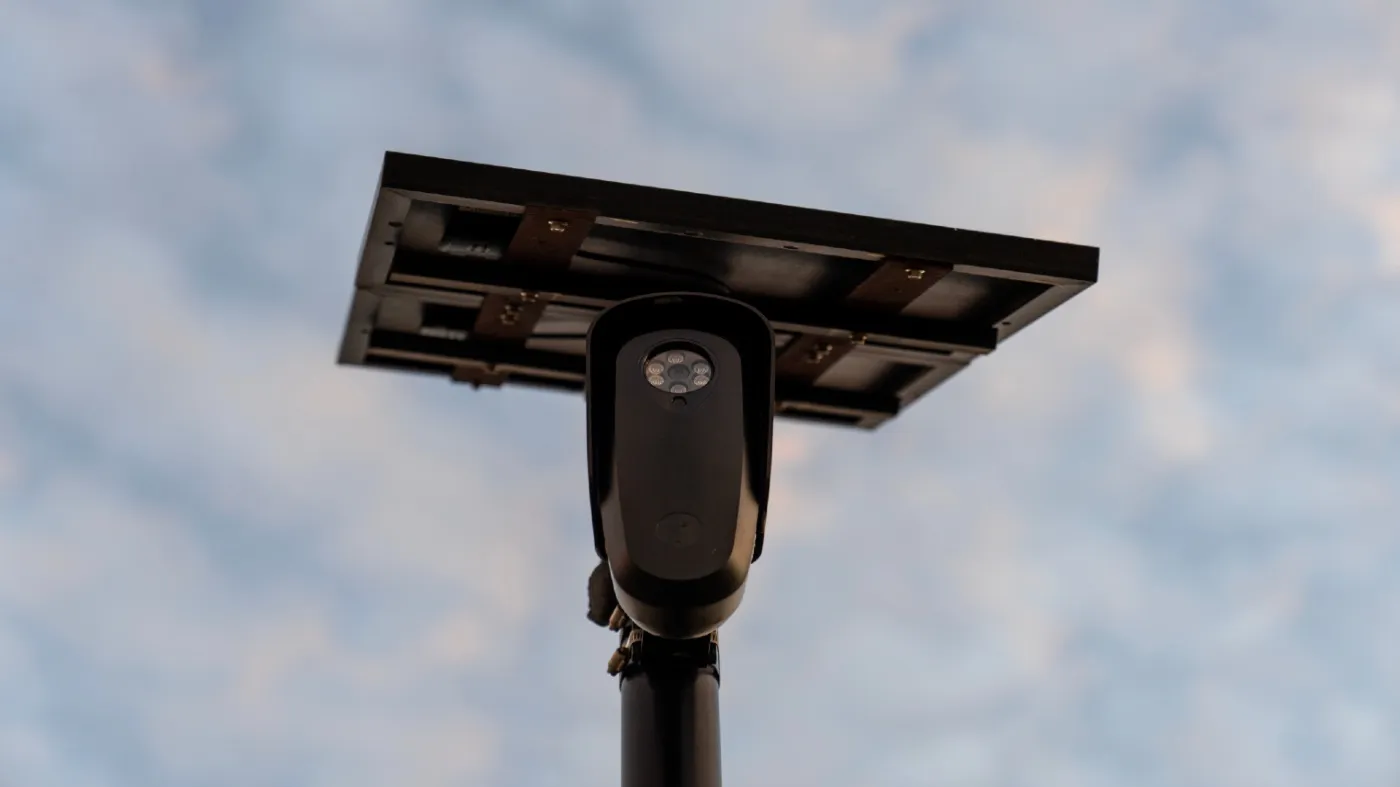
Meanwhile, the network kept growing. More than 120,000 Flock Safety cameras now operate across 49 states , feeding thousands of agencies who search one another’s data across jurisdictional lines . The only federal constraint is the Fourth Amendment, which courts interpret one case at a time, and so far, they have declined to extend the warrant requirement to plate reader data .
In August, Flock Safety announced it would cut its recommended retention period from 30 days to seven, give agencies tighter control over cross-agency sharing, require officers to tie every search to a case code and automatically flag abnormal query patterns for review. Those are genuine improvements. As a commander, I would have welcomed every one of them.
They are also corporate policy, revocable by the same corporation, adopted after abuses were documented rather than before. A policy is a promise. A law is an obligation. The difference matters only when someone wants to break it, which is precisely when it matters most.
And people have broken it. An officer in Milwaukee ran a woman he had been involved with through the system scores of times. An audit in Dayton surfaced thousands of searches whose stated purpose did not match their apparent use. Illinois regulators found data flowing to federal immigration authorities through a channel that state law did not permit.
Not one of those incidents required a hacker or a warrant. Each required only a login and a bad reason.
States noticed. California, Virginia, Illinois, Maine and New Hampshire now fix retention periods and restrict sharing by statute. Washington lawmakers opened with a 72-hour limit and settled on 21 days after police reasonably objected . Redmond Police Chief Darrell Lowe told a hearing that three days offers no investigative value and only masquerades as privacy . In Pennsylvania, a bipartisan group has proposed rules covering access, documented search justification, audit trails, retention, transparency, civil penalties and a private right of action for people harmed by misuse.
It is good work but none of it solves the actual problem. A driver’s protections now change at a state line on a network which does not recognize state lines. We have built a national system and governed it locally, which is another way of saying we have not governed it.
A federal standard does not require reinventing anything. Five elements would cover it.
Set a uniform retention ceiling, with a documented preservation exception tied to an open case number. Require every query to log a named user, a case number and a stated offense, in a record open to audit. Require federal agencies to obtain a warrant before querying state and local databases, closing the loophole letting Washington buy or borrow what it cannot lawfully compel. Prohibit outright the use of this network for immigration enforcement or for tracking anyone who crossed a state line for lawful medical care. And give the standard teeth, through civil liability and suppression, because a rule carrying no consequence is a suggestion.
Congress already has the pieces on the table. Rep. Keith Self (R-Texas) introduced the PRIVACY Act , which would require a federal warrant before querying state and local plate reader systems and limit retention of unrelated data.
Reps. Scott Perry (R-Pa.) and Chuy Garcia (D-Ill.) have drafted an amendment barring recipients of federal highway funding from using these cameras for anything except tolling. I would not vote for the second one. It throws out a working tool to solve a governance failure. But its existence tells you how far the frustration now runs, and how strange the coalition has become.
Some will argue any of this ties the hands of good cops. I was one for two decades, and I will tell you what actually ties our hands: a defense attorney holding an audit log showing officers in the same system ran searches nobody can justify. Transparency does not weaken an investigation. It is what lets the investigation survive cross-examination.
These cameras do not watch for criminals. They watch everyone and sort it out afterward. That may still be a bargain worth making. But a country should make a bargain like this one on purpose, in daylight, under rules written by people answerable to voters, not inherit it by procurement while nobody was paying attention.
Joe Broadmeadow is a retired police captain who commanded the Investigative Services Division, worked narcotics, and served on the Organized Crime Drug Enforcement Task Force with the FBI and DEA. He is an author and the founder of JEBWizard Publishing.
Topics in this story
Gathered from external sources. Rights to this text belong to whoever originally published it.