Trump’s fight with GOP senators over trade intensifies
President Trump is headed for a clash with Senate Republicans over his decision to pause tariffs on beef imports while ratcheting up tariffs on key Canadian goods. Trump’s plan to exempt 300,000 tons of product for ground beef from out-of-quota tariffs to address Americans’ concerns about high food prices while simultaneously threatening Canada with 50…
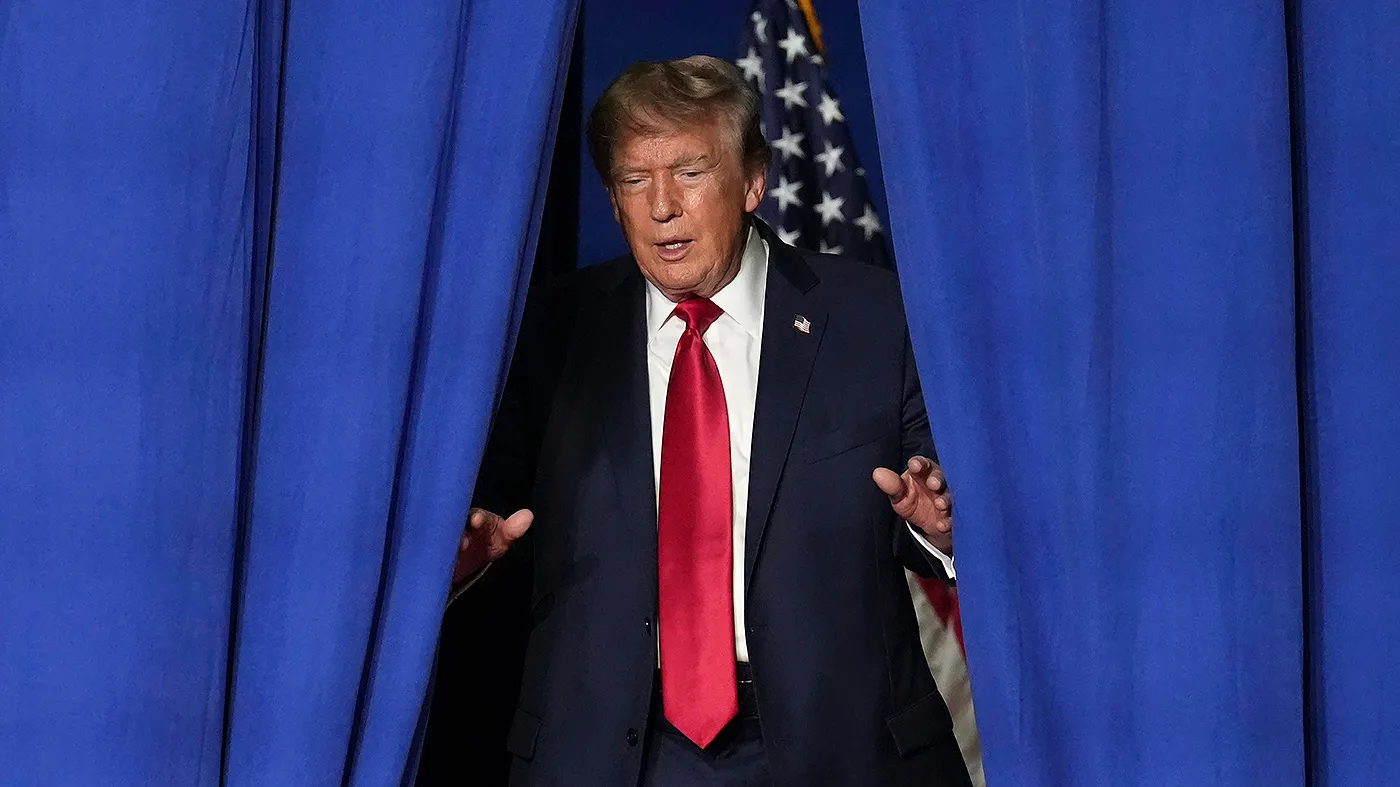
President Trump is headed for a clash with Senate Republicans over his decision to pause tariffs on beef imports while ratcheting up tariffs on key Canadian goods .
Trump’s plan to exempt 300,000 tons of product for ground beef from out-of-quota tariffs to address Americans’ concerns about high food prices while simultaneously threatening Canada with 50 percent tariffs on imports that could impact auto and housing prices has sparked a furious response from GOP senators across the party’s political spectrum.
“I think it’s a mistake. It’s what happens when he has advisers trying to micromanage things. They’re skating where the puck is versus where it needs to be. If you think that providing subsidized beef for some period of time is going to make farmers happy and prices go down on systemic basis, you’re wrong. It doesn’t happen,” Sen. Thom Tillis (R-N.C.) said at the Capitol Monday.
“Every time the government micromanages the economy, consumers suffer,” Tillis warned.
Tillis is one of several Republicans from an agriculture-heavy state to warn against allowing cheap beef imports to flood the U.S. market over the next three months — something that Trump hopes will bring down the price of an American diet staple through the midterm election.
Senate Republican Whip John Barrasso (R-Wyo.), the second-ranking member of the Senate Republican leadership, declared Monday that “Americans want US beef on the table — not foreign imports.”
“Wyoming ranchers produce the highest quality beef in the world. Our ranchers don’t ask for special treatment. They simply want a fair marketplace. It needs to be easier – not harder – for Wyoming ranchers to feed America,” he posted on X, the social media platform.
Sen. Tom Cotton (R-Ark.), the third-ranking member of the Senate GOP leadership, warned that opening U.S. markets to cheaper imports is “ill-advised” and will hurt domestic producers.
“Beef prices are too high for a simple reason: Our cattle herd is too small. Imported beef below market prices will only put more pressure on our cattlemen,” Cotton argued on social media.
“I have advised the President against this ill-advised action in the past and I now urge him to reconsider. We need to support our cattlemen, grow the herd, and let the market work,” Cotton wrote.
Sen. Mike Rounds (R-S.D.) also took to social media to dismiss Trump’s move as a “quick fix” and argued it’s out of step with the president’s efforts to rebuild domestic manufacturing capacity with tariffs, such as those he’s threatening against Canada.
“What our market really needs is a stable, America-First national policy that promotes American beef rather than continuing to import foreign beef as a quick ‘fix.’ This instability harms hardworking American ranchers and consumers who want American-made beef,” he wrote.
“This is the exact opposite approach we take compared to manufacturing, and it doesn’t make sense,” Rounds added.
Sen. Jerry Moran (R-Kan.), a member of the Agriculture Committee, shared that relatively strong beef prices were a “bright spot” for the nation’s “struggling agriculture industry.”
“Importing beef below market prices will only put further downward pressure on the livestock sector, endangering what has been a bright spot in a struggling agriculture industry,” the Kansas senator wrote on social media. “I urge President Trump to halt this action, listen to ranchers and let the free markets work.”
Republican Sens. Chuck Grassley (Iowa), Deb Fischer (Neb.) and Pete Ricketts (Neb.) also raised alarms over foreign beef showing up in American grocery stores.
Grassley said he was “concerned” while Fischer said she was “extremely disappointed by this decision” and Ricketts warned that “flooding the market with lower quality beef” would hurt Nebraska farmers and ranchers.
Yet Trump appears to be more sensitive to ground beef prices, which have risen by approximately 20 percent since he took office in January of 2025.
The average price of ground beef reached $6.89 per pound in July.
Trump pledged that imported beef will be sold at “25 percent below current market prices” over the next three months.
Some Democratic candidates, such as Iowa state Rep. Josh Turek who’s eyeing a Senate seat, are highlighting “skyrocketing” beef prices on the campaign trail.
But many Republicans don’t think that allowing cheap imports into the country is the best solution.
“Increasing beef imports would lead to more uncertainty and instability for our farmers,” said Rep. Ashley Hinson (R-Iowa), the GOP candidate in Iowa’s Senate race.
“We should be focused on cutting red tape for cattle producers, lowering the cost of production and supporting market-based solutions to support Iowa producers and lower costs for consumers,” she wrote on social media.
The criticism from GOP senators of Trump’s decision to pause tariffs on beef imports comes as other Republican senators are pushing back against Trump’s 50 percent tariffs on an array of Canadian imports and his threat to impose equally high fees on even more.
Sen. Susan Collins (R-Maine), who faces a tough reelection race in a state that voted for former President Biden and former Vice President Kamala Harris in the last two presidential elections, called Trump’s threatened tariffs against Canada “a mistake.”
“We produce a lot in Maine — our blueberries, our potatoes, our lobster, our lumber — that is processed across the border. If it comes back with a huge tariff on it, perhaps as much as 50 percent, that increases the cost of eating, building homes and merch[andising] our best-known products,” Collins told News Center Maine in an interview Monday.
Collins was one of four Republicans who voted last year to revoke Trump’s tariffs against Canada. She and Republican Sens. Lisa Murkowski (Alaska), Rand Paul (Ky.) and Mitch McConnell (Ky.) voted with Democrats to pass a resolution blocking them.
Six House Republicans voted with Democrats to pass a similar measure in the House last year.
Former Trump economic adviser Stephen Moore warned that any gains that domestic businesses might get from higher tariffs on Canadian goods are likely outweighed by the “pain” felt by U.S. consumers and businesses that import Canadian products or sell to Canadian markets.
“Probably the pain is not worth the gain. And you know, I’ve been a bit of a skeptic on the tariff front with respect to the Trump strategy,” Moore told Fox Business in an interview Monday.
He warned that raising the cost of Canadian goods may come while Americans are still coping with higher energy prices because of Iran war’s impact on oil and gas prices.
“We’re in a sticky situation obviously in Iran with respect to those negotiations. Now … do I think now is a good time to fight a trade war with Canada? Probably not,” he said. “Commodity prices are rising right now in the U.S. That’s a bad sign. That’s an indication that inflation continues to tick up.”
Tillis on Monday warned that charging steep tariffs on Canadian goods threatens to disrupt the economies of border states — such as Maine — that are closely integrated with the Canadian economy.
“Let the economy do what the economy’s doing. Get the trade relationships with Canada done versus all this volatility. You’re going to address more price fluctuations by doing this than all these gimmicks,” Tillis said.
The North Carolina senator warned that Republicans are running out of time to help farmers before the midterm elections as both a farm bill, which includes relief programs for ranchers hurt by drought and fire, and a budget reconciliation package, which includes $12 billion in emergency assistance to farmers, is stalled in the Senate.
“We’ve got 71 days” until the election “and right now we don’t have a positive message to tell farm country,” he said. “And we haven’t since Liberation Day last year, which is why I was concerned.”
Trump announced sweeping global tariffs on April 2, 2025, which the president proclaimed “Liberation Day.”
Topics in this story
Gathered from external sources. Rights to this text belong to whoever originally published it.