Clayton says he trusts Trump ‘completely’ after calling Putin a friend
Director of National Intelligence Jay Clayton on Sunday said he trusts President Trump “completely” after Trump called Russian President Vladimir Putin, a perceived U.S. adversary, a friend. During Clayton’s interview with CNN’s “State of the Union” on Sunday, host Dana Bash showed the director of national intelligence two Truth Social posts from Trump referring to…
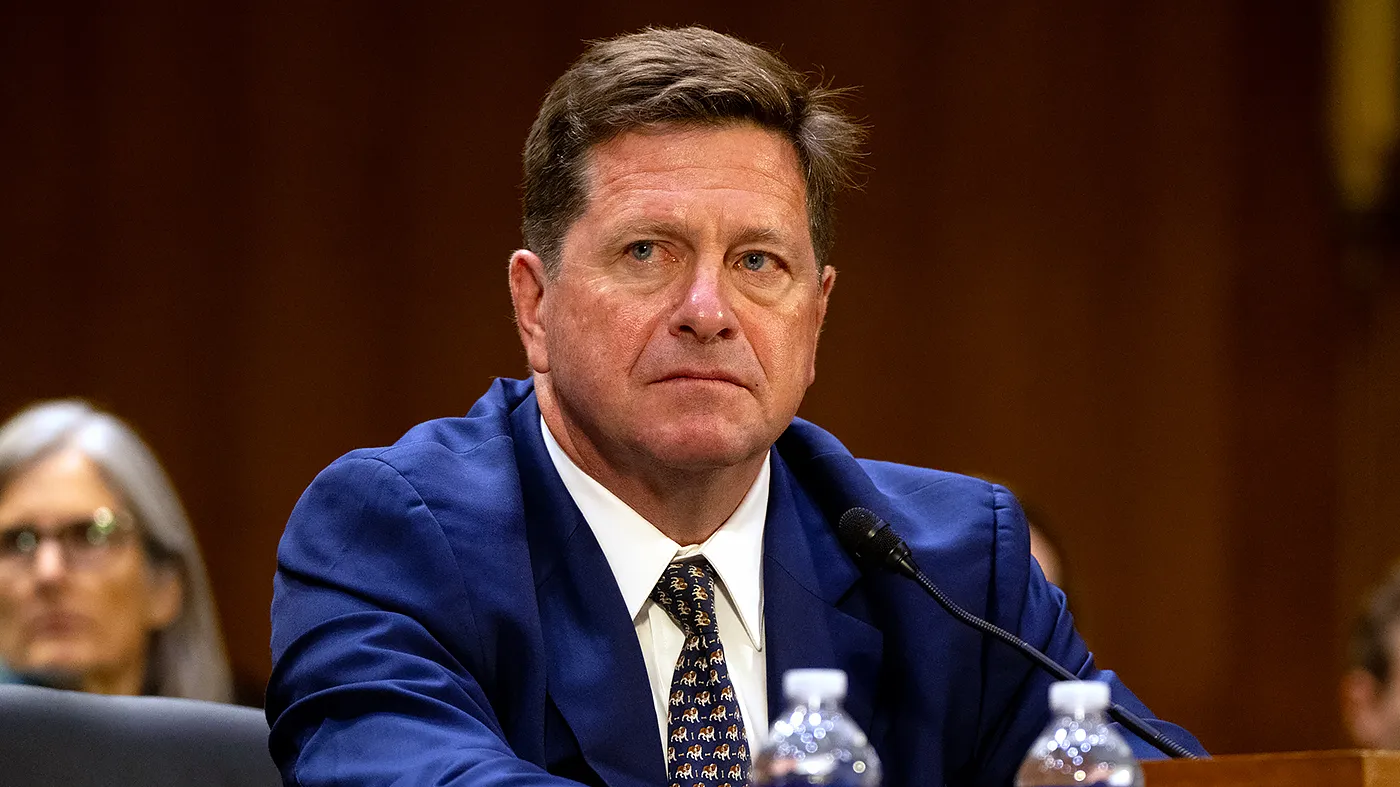
Director of National Intelligence Jay Clayton on Sunday said he trusts President Trump “completely” after Trump called Russian President Vladimir Putin, a perceived U.S. adversary, a friend.
During Clayton’s interview with CNN’s “State of the Union” on Sunday, host Dana Bash showed the director of national intelligence two Truth Social posts from Trump referring to Putin and Chinese President Xi Jinping as his friends , prompting her to ask Clayton if he thinks Putin is a friend to the U.S.
“The president is the greatest conductor of foreign policy, in a very challenging time … getting the three nuclear powers together and getting them to agree that they are not going to escalate, that they are going to communicate. That is historic. That is remarkable,” Clayton said.
“And in that context, whatever language the president wants to use, I trust him completely,” he added.
Bash pressed Clayton further on the question, asking if he thought Putin was a friend to the U.S.
“Dana, in different contexts, you can use a different word,” he replied. “The president pulling off that summit, getting the three of them together, is just remarkable.”
Trump, who has long had a friendly relationship with Putin, met with the Russian leader and Xi at a planned trilateral in Shenzhen, China. After arriving for a meeting Thursday, Trump said before approaching Putin, “ Who is he? He’s my friend .”
The meeting was meant to focus on paths toward peace in the Russia-Ukraine war and the Iran war, as well as push for denuclearization. The three superpowers established a “ declaration toward peace ,” which addressed United Nations reform; oil production and supply; the International Criminal Court; and nuclear conflict, according to text released by all three countries.
Trump early last week told reporters he believed the Russian president was “backing down a bit” in the war in Ukraine, which will hit the five-year mark in February.
Ukrainian President Volodymyr Zelensky, who has fought off Russian military advances with help from the U.S. and Europe, told reporters Saturday that the summit “turned out very badly for Russia.”
“Putin didn’t get his ‘Yalta 2,’” Zelensky wrote Saturday on the social platform X , referring to 1945 talks held by the Allied powers on how to finally defeat Nazi Germany. “… Did Putin want a real Yalta? Yes. In the sense of carving up the world and changing borders. China didn’t let itself be drawn into it. I don’t know what happened between the United States and Russia in their bilateral, but Ukraine wasn’t discussed.”
Zelensky continued the Yalta analogy with: “If there really was an intention to reaffirm the victory over fascism now, then the participants at this summit would have to be the United States, Europe, and Ukraine. Definitely not Russia … If Putin wanted to remind the world once again who he is, there was no need –– we haven’t forgotten that he’s a terrorist and a killer.”
Topics in this story
Gathered from external sources. Rights to this text belong to whoever originally published it.