Blanche’s Justice Department has finally put parents’ rights ahead of abortionists
The department’s acknowledgment calls for a reckoning over how selectively the law was wielded against people peacefully practicing their faith on public sidewalks.
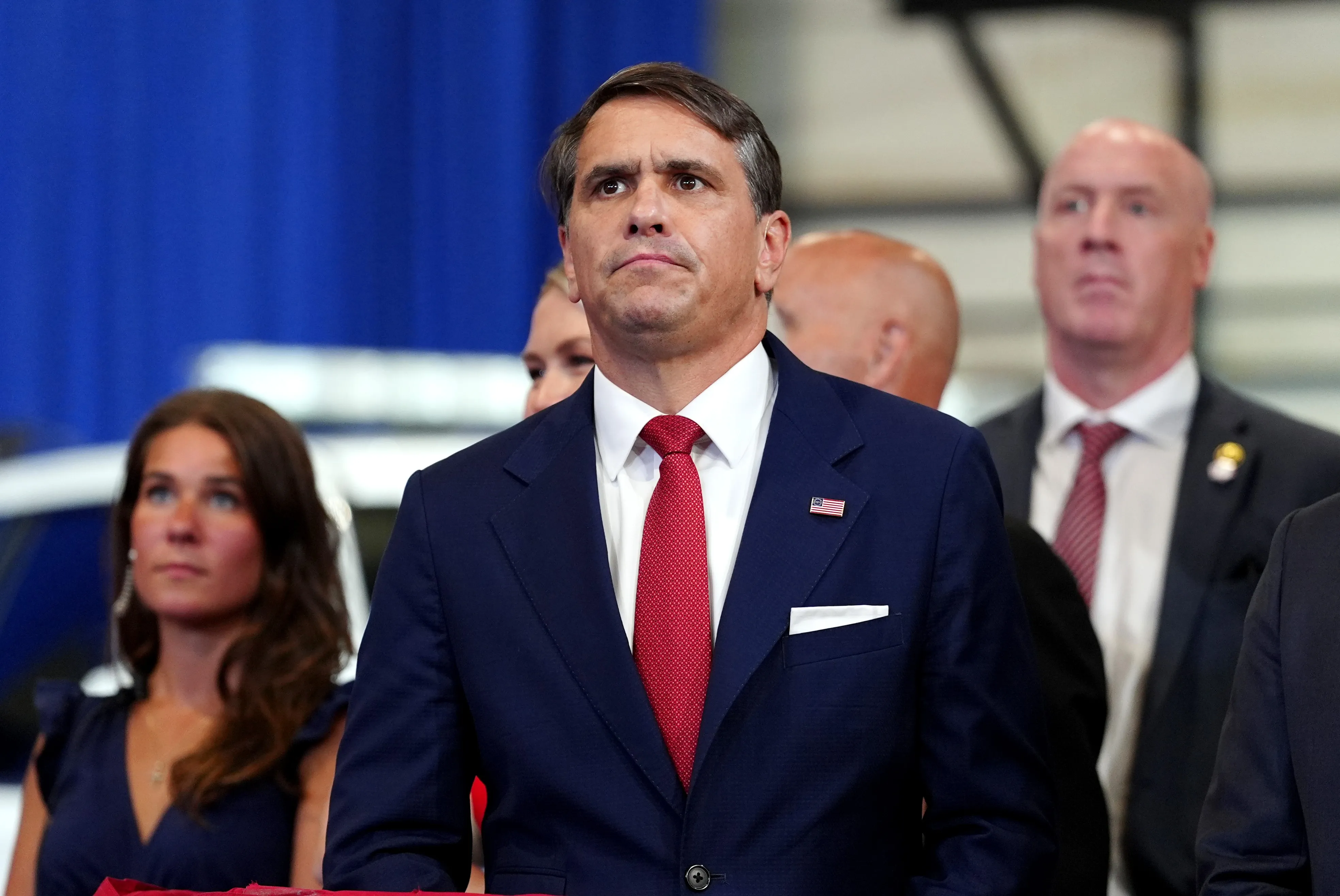
Although Todd Blanche was just confirmed as attorney general earlier this month, he has already made an important mark for religious liberty and parental rights.
On July 23, Blanche issued updated guidance to federal agencies on religious liberty protections. The bulk of the document does what these memos usually do. It walks agencies through a decade’s worth of Supreme Court decisions — Carson v. Makin, Kennedy v. Bremerton School Dist., Fulton v. City of Philadelphia — and tells them to comply with the Constitution and the Religious Freedom Restoration Act on the front end rather than be dragged back into court for the inevitable.
One instruction stands out: Agencies must now also account for precedent confirming that the Constitution protects parents’ authority to direct their children’s upbringing. That is a notable thing to say out loud, given where the Civil Rights Division previously spent its time on matters affecting the family. Its most visible civil rights initiative in recent years was not protecting parents but preventing people from becoming parents in the first place.
Passed in 1994, the FACE Act was the Biden administration’s preferred vehicle for running dragnets against political objectors. Biden’s Civil Rights Division worked hand in glove with the abortion industry, taking tips and target lists from those groups and sweeping up sidewalk counselors indiscriminately. I saw an earlier version of this firsthand as a trial lawyer in the Civil Rights Division section that enforced the FACE Act in the late 1990s. (My request to be exempted from those cases at the time was honored.)
Consider Mark Houck , a Pennsylvania father of seven whose home was raided at gunpoint over a sidewalk altercation defending his son. A jury acquitted him in under an hour, and the government ultimately had to pay him a seven-figure settlement. The Department’s Task Force to Eradicate Anti-Christian Bias has since confirmed that FACE Act cases were built on tips from groups with the greatest stake in silencing their critics. The prior administration preferred to mete out similar treatment wherever Christian conviction on abortion, marriage, or gender collided with its ideology.
None of this excuses actual obstruction of justice or violence, although trespass, vandalism, and assault are already state crimes needing no federal statute. The FACE Act rested on the theory that abortion access was a federally protected interest, justifying federal jurisdiction over ordinary sidewalk conduct. Dobbs eliminated that premise. Once the court clarified that abortion was not constitutionally guaranteed, the case for a special federal apparatus protecting clinic access collapsed, leaving the same security interest every building owner has — one that local police already protect.
The FACE Act’s other half tells a different story. The law also makes it a federal offense to damage or interfere with access to places of worship and pregnancy help centers, but the Justice Department largely ignored enforcement of this provision. For example, the Biden administration failed to enforce FACE after churches and pregnancy centers were vandalized following the Dobbs leak.
Members of Congress complained that the Department could not point to a single such prosecution, even as it swept up sidewalk counselors by the dozen. Only now has the Justice Department begun applying the FACE Act to attacks it was always written to cover.
Blanche’s guidance memo builds on earlier departmental actions emphasizing parental rights. The Solicitor General’s office filed an amicus brief earlier this year supporting the petition for certiorari in St. Mary Catholic Parish v. Roy , now pending before the Supreme Court, addressing whether Colorado can effectively exclude Catholic preschools that hold true to Catholic teaching on sexuality and marriage from its universal preschool program.
Such a filing at the petition stage is unusual, as the government rarely stakes out a position before the court agrees to hear a case. But once review was granted, the solicitor general’s office followed through with a merits-stage amicus brief , a level of engagement reserved for cases the department considers significant. The department similarly played a crucial role last year in Mahmoud v. Taylor , the case that secured parents’ rights to opt their children out of gay-themed classroom instruction.
The resources the Department of Justice once devoted to preventing sidewalk counseling of expectant parents will hopefully be reallocated consistent with Blanche’s guidance. The department’s acknowledgment that the Constitution protects parents raising children by their own convictions, not the government’s, paired with a reckoning over how selectively the law was wielded against people peacefully practicing their faith on public sidewalks, is a start toward treating parents as seriously as it once treated abortion clinics’ security perimeter.
Andrea Picciotti-Bayer is director of the Conscience Project. She previously served as a civil rights attorney in the U.S. Department of Justice.
Topics in this story
Gathered from external sources. Rights to this text belong to whoever originally published it.