States should adopt the federal rule that keeps junk science out of criminal courts
It empowers judges to act as gatekeepers, preventing speculative science from reaching juries or being admitted in the discovery process.
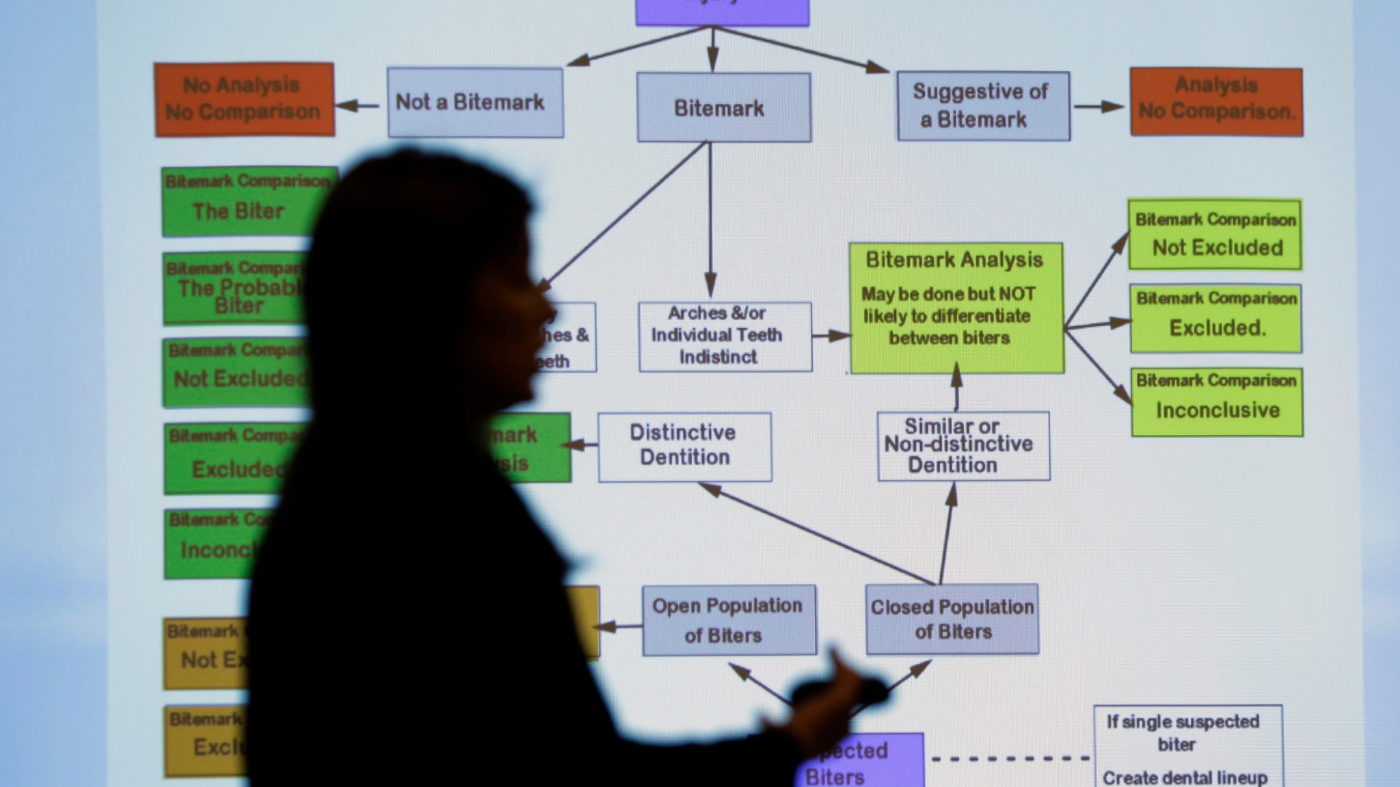
After 37 years behind bars, Robert Wallace Lyons, convicted of murdering Lori Stabenow in a Eugene, Ore. motel room, has been released from prison . Though he is not yet a free man in the fullest sense, prosecutors are deciding whether to retry him.
In 1990, a Lane County jury found Lyons guilty of killing Stabenow, who was discovered strangled in her room at the Stage Stop Inn. The case against him relied heavily on bitemark evidence, a forensic technique whereby an expert compares marks on a victim’s body to a suspect’s teeth. Once widely accepted in courtrooms, this methodology has since been debunked due to its failure to produce scientifically reliable results.
In Lyons’s case, bitemark evidence was the centerpiece of the state’s case. A forensic odontologist testified he had no doubt that marks found on Stabenow’s body matched wax molds made from Lyons’ teeth. That testimony helped secure a conviction that stood for decades until Oregon passed a law this year formally recognizing bitemark analysis as a discredited forensic discipline. That opened the door for Lyons and others convicted on similar evidence to challenge their cases.
As forensic science has evolved, bitemark evidence and the “direct comparison” methodology used by forensic dentists have since been widely rejected , raising serious questions about convictions that relied on such evidence.
Lyons is finally seeing some form of justice, but other individuals who have spent years on death row due to faulty evidence in their cases deserve another perspective as well. Oregon had no judicial gatekeeping standard in place and still doesn’t, illustrating what can happen to people like Lyons when courts fail to rigorously enforce it.
That is where one key federal rule of evidence known as Rule 702 comes in handy, empowering judges to act as gatekeepers and preventing speculative science from reaching juries or being admitted in the discovery process. It helps judges weed out manufactured evidence before it can skew a verdict. It’s an important standard, one that protects against runaway outcomes and safeguards just verdicts in criminal cases where the death penalty is on the line. While it directly governs the federal court system, it has served as a decades-long blueprint for states to adopt similar rigorous standards in their own evidentiary rules.
This is exactly why rigorous evidentiary standards matter. They ensure courtroom outcomes are decided by hard facts, not faulty claims that can cost an innocent person their freedom.
But in Lyon’s case, the problem wasn’t just a lack of gatekeeping standards, but how long it took to revisit it once those standards caught up with the science. Bitemark analysis was deemed unreliable in 2009 , yet it took another 17 years for Lyon to be released on bond.
Bitemark analysis, arson pattern evidence and bullet lead composition analysis are just a few of the forensic techniques that have secured convictions in courts with unenforced gatekeeping standards, only to be discredited later. With no consistent standard to ensure these techniques don’t creep into verdicts, many people still risk facing jail time for crimes they did not commit.
States that have not yet aligned their admissibility standards with federal standards should take the steps to do so. Ensuring that expert testimony is rooted in science rather than speculation should be a priority nationwide. Without that uniformity, we’re left with a fragmented judicial system where the outcome of a case, even a capital punishment case, can depend on the location of the trial rather than the facts.
No appellate process can undo an execution or a lifetime is prison, like the one Robert Wallace Lyons is hoping to narrowly escape. Irreversibility is exactly why gatekeeping has to work upfront, not just on review years or decades later.
How many other convictions built on the same discredited tactics are still standing? How many people have been sentenced to death because of weak expert witness standards? These are questions with real answers. The solution is not a mystery. States need to align their standards with federal rules before the next Robert Wallace Lyons runs out of time.
David Safavian is an attorney, conservative activist and chief operating officer of Unify.US. Jason Pye is vice president of the Due Process Institute.
Topics in this story
Gathered from external sources. Rights to this text belong to whoever originally published it.