The Memo: Embattled Trump seeks reset with White House news conference
President Trump will seek a reset of sorts when he holds a press conference at the White House at noon EST Friday. Trump will appear in front of the media after being weakened by the major beating the GOP took in the midterm elections; while the war on Iran stands unresolved; and as he and…
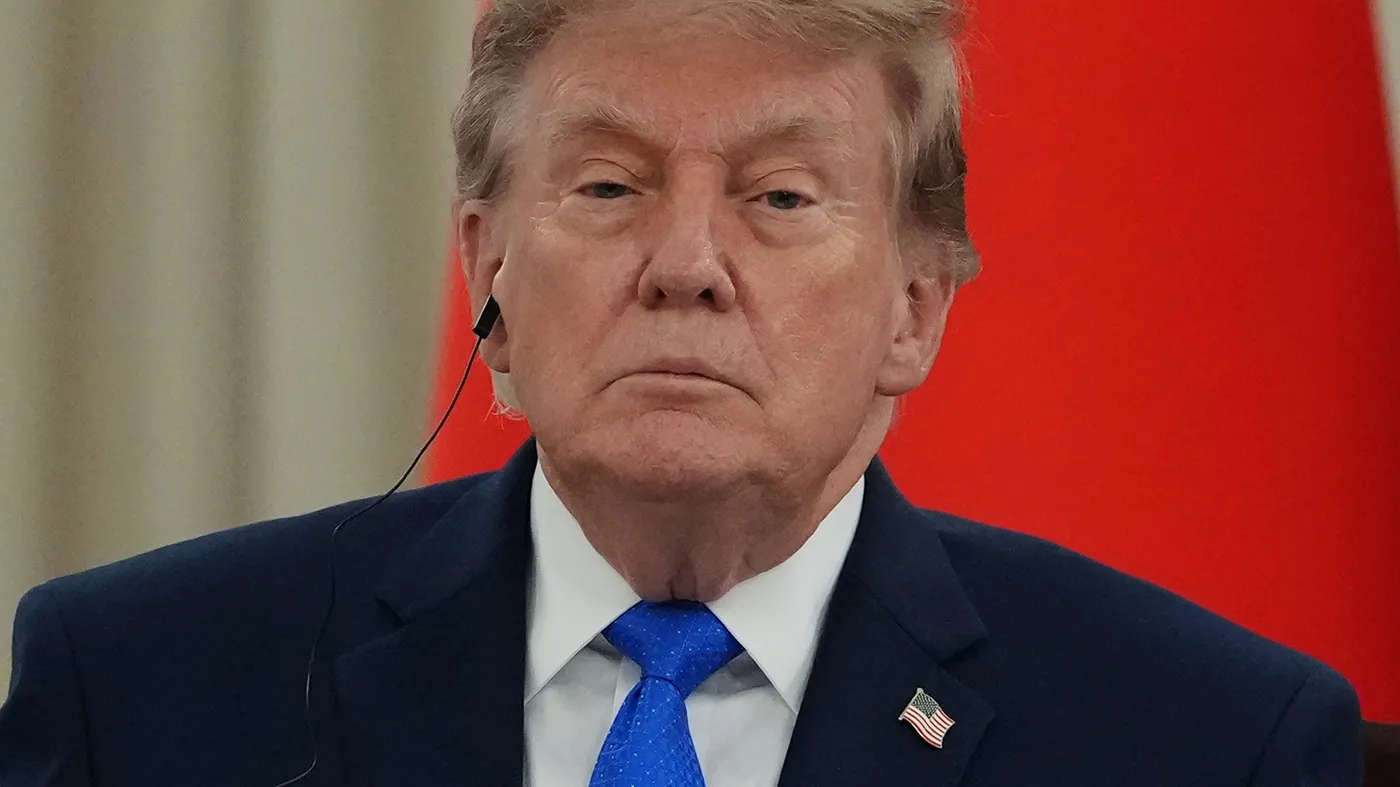
President Trump will seek a reset of sorts when he holds a press conference at the White House at noon EST Friday.
Trump will appear in front of the media after being weakened by the major beating the GOP took in the midterm elections; while the war on Iran stands unresolved; and as he and his allies face uncertainty — and a spate of Democratic-led investigations — during the remaining two years of his presidency.
Even someone with Trump’s ability to shape the media narrative will struggle to turn the page on all those things. But he seems sure to try.
Trump announced the event via a social media post Thursday as he returned from what he termed a “Highly Consequential Trip” to Asia.
He framed the news conference as an opportunity to talk about trade deals with nations in the region. But virtually nobody expects those agreements to be the main focus.
“I imagine it will be more of the same from him [on trade]. That they had a wonderful meeting and reached a bunch of deals that he will have little to no details on,” Stephanie Grisham, who served as White House press secretary and communications director for about nine months of Trump’s first term, told this column.
Grisham, who is now often critical of the president, predicted that Trump would also play down the recent cascade of tech outages that have caused public disquiet and that he might “blame the midterms on cheating and the Iran war that people ‘just won’t understand had to happen.’”
Trump surprised some observers by accepting the outcome of the midterms at first, even as Democrats easily took the majority in the House and flipped nine Senate seats for a 56-44 majority. The Senate gain, finalized this week with a Democratic victory in a close race in Alaska, was the largest since 1958 .
The president fired off a social media post on Nov. 9 questioning whether anyone could “really believe that this ‘Election’ was honest,” however. That message received conspicuously little traction. The response from conservative commentator Megyn Kelly — “Just stop” — was indicative of widespread reluctance to take such claims seriously.
The Friday press conference will, at a minimum, allow Trump to create headlines and, perhaps, to sketch a path forward on some of the issues that loom large in the public mind. As ever, it is also possible the biggest news could come from some entirely unexpected direction.
The GOP’s defeat at the polls was largely driven by Trump’s low popularity ratings, which are in turn a consequence of the unpopular war and a perceived failure to address the cost of living. The two topics are linked given that gas prices, though lower than their peak, remain elevated from prewar levels.
There is speculation about what comes next in Iran, thanks in part to the president’s mixed signals.
“We don’t need a deal with Iran,” he wrote on social media last week, seeming to suggest that he saw continuing economic pressure on the Islamic Republic as the best way to try to extract further concessions from Tehran. But another American aircraft carrier, the USS Roosevelt, arrived in the Middle East this week, keeping military options open.
The New York Times reported Wednesday that Trump was mulling “extensive” new strikes on Iran, in part because he was “considering warnings from Israel about Iran’s success in rebuilding its missile and drone arsenals.”
Such an escalation would be highly contentious at home, though Trump may believe it could help deliver the kind of victory that has eluded him so far.
The president’s lagging poll numbers are also widely viewed as a sign of public weariness with his penchant for self-aggrandizement and chaos — including his controversial plans for the renovation of existing Washington landmarks and the construction of new ones in his honor.
Trump has given some characteristically mixed signals as to where he intends to go from here in the remaining two years of his presidency.
In an interview with CBS’s “60 Minutes” right after the midterms, he admitted that his immigration enforcement actions have come to be seen as “too tough” by some people. Yet he also announced the promotion of Stephen Miller, perhaps the most hard-line member of the administration on immigration matters, to replace the departing Susie Wiles as White House chief of staff.
“Trump has indicated through [elevating] Stephen Miller that he is ready to fight,” GOP strategist Ron Bonjean said. “At the same time, he has been complimentary of Democrats and deferential to them winning power. I think he is going to engage — or there is going to be one heck of a fight coming.”
To be sure, Trump has some political strengths on which he can draw. Even if more Republicans are now privately willing to express misgivings with his leadership in the wake of the midterms, few are inclined to do so publicly — a reminder of the firm grip he continues to exert on his party.
Even amid his low poll ratings, he retains the avid support of the roughly one-third of Americans who are firmly in the MAGA camp.
In terms of tactics, Trump seems likely to try to defy efforts by the new Democratic majorities to pump the brakes on his agenda. Many of his most sweeping actions have come by the use of executive power rather than through the legislative process, and that is likely to continue.
Allies in the White House — and further afield — are set to do their utmost to frustrate Democratic investigations, too.
Aaron Reitz, the U.S. attorney for the Southern District of Texas, on Monday wrote to incoming House Oversight and Government Reform Committee Chair Robert Garcia (D-Calif.) warning him to preserve documents. Reitz also asserted that “a committee’s gavel is not a prosecutor’s commission.”
There’s one more element of Friday’s news conference that will be closely watched: whether Trump tips his hand in terms of whom he currently favors to succeed him.
The ebbs and flows in the perceived fortunes of Vice President Vance and Secretary of State Marco Rubio, in particular, have become something of a Beltway obsession in this regard.
The 2028 speculation is a reminder that the post-Trump era is not so far away. But on Friday, it’s only Trump who will be center stage.
The Memo is a reported column by Niall Stanage.
Topics in this story
Gathered from external sources. Rights to this text belong to whoever originally published it.