Israel election: Partial results indicate possible deadlock, Netanyahu alleges fraud
Both main coalitions are projected to fall short of a parliamentary majority.
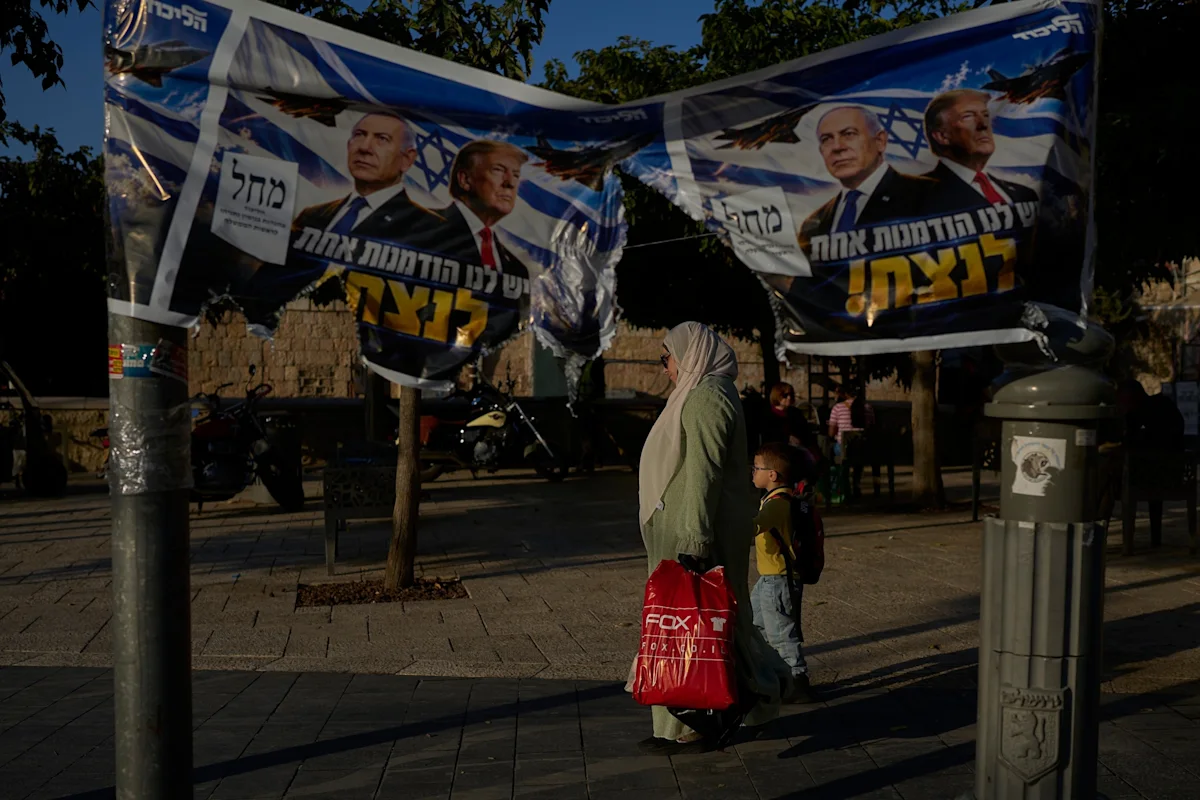
Israeli election authorities were still counting votes from Tuesday's parliamentary election on Thursday morning.
But even with the vast majority of ballots counted, it remained unclear who will form the country's new government. Neither the bloc led by Prime Minister Benjamin Netanyahu nor that of his prime challenger Gadi Eisenkot has an obvious course to secure a majority of seats in the Knesset, according to exit polls and partial results released by electoral authorities.
As of Thursday, Israel's Central Election Committee said it had counted nearly 94% of votes. The partial results -- which are subject to some change as the rest of the votes are tallied -- indicated that Netanyahu's Likud party would win 26 seats, with Eisenkot's Yashar party on 21 seats.
The CEC projected that Netanyahu's coalition was on course to secure 53 seats, slightly ahead of Eisenkot's bloc on 48 seats. Neither coalition was on course to achieve a 61-seat majority.
The Arab parties, meanwhile, were projected by the CEC to take 19 seats.
The last stage of vote counting is expected to end on Thursday afternoon or evening local time, the CEC said. The final results will not be published until Nov. 4.
If the CEC projections hold true, the two coalitions led by Netanyahu and Eisenkot may need the backing of the Arab-Israeli parties to have any chance of a majority in the Knesset.
Both Netanyahu and Eisenkot have previously ruled out forming a coalition with the Arab parties. In his post-election speech, Netanyahu suggested that any government that included Arab parties would "endanger Israel."
Arab party leaders have indicated willingness to work with the anti-Netanyahu opposition. The Arab-led Joint List -- a collection of three parties which between them were on course to win 12 seats as of Wednesday -- said in a statement that they were ready for "political cooperation to oust the Netanyahu government."
"The Joint List will work with all its strength to bring an end to Netanyahu's rule. We are ready for political cooperation to establish an alternative government, which will present a true alternative and commit itself to a true change of the current government's racist policy," it said in a statement.
Mansour Abbas, the leader of the United Arab List -- also known as Ra'am -- which was projected to win seven seats, said he had been in touch with representatives of both the Netanyahu and Eisenkot coalitions.
As vote counting continued on Wednesday, Netanyahu alleged -- without providing any evidence -- that the election had been "stolen by Arab parties," claiming that Likud had gathered evidence of electoral fraud and submitted it to electoral, law enforcement and security bodies.
Likud issued a statement claiming that "foreign entities" had interfered with the election by providing financial support to Arab parties. The party did not immediately provide any evidence to support its allegation.
Opposition leaders condemned the prime minister's remarks, maintaining that the elections in Israel were free and fair and there was no evidence of election fraud. The Israeli police said they will investigate any credible allegations of wrongdoing.
Dean Livne, the acting director general of the CEC said on Wednesday that there was "no basis for allegations of election theft," as reported by Israel's Kan radio station.
Eisenkot, meanwhile, said on Wednesday night that he had undertaken "a long day of meetings, conversations, and preparations to realize the will of the voter."
"We are focused on the heavy task entrusted to us -- bringing change to Israel," he wrote in a post to X.
ABC News' Nasser Atta and Joe Simonetti contributed to this report.
Gathered from external sources. Rights to this text belong to whoever originally published it.