Trump dangled a nuclear jobs boom — Now comes the fine print
Nearly 10 months later, the vision has collided with reality.
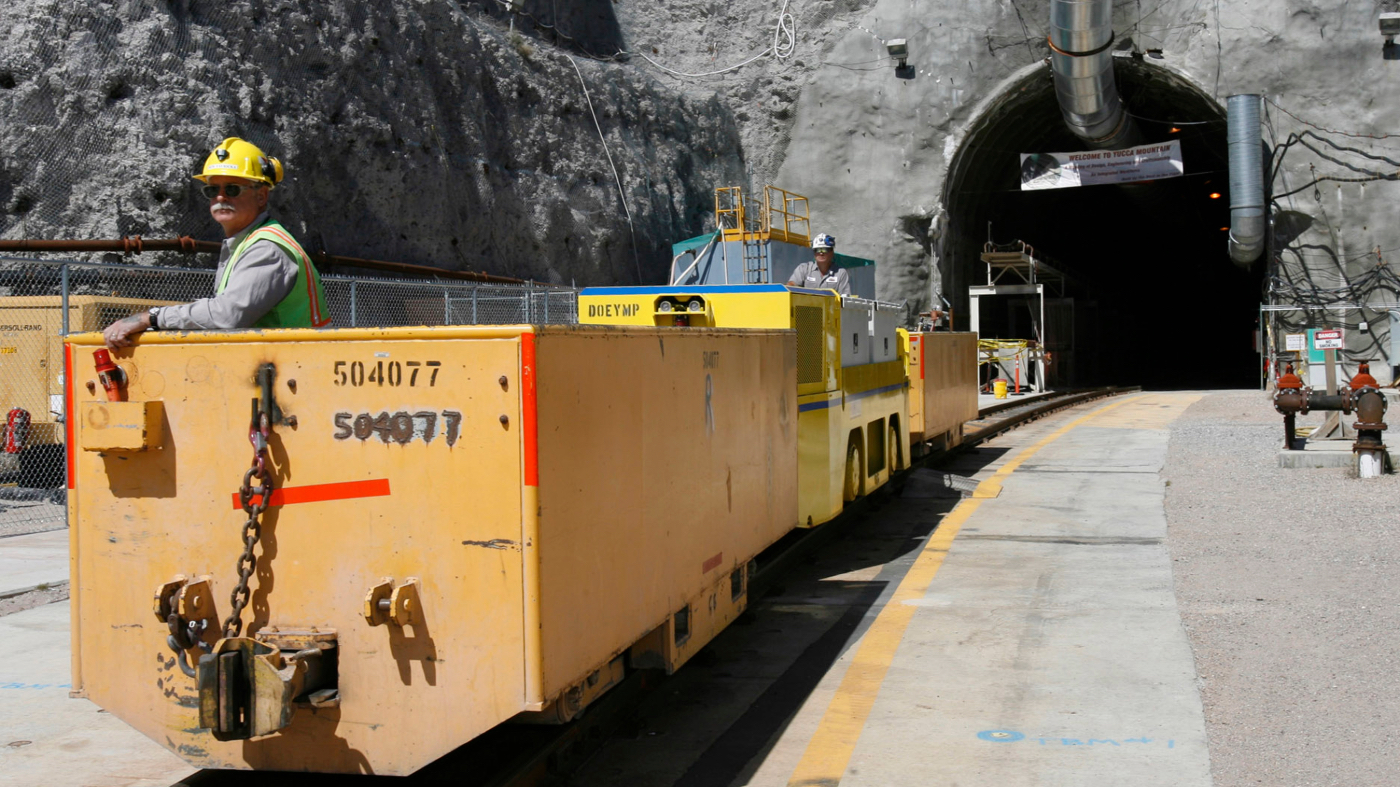
Washington has struggled for decades to find a state willing to permanently host spent fuel from nuclear power plants. Last summer, the Trump administration achieved a political breakthrough . It enticed five governors to the negotiating table with a bargain: nuclear waste would be bundled with tens of billions in investment as well as tens or hundreds of thousands of new jobs.
When the Department of Energy pitched Nuclear Lifecycle Innovation Campuses to states in January, it described mega sites that could hold everything from uranium enrichment, advanced reactors and nuclear fuel fabrication to advanced manufacturing, data centers, spent fuel recycling and waste disposal. A hypothetical campus , the department suggested, could directly employ 50,000 workers, support 100,000 to 150,000 indirect jobs and require 10,000 to 20,000 new housing units.
In September, Assistant Secretary for Nuclear Energy Ted Garrish defined success as at least three or four nuclear campuses running in 10 to 20 years. At January’s top figure, that would mean 600,000 to 800,000 jobs. At the Department of Energy’s lower figures floated in July — up to $50 billion in capital investment and nearly 25,000 jobs per campus — that is roughly 75,000 to 100,000 jobs. What governor wouldn’t want to explore numbers like these?
But nearly 10 months later, the vision has collided with reality.
First, where would the personnel come from? The Energy Department’s own employment reports count just over 70,000 people working in the American nuclear energy sector in 2025. Sixty-five percent of nuclear power and fuel employers reported hiring challenges last year. Another survey found that only 23 percent of nuclear workers were under 30. A nuclear campus would also have to compete with advanced manufacturing and data centers for electricians and technicians.
Second, why did department officials pitch such unrealistic timelines? In January, the visoin was for initial nuclear campus facilities “online in the 2027 timeframe.” But the Sept. 30 target for host agreements has come and gone. On Nov. 10, Energy Secretary Chris Wright acknowledged that spent fuel disposal outside Nevada’s Yucca Mountain site requires legislative change. Rep. Chuck Fleischmann (R-Tenn.) hoped to take action during Congress’ lame-duck session. Now, he says it may have to wait for the incoming Democrat-controlled Congress.
A week after Trump’s midterm rebuke , American Nuclear Society head Craig Piercy described a more plausible scenario. Some in the nuclear sector, he noted, worry that the near-term economic benefits of spent fuel recycling — a centerpiece of Trump’s nuclear campus plan — were oversold to states. Piercy, who supports the program, anticipated that the first projects would be limited public-private demonstrations of spent fuel transportation, recycling, storage and disposal technologies. “Even that is a ways off,” he acknowledged.
This is a welcome dose of realism. The Energy Department gambled with its own credibility earlier this year when it lent gravitas to the Trump administration’s promise-the-moon bluster.
The department’s campus site selections are expected this year or early next. Before that happens, residents of states still at the table deserve to know how much of Trump’s original bargain their governor can secure. A handful of demonstration projects, after all, would bring in a fraction of the new jobs that Trump’s Energy Department initially invited communities, families and businesses to imagine.
A vigilant public should ask: Which facilities will actually be built? Who will pay for them? Will any really open around 2027? When will employment tick up? How many jobs will be permanent? Did state negotiators secure a strong benefits package? Can a community walk away if it feels its governor was hoodwinked? Was the Trump administration’s January pitch too good to be true?
It is unclear whether the Department of Energy’s job creation scenarios reflect an earnest ambition, careless arithmetic, a trumped-up sales pitch or an accurate accounting of the hosting agreements to follow. But if the bold economic vision that initially brought governors to the table has since fallen away — while communities are still asked to accept long-term nuclear waste commitments — then Trump’s political breakthrough may, in hindsight, look more like sleight of hand.
Vincent Ialenti is a former U.S. Department of Energy senior program manager and a senior research fellow at Tampere University in Finland. He is the author of “Longstorming: Beyond the Age of Haste.”
Topics in this story
Gathered from external sources. Rights to this text belong to whoever originally published it.