For many Democrats this cycle, the tipping point between victory and defeat is Israel
Beneath their putative “big tent,” the national Democratic Party is embroiled in an ideological civil war — one that is likely to intensify through 2028’s presidential campaign.
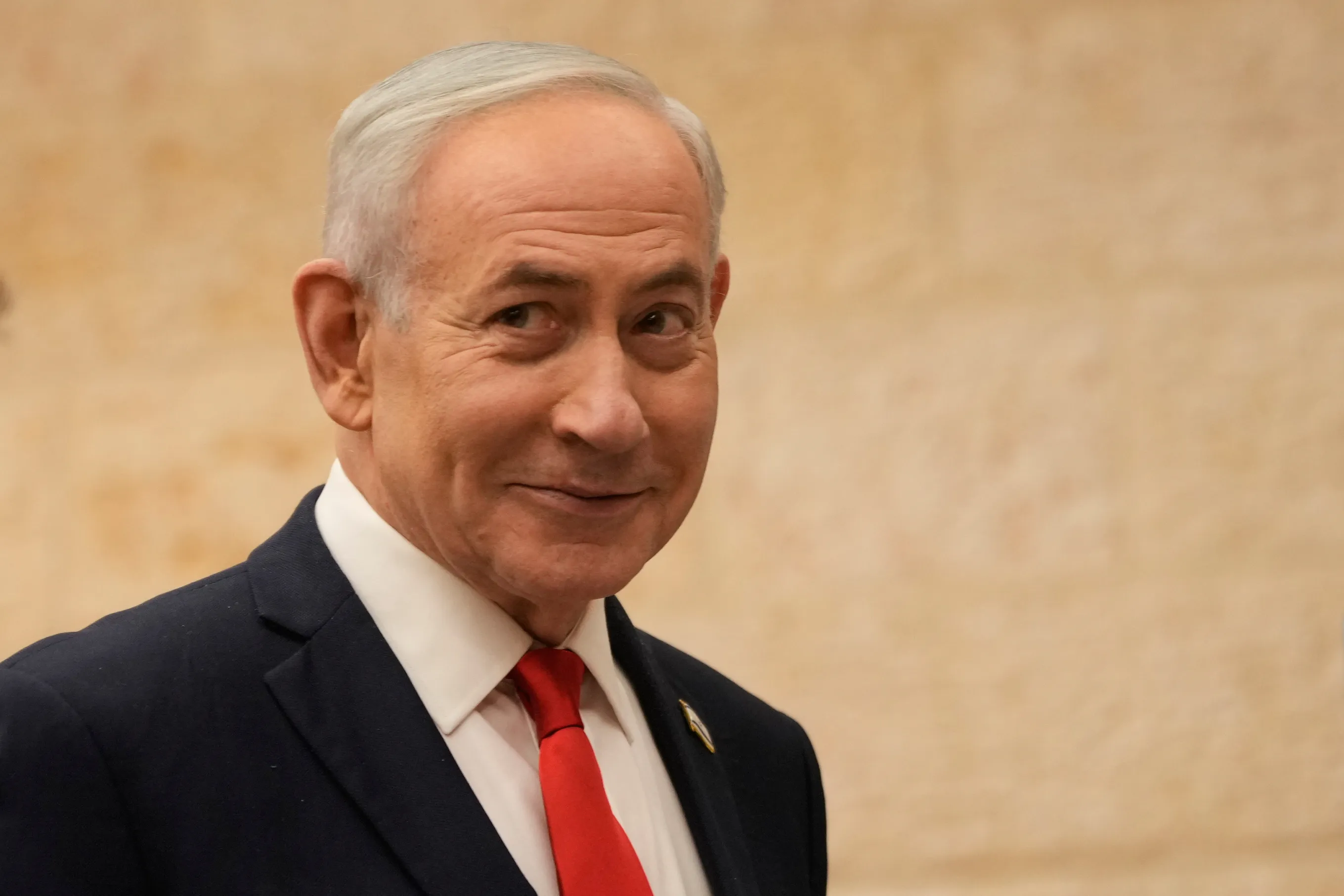
Beneath their putative big tent, the national Democratic Party is embroiled in an ideological civil war that is likely to intensify through the 2028 presidential campaign.
While there are many topic Democrats disagree on — socialism, transgender issues, open borders and appeals to the white working class — the one that underlies this battle for the party’s soul is U.S. support for Israel.
“The genocide in Gaza has had an overwhelming effect on large, significant segments of the American public,” said Ian Lustick, co-author of the new book, “ Israel’s Lobby: America in the Grip of a Foreign Power. “ “Israel’s policies in the past 20 years have become essentially indefensible.”
For Jews critical of the Netanyahu regime, the horrific Oct. 7 Hamas attack (1,200 Israelis killed; hundreds taken hostage) did not justify killing thousands of Gaza civilians or targeting journalists and emergency medical personal with supposedly precision air strikes.
For single-issue, pro- Likud Jews, having a Democratic Party united against further U.S. aid to Israel means they would rather have a JD Vance or Marco Rubio in the White House, and a Republican-controlled Congress.
In U.S. Senate races in Michigan and Georgia, pro-Likud activists are supporting Republican campaigns.
Shocked by Abdul El-Sayed’s Democratic primary victory, prominent Detroit businessman Eric Bronstein — a Democrat — wrote an open letter to Jewish Democrats and independents in support of Republican Senate candidate and former Rep. Mike Rogers (R-Mich.). Several Jewish Democratic bundlers later met for a Rogers fundraiser.
Other Michigan Jewish Democrats, like Attorney General Dana Nessel, disagree, declining to endorse Rogers . “We have a moral imperative to place the needs of the world above even our own self-interest and, yes, even our own survival,” she told a gathering of Jewish Democrats, provoking Likud supporters’ outrage.
In Georgia, in an open letter to Sen. Jon Ossoff (D) — Jewish, up for reelection and a possible 2028 presidential aspirant — Atlanta Jewish Times publisher Michael Morris called on Ossoff to “stop lying to me and your constituents” about his “ironclad support for Israel. … Your antagonism toward Israel has remained steadfast.”
El-Sayed and Ossoff recently rejected controversial Twitch streamer Hasan Piker’s alleged antisemitic postings. That was insufficient and too late, legacy Jewish organizations said.
In Florida’s U.S. Senate primary, state Rep. Angie Nixon (D), a democratic socialist, has repeatedly accused Israel of committing genocide . She criticized the favorite for the nomination, Alex Vindman, for silence on Israel. She introduced a bill in the Florida legislature calling for a “de-escalation and ceasefire in the state of Israel and occupied Palestine,” supports cutting U.S. aid for the Jewish state and refuses AIPAC money. Nixon’s position on military aid to Israel helped her upset win .
Across the country, accepting AIPAC money has proved toxic for many congressional candidates. For decades, AIPAC threw its weight (and money) around with supplicants. But in insurgent primary campaigns this year, accepting AIPAC-sourced campaign money has become a liability.
Rogers’s campaign in Michigan is nervous, asking AIPAC to lie low and routing the cash from its superPAC, United Democracy Project, to a separate non-campaign group. Notwithstanding, Jewish Insider reports that Rogers attended four AIPAC fundraisers in Los Angeles over a long weekend in late August.
Even in deep-red Oklahoma, one candidate in the Senate Democratic primary ran a social media spot featuring a giant red bin labeled “AIPAC Funds,” with a caption reading, “ Just taking out the trash .” The candidate, N’kiyla Jasmine Thomas, trounced her pro-Israel opponent , centrist Jim Priest.
Of course, there are still some imponderable “ifs” ahead. If, for example, Prime Minister Benjamin Netanyahu is turned out of office in October, that may affect U.S. Israel supporters’ internal debates.
Ironically, approaching the fall midterms, Democrats are much less divided than current struggles over Israel would suggest. From the center-left Democratic governors of swing states who support Israel, like Pennsylvania’s Josh Shapiro , to progressives like Alexandria Ocasio-Cortez of New York City, consensus exists on November’s campaign agenda: economics, affordability, Medicare for All, higher federal minimum wage, free preschool and no AI data centers.
I have a modest proposal for Democrats: Put off this searing fratricidal controversy over Israel until after the midterms. Don’t fight over the spoils of victory until there is a victory to fight over.
Mark I. Pinsky is a journalist and author based in Durham, N.C. He was a civilian volunteer attached to the IDF in El Arish, Sinai, in the summer of 1967.
Topics in this story
Gathered from external sources. Rights to this text belong to whoever originally published it.