$1.7 trillion Biden-era government funding bill found unconstitutional, appeals court rules
An appeals court ruled Friday that the 2022 $1.7 trillion government funding bill passed by Congress under former President Biden through a pandemic-era rule that allowed lawmakers to vote by proxy was unconstitutional. The New Orleans-based 5th U.S. Circuit Court of Appeals voted 9-8, stating that voting by proxy went against the Constitution’s Quorum Clause…
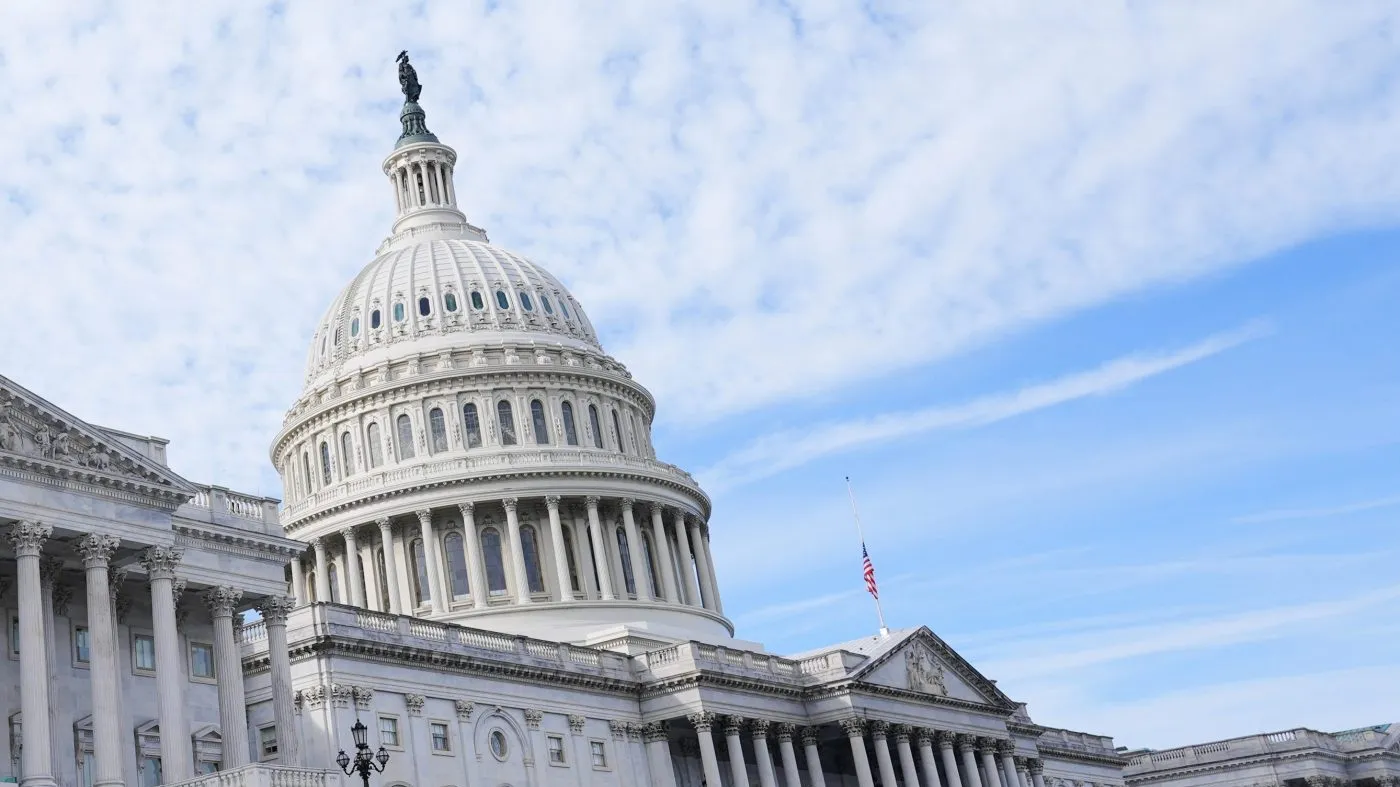
An appeals court ruled Friday that the 2022 $1.7 trillion government funding bill passed by Congress under former President Biden through a pandemic-era rule that allowed lawmakers to vote by proxy was unconstitutional.
The New Orleans-based 5th U.S. Circuit Court of Appeals voted 9-8, stating that voting by proxy went against the Constitution’s Quorum Clause as its “text, context, original understanding and unbroken historical application all indicate that Members of Congress must be present for quorum purposes.”
“‘Proxy presence’ does not count,” U.S. Circuit Judge Cory Wilson, a Trump appointee, wrote in the ruling. “While the chambers of the legislature have much discretion regarding their rules of procedure, the Quorum Clause’s constraints on congressional power cannot be circumvented by congressional fiat.”
BestReviews is reader-supported and may earn an affiliate commission.
The House used the proxy rule when the 2023 Consolidated Appropriations Act was passed 225-201, with 226 House members recording their presence and their vote by proxy.
“Thus, when the House voted on the Act, less than a majority of members were physically present,” Wilson wrote.
He noted how the rule was implemented during the COVID-19 pandemic, in which voting by proxy preventing the risk of the virus spreading when infections were still high. He also established that the federal government’s “theory” was that Congress could define what “present” means for the purposes of holding quorum.
He added, however, that the fact that it was implemented in response to the pandemic “does nothing to minimize the ramifications of the Government’s theory, because nothing about that theory depends on the existence of an emergency.”
“Under the Government’s view, the House needs no external justification whatsoever before allowing Members to delegate their presence to a proxy for quorum purposes,” Wilson wrote. “While an ’emergency may afford a reason for the exertion of a living power already enjoyed,’ an emergency ‘may not call into life a power which has never lived.'”
Texas Attorney General Ken Paxton (R), who earlier this month lost his Senate bid, brought the case in 2023 to block the Pregnant Workers Fairness Act from being enforced in Texas.
Wilson wrote that the decision does not extend further to the Pregnant Workers Fairness Act’s impact on Texas beyond “affirming the relief awarded by the district court.”
Judge James Graves Jr., an Obama appointee, wrote in the dissenting opinion that the majority had misinterpreted the Constitution and that no member of the House objected that there was a lack of quorum. He added that requiring lawmakers to be in person “shoehorns a much larger requirement into the Constitution.”
He also noted that 99 percent of lawmakers took part in the vote on the omnibus bill.
“Put simply, historical practice over the last 235 years strongly favors rejecting the majority’s narrow interpretation,” Graves wrote. “Even the First Congress, which included Framers of our national charter, well understood that physical attendance was not required by the Quorum Clause.”
Topics in this story
Gathered from external sources. Rights to this text belong to whoever originally published it.