Trump’s $5,000 dividend falls flat with GOP senators
President Trump’s call to give all American adults $5,000 payments if Republicans win the midterm election is getting panned by Republican lawmakers, who warn they will not support giving away money to people who don’t work or pay taxes. Fiscal hawks in the GOP warn the extravagant proposal raises questions about the looming insolvency of…
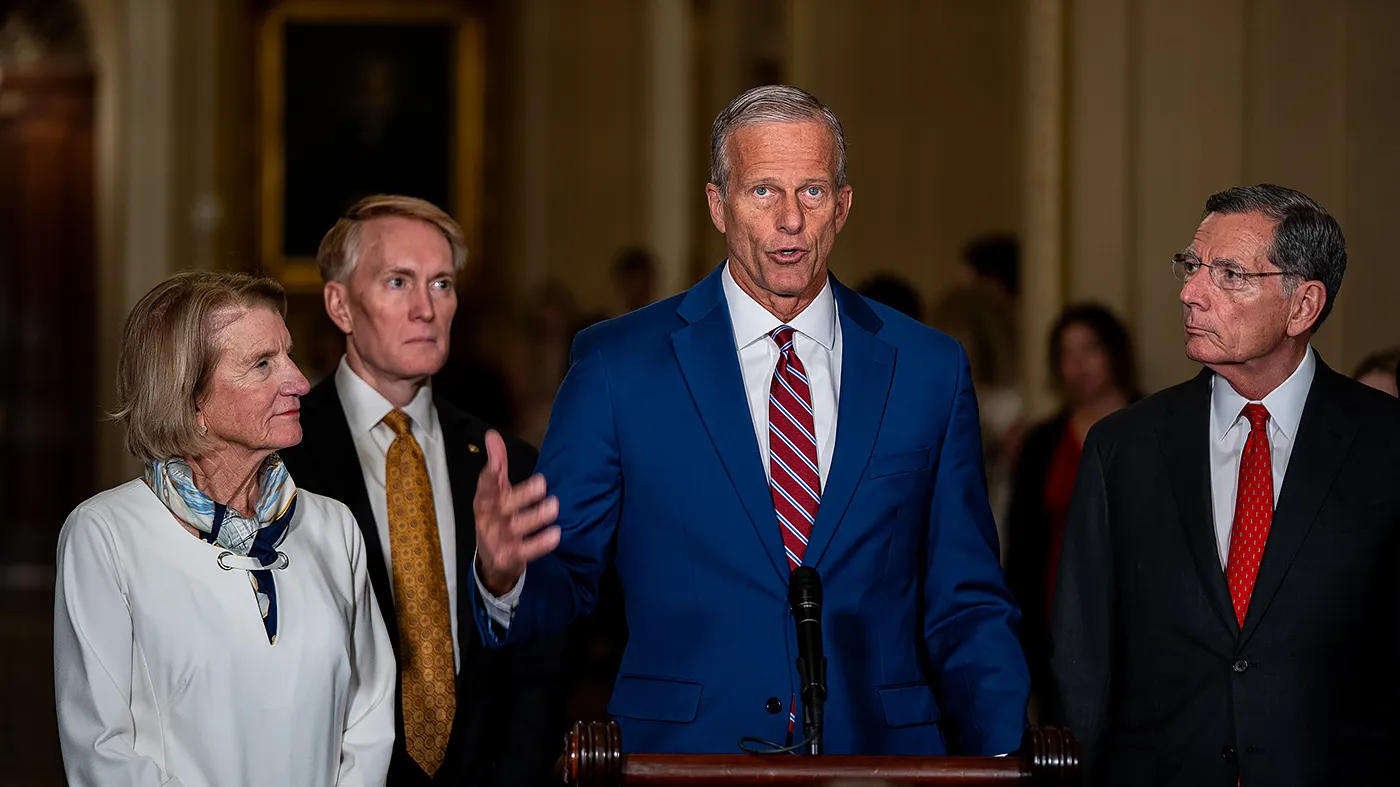
President Trump’s call to give all American adults $5,000 payments if Republicans win the midterm election is getting panned by Republican lawmakers, who warn they will not support giving away money to people who don’t work or pay taxes.
Fiscal hawks in the GOP warn the extravagant proposal raises questions about the looming insolvency of Social Security and Medicare, which are projected to hit shortfalls in 2032 and 2033, respectively.
Trump’s proposed payments would add more than $1 trillion to the national debt and require Congress to raise the debt limit by more than initially expected to cover the reminder of his second term.
“We’re trying to figure out what that proposal is. He called it a ‘dividend’ but I don’t know what that proposal is and I’ve seen no legislation,” said Sen. James Lankford (R-Okla.), who warned that pumping more than a trillion dollars into the economy could make inflation worse.
“I don’t know whether it should go out at all,” he said.
“We watched the Inflation Reduction Act and the money that was actually shipped out the door and what that did to inflation across the country,” Lankford said of the economic impact of former President Biden’s signature spending bill in 2022. “That had a detrimental effect when you throw money out.”
Other Republicans raised concern about the nation’s $40 trillion debt, which now costs more than a trillion dollars in annual interest payments.
“I haven’t seen the mechanism and mechanics around how we could get it done,” Sen. Steve Daines (R-Mont.) said of the $5,000 dividend. “I do worry about the $40 trillion in debt that we have, and something like that would add to the national debt.”
Daines acknowledged that it was “the first time I heard it” when Trump unveiled the proposal during his primetime address at the GOP midterm convention in Dallas last Thursday.
GOP senators say they didn’t receive any heads-up from the president and don’t expect action on his proposal anytime soon.
Senate Majority Leader John Thune (R-S.D.) on Monday declined to endorse Trump’s proposal, noting the president hasn’t put out a specific plan.
“There’s no specific proposal out there and obviously how that were to come together, Congress would have a big role in determining,” he said.
Thune did suggest GOP senators wouldn’t ignore the proposal.
“There will be discussions around that subject,” he added.
But like other Republicans, Thune was blindsided by the surprise proposal.
Asked if he received any notice before Trump unveiled his $5,000 dividend proposal at last week’s GOP midterm convention, Thune said: “I did not.”
Sen. Rand Paul (R-Ky.) said paying a dividend to Americans would make sense if the federal government were running a surplus instead of a $2 trillion annual deficit.
“Most of the time when you give out dividends, you’re running a profit. I’m thinking maybe they just forgot the negative sign. If you lose $2 trillion a year, I guess it would be a negative $5,000 dividend,” he said.
“I don’t think it would be a good idea to basically borrow money to send to the public,” he said.
“I don’t think it will come to fruition,” he added
Sen. Bill Cassidy (R-La.) said he would support putting $5,000 in funding into Americans’ retirement or investment accounts provided the money “is there.”
He said if the federal government needed to borrow them money to fund the dividend, that would be a big problem.
“If you’re telling me we’ve got to borrow the money then obviously that’s going to negatively impact people’s personal finances in the near, intermediate and long term by raising interest rates,” he said.
Other GOP lawmakers say that it would need to be reworked into a tax cut for people who pay income or payroll taxes if it is to have any chance of passage in the next Congress.
“I think we should be incentivizing work. I don’t think we should be paying people that are not working,” Senate Commerce Committee Chair Ted Cruz (R-Texas) said in an interview with Fox News.
Cruz said the proposal needs to be “structured as a tax refund.”
Senate Appropriations Committee Chair Susan Collins (R-Maine) called the idea “extraordinarily costly.”
Thune last week defended Trump’s proposal as an effort to give more money back to taxpayers, but he stopped well short of pledging to bring it to the Senate floor for a vote.
Asked if Senate Republicans would pass Trump’s $5,000 dividend, Thune replied: “Well, that’s a good question.”
“We’ll cross that bridge when we come to it,” he said.
When he was asked about whether the payout should go to people who don’t pay taxes, Thune said: “All those questions are unanswered at this point.”
Republicans are wary of embracing Trump’s plan to make large payouts to approximately 270 million Americans at a time when investors’ concerns over the national debt are driving up bond yields.
The yield on 10-year Treasurys crossed to more than 5 percent on Monday before closing for the day slightly below that mark. Treasury Secretary Scott Bessent has repeatedly sought to calm the bond markets, but to little avail so far.
Paul on Monday called on Congress to cut spending instead of sending out $5,000 checks to millions of Americans regardless of their employment status.
“If Washington really wanted to tackle affordability, it would rein in the reckless spending that drives inflation,” he wrote on the social platform X.
Paul is calling on Congress to adopt a budget to cut 6 cents from every dollar in federal spending across the board.
“My Six Penny Plan cuts six cents from every federal dollar spent, balancing the budget in five years and making life more affordable for everyone,” he said.
Sen. Chuck Grassley (R-Iowa), who represents a state where farmers are struggling with high fuel and fertilizer prices, said Republicans need to address the affordability crisis many Americans are facing.
He said high diesel prices are a bigger issue in the Iowa gubernatorial and Senate races than the proposed $5,000 dividend. Both of those contests are competitive.
“We need to concentrate on affordability for this election. With diesel at $6 [a gallon], the best thing Trump could do is follow what a Republican president did in the ”70s and a Democrat president did in the ’70s when they were worried about the price of food: They put an embargo on soybeans and wheat,” Grassley said.
He called on Trump to stop diesel exports to reserve fuel for domestic consumption.
“He should put an embargo on diesel leaving the country because $6 diesel is a bigger issue in Iowa than $5,000,” he said, referring to the dividend.
Some Republicans, however, are applauding Trump’s dividend proposal.
Sen. Darline Graham (S.C.), who recently won a Republican primary runoff with Trump’s support, expressed support for the proposal.
Other Republican senators are on the fence.
“It kind of came as a surprise to everybody, the president’s proposal,” said Senate Republican Policy Committee Chair Shelley Moore Capito (W.Va.).
“When it’s time, we’ll take a look at it. I don’t think it will come in the immediate,” she said.
Asked about the opposition of fiscal conservatives who don’t want to send hefty payments to people who don’t work or pay taxes, Capito said: “There’s a lot of discussion, I’m sure, that’s going to be had.”
Topics in this story
Gathered from external sources. Rights to this text belong to whoever originally published it.