ICE tried using Palantir to review voter roll information?
ICE is now investigating the people who help Americans register to vote.
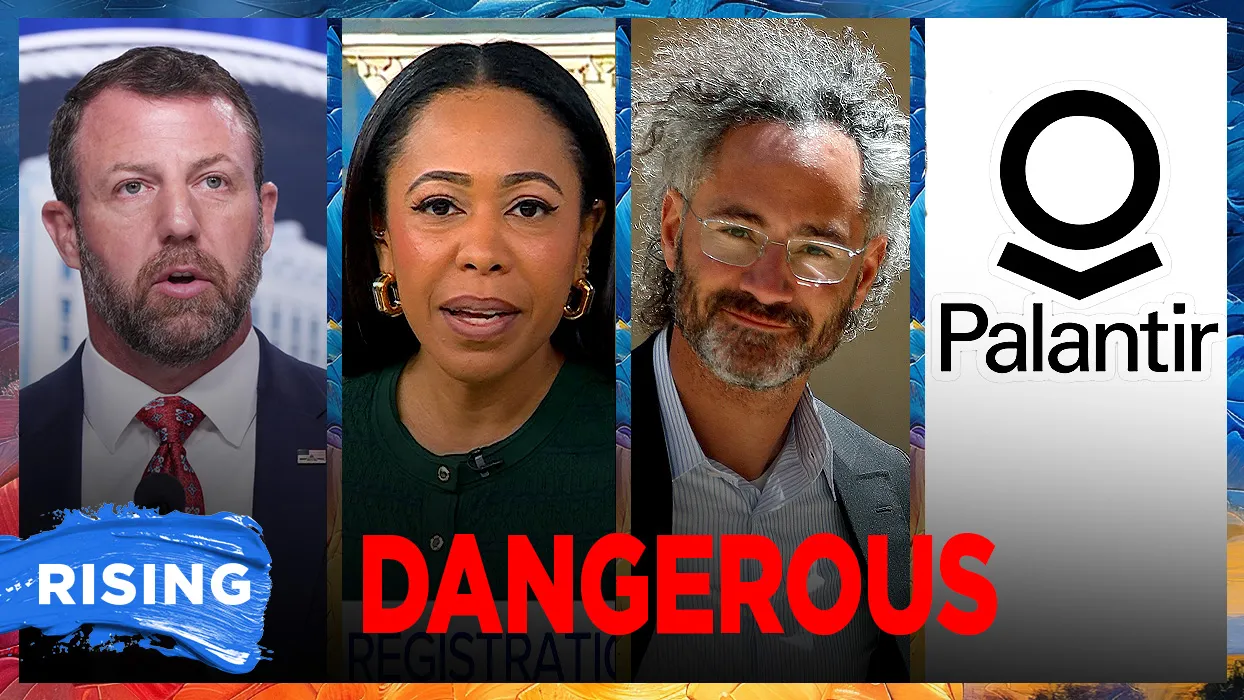
ICE is now investigating the people who help Americans register to vote.
According to internal government documents obtained by the legal nonprofit Democracy Forward, Homeland Security Investigations, ICE’s investigative arm, spent the past year scrutinizing hundreds of nonprofits and organizations involved in voter registration , including at least 82 organizations in Pennsylvania and 41 in New Jersey.
These documents were obtained through a recent Freedom of Information Act lawsuit, and they show the agency considered using undercover agents to communicate with organizations suspected of helping noncitizens register to vote.
A June report says investigators had taken in 50.6 million records from a Justice Department dataset, plus another 48.4 million records obtained through what the document calls “independent sources.” That’s nearly 100 million records being analyzed for potential investigative leads. This year, Homeland Security Investigations said it had opened 418 voter-fraud cases, but 318 of those 418 cases had not been referred for prosecution — meaning a lot of the investigations reportedly produced nothing.
According to the documents, Homeland Security Investigations focused on nonprofit groups in battleground states like Ohio and Pennsylvania, as well as targeting places like Washington, D.C., and Minnesota.
State voter-roll information may have also been entered into Palantir’s ELITE system , an ICE tool used to identify, prioritize and locate people targeted for immigration enforcement, according to Democracy Docket.
Noncitizen voting is already prohibited under federal law. The government was not investigating a person suspected of illegally voting, which would have been valid — it was investigating the organizations helping people register to vote. Which should be problematic for everyone.
This administration has a documented history of challenging the legitimacy of our elections. Don’t forget, Donald Trump pressured Georgia officials after losing the 2020 election, and asked Secretary of State Brad Raffensperger to “find” enough votes to reverse his defeat. To this day, the president won’t even admit he lost the the 2020 election.
Now, years later, his administration has built an enormous federal apparatus around finding voter fraud, which now apparently includes examining nonprofits, scrutinizing voter rolls and considering undercover operations.
The available evidence shows that voter fraud is extraordinarily rare. One Brennan Center study of 23.5 million votes across 42 jurisdictions, found just 30 suspected cases of voter fraud. Thirty — that’s roughly one for every million votes. More recent state audits have similarly found numbers that were extremely low and did not sway the outcome of the election in any way.
Lindsey Granger is a NewsNation contributor and co-host of The Hill’s commentary show “Rising.” This column is an edited transcription of her on-air commentary.
Topics in this story
Gathered from external sources. Rights to this text belong to whoever originally published it.