Republicans walk a Trump tightrope heading into midterms
Republicans are increasingly putting daylight between themselves and President Trump as November’s elections draw closer, highlighting the political tightrope facing members in competitive races. In recent weeks, some GOP lawmakers have broken with Trump on beef imports, the military conflict with Iran, the administration’s immigration crackdown and his executive order requiring federal agencies to rename…
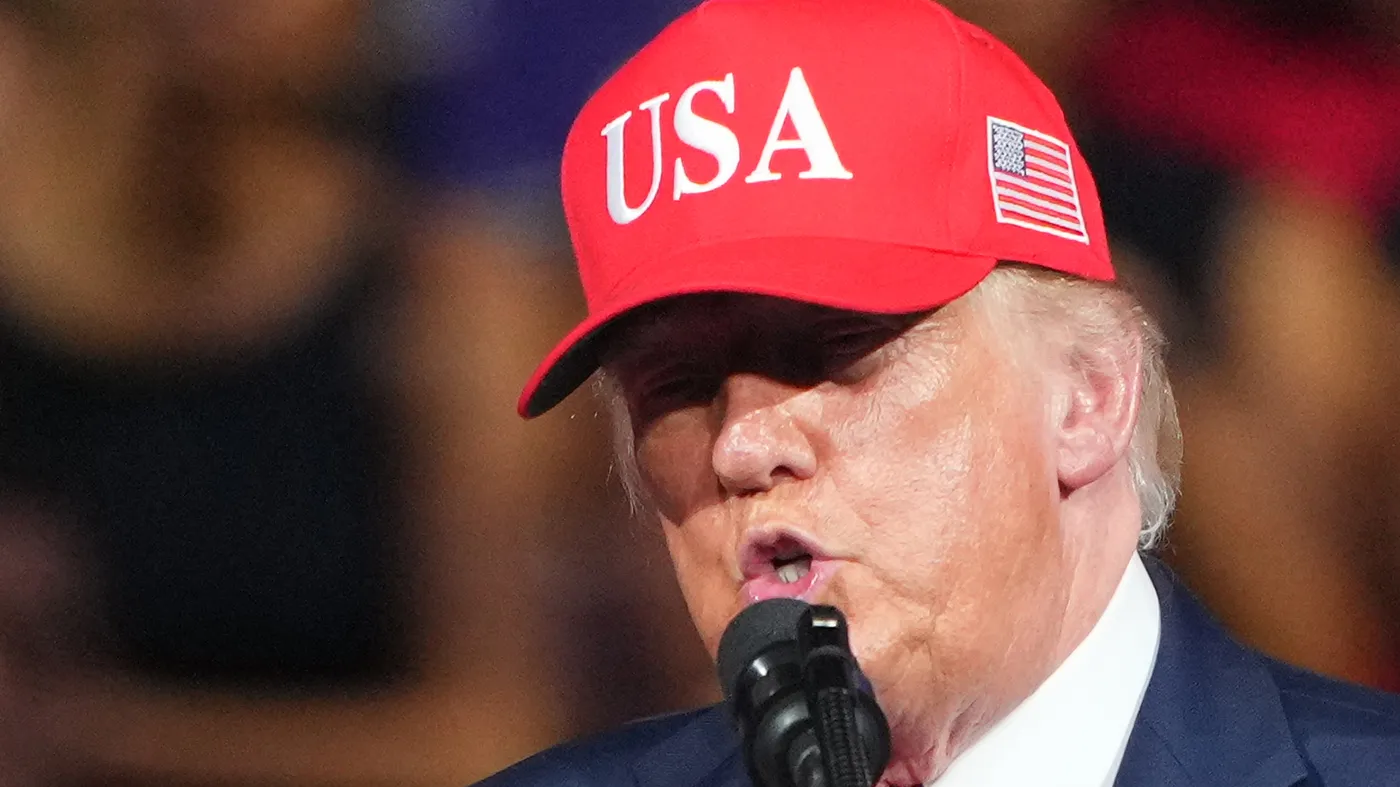
Republicans are increasingly putting daylight between themselves and President Trump as November’s elections draw closer , highlighting the political tightrope facing members in competitive races.
In recent weeks, some GOP lawmakers have broken with Trump on beef imports, the military conflict with Iran, the administration’s immigration crackdown and his executive order requiring federal agencies to rename Lake Ontario to Lake America.
Trump has sought to nationalize the contests, urging Republicans to treat the elections as a continuation of his agenda and telling supporters at a rally last week to “pretend I’m on the ticket, because essentially I am.” But members in tight contests are increasingly trying to make their campaigns about issues closer to home — and create some separation from the White House where politically necessary.
Rep. Ashley Hinson (R-Iowa), the Republican Senate candidate in Iowa, for instance, wrote on the social media platform X Monday that constituents in her home state “are being squeezed and shouldn’t have to foot the bill at the pump or the checkout line for the war in Iran.” She called for an immediate end to the ongoing operation.
Her statement comes after seven Republicans broke with their party in support of a war powers resolution that would limit Trump’s military actions in Iran just last week. Reps. Zach Nunn (R-Iowa) and Mariannette Miller-Meeks (R-Iowa) — two of the new “yes” GOP votes — in particular pointed to how the war is impacting their constituents at home.
“I said it in March: the mission had to stay focused and limited, because Americans do not want another forever war. I will not vote to keep our soldiers in an open-ended war, with Iowans paying too much at the pump,” Miller-Meeks wrote on social media after the vote.
“The Iranian regime and its nuclear ambitions have been defanged. The President needs to present a plan to Congress and the American people for how this ends so we can focus on bringing our soldiers home and lowering prices,” she added.
Nunn echoed similar sentiments, arguing in a statement that Iowa “has already paid a devastating price, including two service members killed by an Iranian drone in Kuwait.”
Miller-Meeks, Nunn and Rep. Tom Barrett (R-Mich.), who voted in favor of the resolution for a third time last week, are running in seats rated as toss-ups by the nonpartisan Cook Political Report.
Hinson and Rep. Tom Tiffany (R-Wis.), the GOP nominee for Wisconsin’s gubernatorial race, have also broken with Trump on his plan to import foreign beef as a way to reduce prices for Americans. Hinson argued in a post last month that Iowa cattle producers “raise the highest quality beef in the world.”
“They’ve faced tough market conditions for years, and increasing beef imports would lead to more uncertainty and instability for our farmers. We should be focused on cutting red tape for cattle producers, lowering the cost of production, and supporting market-based solutions to support Iowa producers and lower costs for consumers,” Hinson wrote on X.
And Tiffany told reporters last month that he stands with Wisconsin farmers when asked about Trump’s plan, according to WisPolitics.
“We shouldn’t penalize our farmers here in Wisconsin by having beef that comes in from other countries,” Tiffany said. “We need to grow our capacity, both here in Wisconsin as well as nationally.”
Tiffany has also argued that he believes “the Great Lakes are the Great Lakes and should stay Lake Superior, Lake Michigan, Lake Ontario,” according to Wisconsin Public Radio .
A Marquette Law School poll released last month indicated that Tiffany is currently tied with Democratic opponent David Crowley in the governor’s race. In the survey, 44 percent of registered voter respondents said they would back Tiffany and 44 percent said they would back Crowley if the election were happening that day, while 12 percent were undecided.
The distance from vulnerable Republicans also comes as Trump’s approval rating has weakened. His overall approval was 32 percent, the lowest of his second term, in a Reuters/Ipsos poll conducted between Sept. 17 and Sept. 20.
Rep. Maria Elvira Salazar (R-Fla.) last week released a scathing advertisement accusing Trump of going “too far” with some of his immigration enforcement efforts. She argued that the same Hispanics who voted for him in 2024 “feel betrayed today.”
She later said Sunday on CBS News’s “Face the Nation” that Trump was “very receptive” to her warning about Hispanic voters.
And Rep. Mike Lawler (R-N.Y.), whose seat is rated as a toss-up by the Cook Political Report, dodged the question of whether he pledges allegiance to Trump, telling ABC News’s George Stephanopoulos that “I pledge my allegiance to my constituents, which I always have.”
Still, some Republicans in tight districts have chosen to embrace Trump rather than break from the president.
Rep. Derrick Van Orden (R-Wis.), whose seat is rated as a toss-up by the Cook Political Report, told The Associated Press that he doesn’t have any “second thoughts” about aligning himself more closely with the president. Van Orden is competing against Democratic opponent Rebecca Cooke in November.
“I’ve done everything I possibly can to help the people here in the 3rd (District) and to help Wisconsinites and help Americans,” Van Orden, who attended the GOP midterm convention in Dallas, told the outlet. “And if people in the 3rd Congressional District decide they want to have somebody else who is a rampant socialist to represent them, that’s up to them.”
Topics in this story
Gathered from external sources. Rights to this text belong to whoever originally published it.