Trump’s midterm reckoning: Why the Republican Party is facing a Senate wipeout
A year ago, losing control of the Senate seemed rather unlikely for Republicans. Today, the fact that their Senate majority is in doubt at all is a major rebuke.
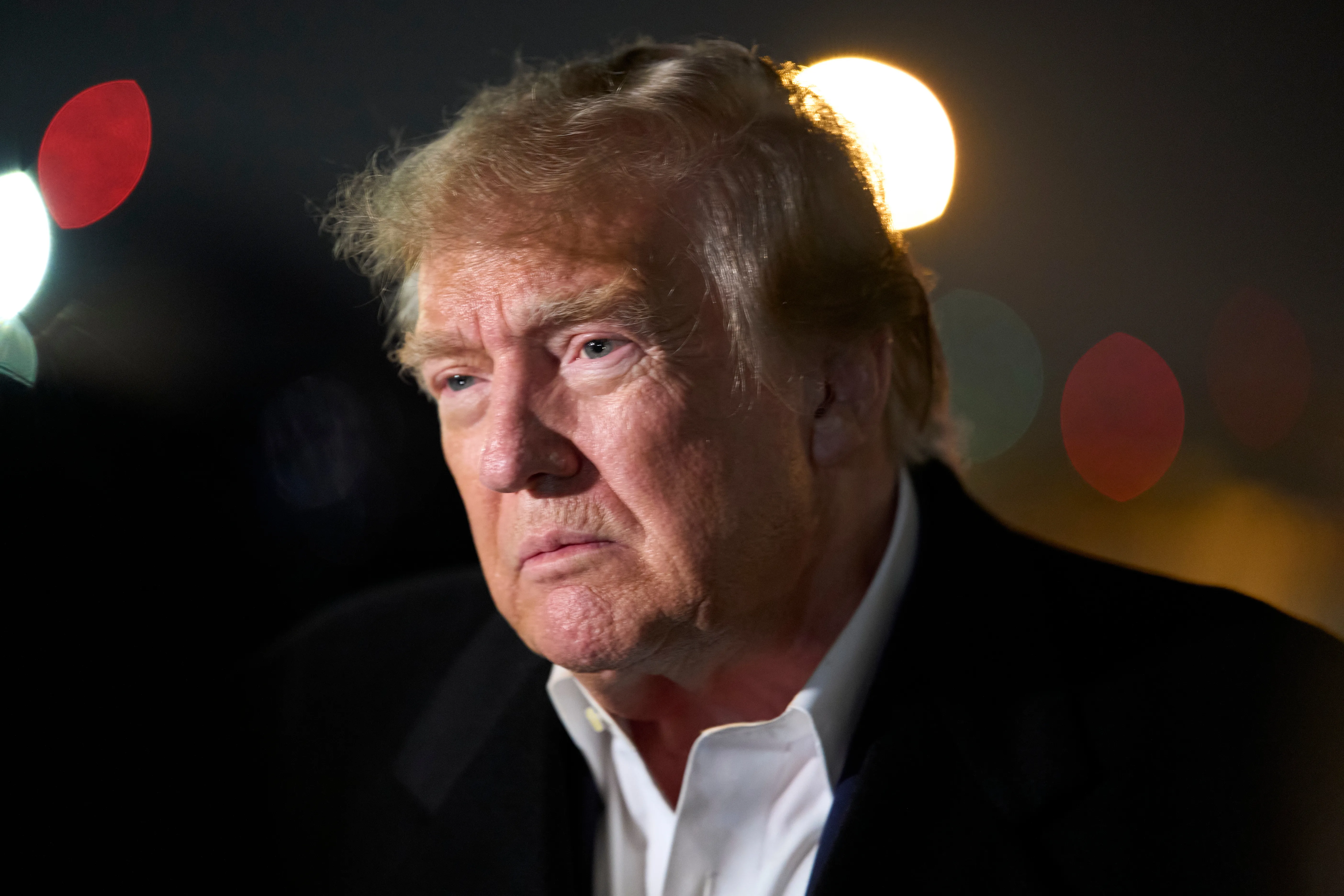
You can tell when President Trump knows he is in trouble. Of course, he’ll never admit to making a mistake. If there is something everyone should know by now, it’s that Trump will never admit he is wrong, never admit he lost and never apologizes.
But over the past few weeks, Trump has clearly signaled he recognizes that he has not taken inflation seriously enough — the trade fight with Canada was ill-timed, to say the least — and he picked some real duds to run for Senate.
Although he deserves some credit for recognizing his errors , in marked contrast to the Biden administration’s denial and delusion, it is too late to fix his mistakes. Despite the copious copium dished out by various conservative-leaning pundits over bad polls and fake news, and what is really a favorable Senate map, Republicans are more likely than not to lose control of the Senate in addition to their majority in the House .
A year ago, losing control of the Senate seemed rather unlikely for Republicans. The only seat in a state where Trump lost in 2024 was Maine , where Sen. Susan Collins (R) has proven to be the ultimate political survivor. At the same time, Democrats were defending seats in two states Trump won — Georgia and Michigan. Even if Trump and the Republicans faced a typical first-term downer cycle, losing the majority seemed inconceivable.
If every Republican in every state ran 10 points behind 2024 Trump, Republicans would lose only Maine and North Carolina. That is a monumental structural advantage. Trump’s winning margin in the seats that are now viewed as competitive ranged from 11.2 percent (Ohio) to 17.9 percent (South Carolina). Yet according to the RealClearPolitics averages , Democratic candidates are winning in all the 2024 competitive and Democratic states, as well as in Ohio, Alaska (plus-13.1 percent for Trump) and Texas (plus-13.7 percent for Trump).
There are enough close races that the final tally for the Senate could be anywhere from a 53-47 Republican majority (no change) to a 55-45 Democratic wipeout. It is increasingly looking like at least a slim Democratic majority. At the time of writing, the RealClear “no toss-ups” map is 52-48 for Democrats. With their seven toss-ups, RealClear has it at 47-44, Sabato’s Crystal Ball shows 49-46, with five toss-ups, and Cook Politico Report is at 47-46, with seven toss-ups.
The challenge in projecting the final numbers is that none of the Democrats in competitive races are consistently polling at or above 50 percent. That means undecided voters will make the difference — most of those undecided voters were 2024 Trump voters. That bit of data is what gives Trump and Republican leaders’ confidence.
The problem with that reasoning, however, is that those undecideds must both turn out and not turn against the Republicans.
Consider Ohio, where Trump won by more than 11 points. Former Sen. Sherrod Brown (D) leads current Sen. Jon Husted (R) — appointed to the JD Vance vacancy — 48.1 to 44.8 percent, with 7.1 percent undecided, in the RealClear average. If you accept the polling, then for Husted to overtake Brown, he would need to win 75 percent of undecided voters — and that’s if they actually vote. If only half the undecided voters turn out, Husted loses.
The situation is brighter in Texas, with Democratic state Rep. James Talarico having just a 1.8 percent RealClear advantage and 4.8 percent undecided. Republican Ken Paxton needs 71 percent of the undecided voters. If only half the undecided voters turn out, Paxton loses. The narrower lead does mean that more polls are within the margin of error. Paxton might be closer than reported. But margin of error works both ways.
Yes, the polls might be off, but that does not track with the national mood. The right direction-wrong track is net negative by more than 31 points. Trump’s RealClear average approval is negative by almost 22 points. Even Trump-friendly polls show the president lagging, with Rasmussen at negative 16 points, Morning Consult down 17 points and RMG Research down 15 points. The most Trump-friendly of them all, Harvard-Harris, has Trump down 20 points. A systemic polling error of 1 point in the Republicans’ favor (which is a lot), would still leave Democrats leading most races and Republicans relying on turning out sour voters.
It is possible Republicans will hang on to 50 or 51 seats. Abdul El-Sayed is a bad candidate in Michigan, stubbornly stuck at about a 2-point lead . The New York Times story on Mary Peltola’s skullduggery could be enough to boost the real Sen. Dan Sullivan (R) in Alaska. Troy Jackson is a weak candidate in Maine against Collins.
But the fact that their Senate majority is in doubt at all is a major rebuke to Republicans. A new Senate with a bare Republican majority would still feature unreliables like Lisa Murkowski (R-Alaska), the prickly Rand Paul (R-Ky.) and the wildcard John Fetterman (D-Pa.). And all that with a president who maybe-not-so-secretly thinks he should be able to run again and certainly is not interested in relinquishing any power.
Regardless of the results on Tuesday, it will be a raucous, fractious couple of years.
Keith Naughton is a former campaign consultant and co-founder of the public affairs firm Silent Majority Strategies. Find him on his Substack, “Betting On Politics.”
Topics in this story
Gathered from external sources. Rights to this text belong to whoever originally published it.