What Orson Welles’s ‘War of the Worlds’ broadcast tells us, 88 years later
Our current obsession with fake news really began 88 years ago.
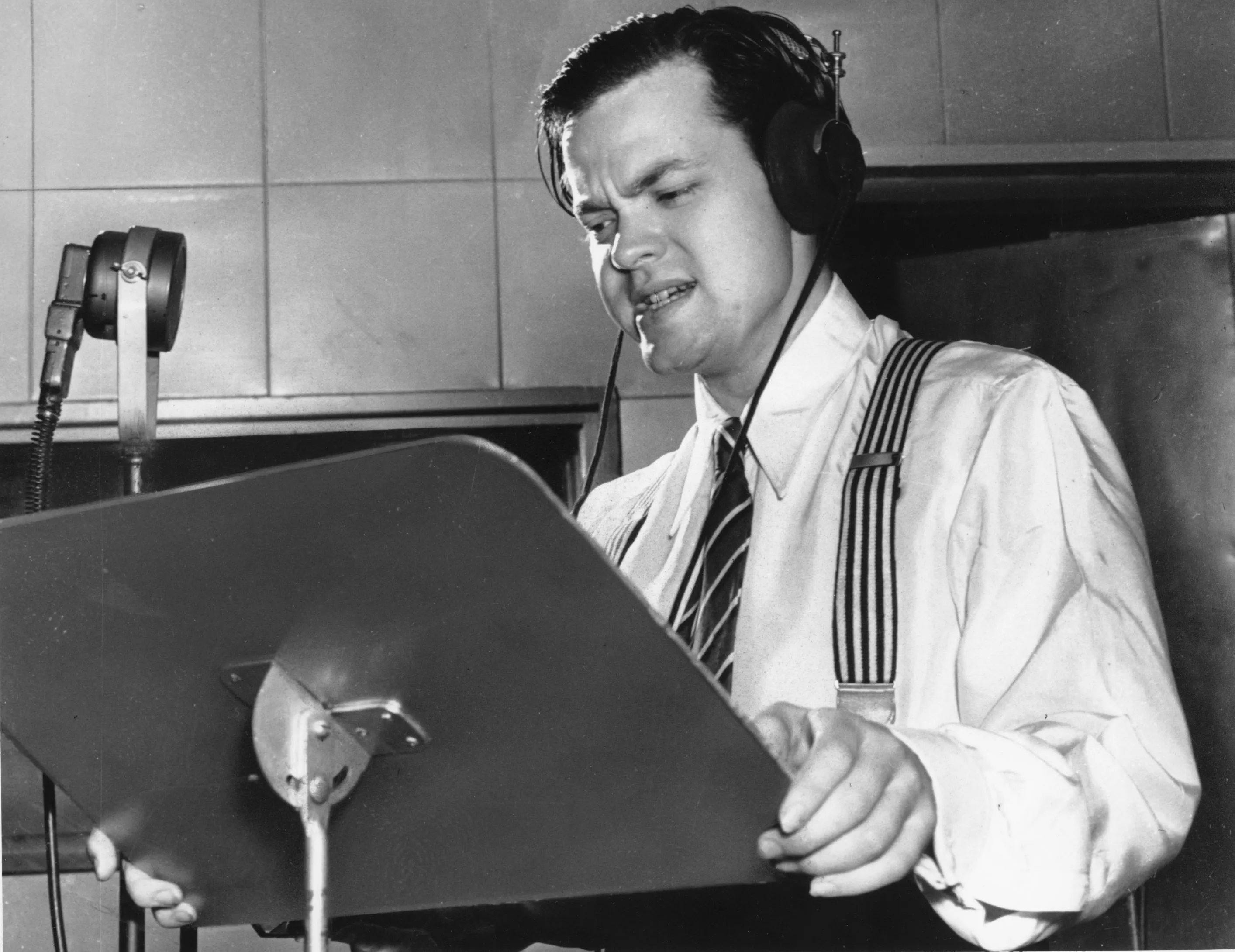
On October 30, 1938, a broadcast interrupted dinners across America. This was the era of breaking news bulletins, and many thought it was the beginning of World War II.
Hitler had been threatening to invade Czechoslovakia to take back the Sudetenland. War had seemed imminent all through the month. But this was something different. Up in the radio studio at CBS in Manhattan a young man with a baritone voice was holding up his hands for six seconds of silence after a reporter had been burned alive on the radio. The boy wonder, Orson Welles, held the world in thrall with his Martians landing all over America and people running for the hills.
Halloween is upon us, and so is the 88th anniversary of Orson Welles’ broadcast of H.G. Wells’s “The War of the Worlds.” What started as the seventeenth program of Mercury Theatre on the Air quickly devolved into a terrifying news broadcast that Martians had landed in Grovers Mill, N.J. and emerged with heat ray guns and poisonous gas to exterminate humanity.
The Martians then headed for New York, and people headed for the countryside. They hid in basements and cars. They ran out of apartment buildings. They dashed from restaurants without paying. They ran into churches, out movie theatres, out of hospitals, weddings, schools, colleges — anything to get away from the advancing Martian’s that had suddenly had crossed the continental U.S., incinerated the army and were finishing off human life.
All this from the mind of a twenty-three-year-old on a brisk October night before Halloween. It was ingenious really. Take a science fiction novel by an English writer and turn it into a one hour drama with a breaking news format. Incinerate a reporter on the air and then go to six seconds of radio silence, or “dead air.”
This is where Welles shined. He turned this moment of silence into a moment of terror and made the radio a character, breaking the fourth wall. We are used to that now, with characters talking to the camera in everything from “The Big Short” to “The Office.” But in 1938, no one came out from behind the curtain.
Welles did two things at once. He used the new medium of radio against itself by proclaiming a crisis, then had radio run away in panic as well. Brilliant. It was the first Fake News broadcast.
The blowback from this moment would change radio forever. Welles himself was headed for jail — or at least banishment or physical harm with death threats and lawsuits raining down on CBS and himself. CBS held a famous news conference, with him standing at the center, looking like the title character of “ Peck’s Bad Boy ” pleading innocence.
It didn’t work, but then Dorothy Thompson the leading columnist of her day turned the pandemonium on its head and told the world Orson had done everyone a favor by showing how ignorant, how uneducated, how gullible the American public was. It was a warning to wake up, or else Hitler and Mussolini would soon be marching down Fifth Avenue.
Just like that, Welles was proclaimed a genius and headed to Hollywood to make his opus, “Citizen Kane.”
Orson later admitted to his prank on the BBC. He claimed he did it because people believed just about anything coming through the radio. He wanted to show we should question what we heard.
The thought that a 23-year-old could cause coast-to-coast panic today with a broadcast about invading Martians does seem absurd to our Twenty-First Century sensibilities. People have said this type of panic could never happen again. But when my book came out a few years back on the broadcast , “ Dead Air: The Night Orson Welles Terrified America ,” there were drones in the skies over America. President Joe Biden was telling us not to worry, but social media lit up with aliens and Martians invading.
Our current obsession with fake news really began 88 years ago, when Welles grabbed our anxiety and took it out for a night ride.
William Elliott Hazelgrove is the author of “Dead Air: The Night Orson Welles Terrified America.”
Topics in this story
Gathered from external sources. Rights to this text belong to whoever originally published it.