Jewish Dems in Michigan question place in party
Jewish Democrats in Michigan are facing a moment of reckoning in the Democratic Party as they grapple with a Senate nominee who has alienated some Jewish voters and with broader questions about their place in the party amid a rise in antisemitism. Progressive Democrat Abdul El-Sayed’s primary victory over moderate Rep. Haley Stevens (D-Mich.) earlier…
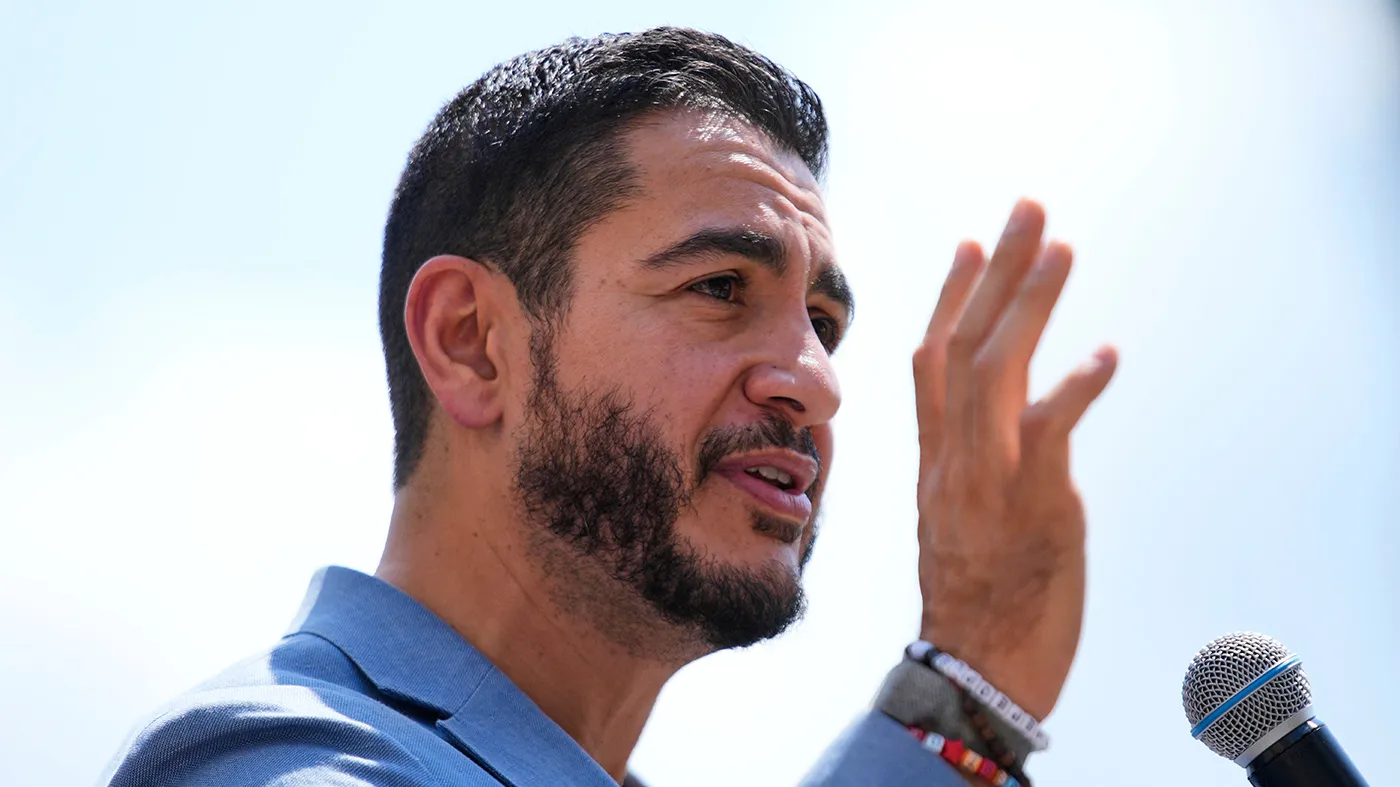
Jewish Democrats in Michigan are facing a moment of reckoning in the Democratic Party as they grapple with a Senate nominee who has alienated some Jewish voters and with broader questions about their place in the party amid a rise in antisemitism.
Progressive Democrat Abdul El-Sayed’s primary victory over moderate Rep. Haley Stevens (D-Mich.) earlier this month has thrust those questions into the national spotlight , with some Jewish Democrats openly wrestling with whether to back their party’s nominee despite having reservations about his rhetoric on Israel and response to recent antisemitic incidents.
Michigan Attorney General Dana Nessel (D), one of the state’s top Jewish elected officials, described some of those concerns in a recent interview with The Atlantic’s David Frum, saying many Michigan Jews feel increasingly unwelcome in their party and cast aside because of their belief that Israel has a right to exist.
“And so for a lot of us, you know, we feel really isolated. Like, do we have a home in the Democratic Party anymore?” Nessel said in the podcast released Wednesday.
Nessel was absent from the state party’s nominating convention on Saturday, announcing ahead of time that she would skip the gathering after a spring convention drew attendees who chased and shouted at Jewish and pro-Israel Democrats, sometimes preventing them from speaking.
She also said she feared the presence of five members of the state’s Democratic Party who had been criminally indicted for acts of vandalism, terrorism, harassment and intimidation against the Jewish Federation of Detroit and elected Jewish officials in their homes. The attorney general said the state party “seemingly are refusing to even suspend their membership to allow them to come to convention.”
“How are you supposed to feel, if you are an elected person, and who is a Democrat in Michigan, and you want to go to the convention, and you know those people are going to be there?” Nessel said on the podcast.
A spokesperson from the Michigan Democratic Party told The Hill on Sunday that “the party asked the individuals under criminal indictment not to attend the convention and they complied. ”
Michigan Democratic Party Chair Curtis Hertel touted the unity on display at the convention on Saturday and said the party is taking the concerns of Jewish Democrats seriously.
“As we saw at yesterday’s convention, Michigan Democrats are united heading into this election, and that includes a real, sustained commitment to earning the support of Jewish voters across our state,” Hertel said in a statement Sunday.
“We are committed to ensuring Democrats from every community feel safe and welcome within our party, including Jewish members, and that’s why we are taking seriously concerns Jewish Democrats have raised about antisemitism and safety, expanding regular dialogue with Jewish community leaders and the Jewish Caucus, and ensuring our candidates are showing up directly in Jewish communities across Michigan. We will continue these efforts through the election and beyond,” he continued.
Joan Lowenstein, endorsements chair of the Michigan Democratic Jewish Caucus, recalled that at the spring convention some of El-Sayed’s supporters became “not violent, but vociferously anti-Jewish and anti-Israel in supporting him,” which she said made many Jewish Democrats at the convention feel uncomfortable and like “they were being forced out.”
“In a way, it’s like being in any kind of club where you’ve been a longtime member and you’ve been loyal to the club, and all of a sudden, somebody comes in and tries to force you out,” Lowenstein told The Hill ahead of Saturday’s convention.
“I think there are many Jews, and I consider myself among them, who are going to stay in the club,” Lowenstein said. “There are others who say, ‘Look, this is a betrayal.’ People really feel betrayed … by seeing that a lot of our Democratic leaders are not standing up for us.”
The concerns are coming into sharper focus as Michigan Democrats wrestle with whether to back El-Sayed’s candidacy. Nessel told Frum she’s having conversations with Jewish Democrats who plan on backing the GOP candidate, former Rep. Mike Rogers (Mich.), but for many Democrats — including Nessel — the choice is not so clear, since Michigan is seen as an essential seat for Democrats to win in November if they want to take control of the Senate.
“I will amputate my right arm before I fill in the oval next to Mike Rogers’s name,” Nessel said. “I think that keeping a Republican majority in the Senate is incredibly dangerous. I think Mike Rogers would be a rubber stamp for all of the worst excesses of the most corrupt administration we’ve ever had in American history. So he is a danger.”
But Nessel has not embraced El-Sayed’s candidacy either. El-Sayed has consistently condemned antisemitism, but he faced pushback for his response to the antisemitic attack earlier this year at Michigan’s largest synagogue, Temple Israel.
After initially condemning the attack, he released a subsequent video statement in which he tied the attack to Israeli military activity, noting the attacker had family in Lebanon who died in an airstrike and saying, “hurt people hurt people.”
Nessel said she and some other Democrats have concerns about that statement and the fact that until recently, El-Sayed stood by the remarks. El-Sayed on Saturday apologized for the comments.
“I made a mistake,” El-Sayed said during an appearance before the Michigan Democratic Jewish Caucus at the state party’s convention in Lansing. “I should have issued a statement, of course condemning it, and it just should have been the full stop.”
In a statement to The Hill, a campaign spokesperson said El-Sayed is having “good conversations” with Jewish leaders and will continue to do so.
“Abdul is grateful for a weekend of good conversations, and he’ll continue to be actively engaged with Jewish leaders across Michigan to build the coalition that will defeat Rogers, restore Democratic control of the U.S. Senate, and put a much-needed check on Trump’s reckless agenda,” the spokesperson said Sunday.
The conversation resurfaced last week after Hasan Piker, a left-wing streamer who has campaigned for El-Sayed, suggested violence could befall Jewish Americans if they continue to support Israel. As he was making the comments, a photo of Michigan state Sen. Jeremy Moss — the only Democrat in the state Legislature’s upper chamber and the nominee for Stevens’s current House seat — appeared on the screen in Israel surrounded by Israeli flags.
The incident was broadly condemned, including by El-Sayed , who has said he has no plans to campaign with Piker, but some criticized the nominee’s statement for not going far enough to distance himself from the streamer.
Michigan-based political consultant Adrian Hemond described Jewish Democrats as fitting into one of three buckets: “Group one is the ‘hell nos.’ Group two … [is] the want-to-get-to-yes category,” and group three includes “folks who have fallen in line.”
Hemond pointed to Moss as an example of the second group, an elected Democrat who, in his telling, “wants to get to yes” but has not been able to do so yet.
“A lot of people have really, really ambivalent feelings about this race,” Hemond said. “They think that Abdul’s an antisemite. They also think that the president sucks, and that it would be good to have a check on him in Washington. And so they’re sort of stuck between those two things.”
Josh Pasek, a professor of communication and media and political science at the University of Michigan, said Jewish Americans tend to be a very politically engaged group but may struggle to support a candidate if they disagree with them on social issues.
“That’s going to create a lot of structural ambivalence in voters. That’s a lot of what I think we’re seeing with this homelessness sense,” Pasek said.
Pasek said it’s hard to predict the political fallout, but he expects some Jewish voters will stay home while others will leave the Senate race blank.
Some Jewish Americans are single-issue voters on Israel, Pasek said, but those voters tend to fall on the political right, and most are “many-issue voters, so that is something that I think is going to have to be wrestled with over time.”
“Where the line is between what’s a policy dispute on Israel and where it gets to the point that somebody’s sufficiently anti-Israel that it is either problematic to one’s Judaism or feels antisemitic or something like that, is going to vary a lot across Jewish voters broadly, but Jewish voters in Michigan in particular, and that I think is going to be the inflection point that decides how impactful this all is,” Pasek said.
The conflict has been playing out on an institutional level as well. Lowenstein, as chair of endorsements for Michigan Democratic Jewish Caucus, described a fiercely divided caucus as its members question, for the first time since the group was founded in 2019, whether to back the Democratic general election candidate.
“Our caucus is not very old,” Lowenstein said. “So, in the past, I can’t think of any Democratic nominee that we have not endorsed.”
Lowenstein said she can’t say with certainty what the committee will decide, but Jewish voters have expressed concerns about rising threats of antisemitism, and she thinks the caucus will take those concerns seriously in making an ultimate decision.
“I do not know how it will actually come out because as I said, people are divided. I would say looking at it now, talking to members of our caucus, I don’t think that the people who support our caucus — the Democratic Jewish voters — I don’t think they want us to endorse El-Sayed.”
“Our caucus is never going to endorse a Republican. We are the Democratic Jewish caucus,” she added. “But, at the same time, there are so many people who feel so threatened by El-Sayed that there is just no way that — I think that we would lose our heart, the heart of what the caucus is all about, for us to go against the very strong feelings that so many in our caucus have.”
Topics in this story
Gathered from external sources. Rights to this text belong to whoever originally published it.