Trump's stinging midterm rebuke casts a new political landscape
After a decade of defining American politics, Trump's coalition shows signs of fraying with blue victories in red precincts.
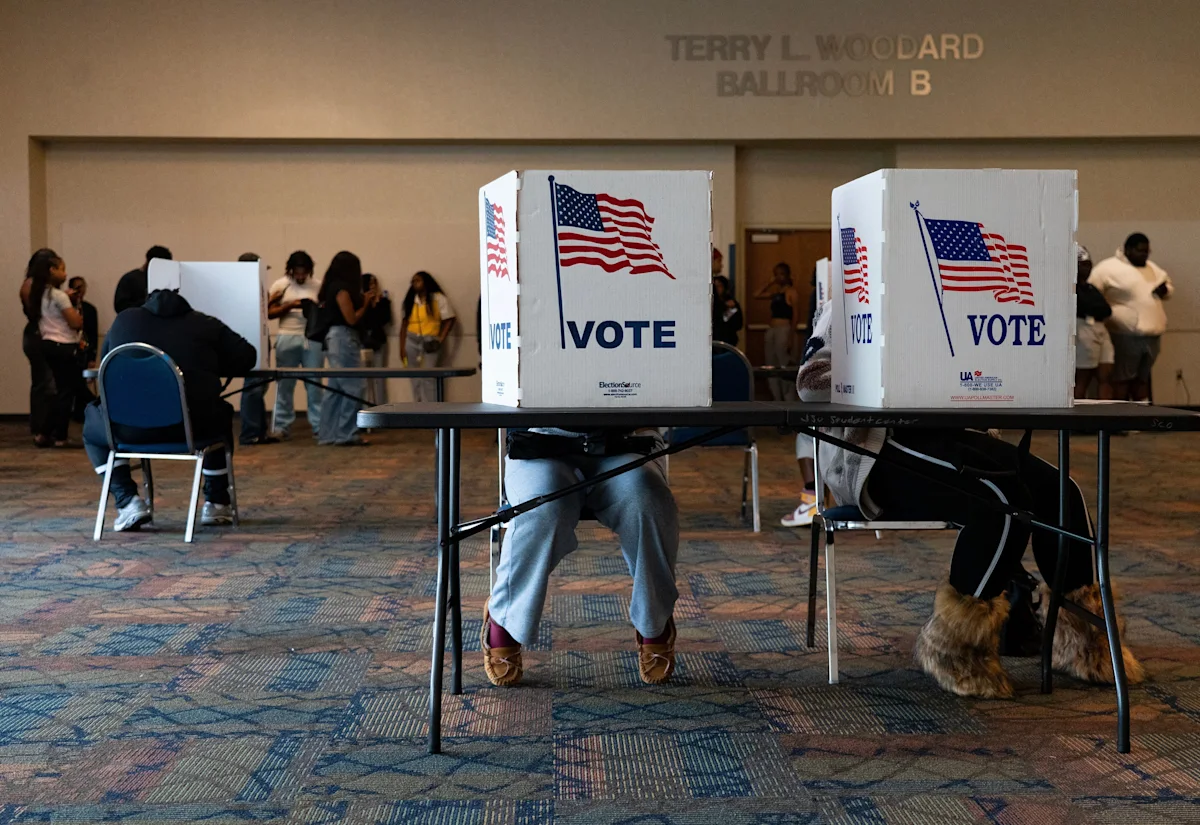
In a stinging midterm rebuke of President Donald Trump , Democrats were poised to win control of the House of Representatives and the Senate. After a decade of defining American politics, Trump now begins a new political chapter , his trademark coalition showing signs of fraying while his opponents gain a foothold to confront him during his final two years in office.
Republicans faced losses even in red states and districts that Trump had carried by double digits just two years ago. That's the definition of a political tsunami, when the opposition's wave is overwhelming enough to swamp even distant shores.
Three of four voters said in a survey sponsored by NBC and other news organizations that they were dissatisfied or angry with the way things are going in the United States − including almost every Democrat and nearly half of Republicans. Seven of 10 voters complained that Congress hadn't done enough to check the powers of the presidency.
Midterm hopefuls vote and greet supporters
For the past two years, the weapons of Trump's Democratic opposition have been largely limited to lawsuits and rhetorical shadowboxing. After the results of Nov. 3, they will be able to wield legislative powers to investigate his administration and challenge policies on everything from safety-net spending and global tariffs to waging war with Iran.
"I have the ultimate power – it's called 'veto,'" Trump told CBS News as votes were being counted. He predicted Democrats eventually would be forced to cooperate with him. "Historically, you veto for a couple of months and then they come and say, 'We've got to make a deal.'"
"America is back," House Democratic Leader Hakeem Jeffries, expected to become the first Black speaker of the House, told exuberant Democrats at an election night rally in Washington. "Today begins the great American comeback."
Democrats, who needed a net gain of three seats to control the House, were rolling well past that to a solid majority. In Senate races, where they needed a net gain of four seats to win control, their road to the majority ran through some very red states.
Democrat Roy Cooper flipped a Republican-held seat in North Carolina. In Texas, which Trump carried by 14 points in 2024, Democrat James Talarico defeated Ken Paxton. And in South Carolina, Democrat Annie Andrews ousted Sen. Darline Graham.
Trump, who carried the state by 18 points two years ago, had hand-picked her as the nominee.
Once again, it was the economy, stupid – the mantra coined by Bill Clinton's presidential campaign more than three decades ago and one that politicians have ignored at their peril.
Nearly 9 in 10 voters in exit polls said the cost of living had been a crucial or major factor in determining their vote, and almost 8 in 10 said inflation had caused a hardship for their families. The president was getting much of the blame: By more than 2-1, 65%-28%, they said he had made economic conditions worse, not better.
Trump found himself being hammered for the issue that helped propel his election two years ago. Then, he lambasted the Biden administration for failing to control inflation. Now, voters said they trusted Democrats more than Republicans to handle the economy.
Voters leave stickers at Renee Good, Alex Pretti memorials
Then, Trump blasted then-president Joe Biden for allowing a massive influx of undocumented immigrants across what he called "open borders." Now, nearly 6 in 10 voters said Trump's immigration enforcement measures had gone too far.
In Minneapolis, voters left "I Voted" stickers at street memorials for Alex Pretti and Renee Good, who were fatally shot by immigration officers this year.
Concern about immigration was costing Republicans among some Hispanics. That voter group, like young people, had swung toward Trump in the presidential election two years ago only to fall away in the midterms Tuesday.
That said, Democrats can't count on automatically reclaiming their political loyalty. Neither party is held in high regard: Republicans had a favorable-unfavorable rating of 41%-58%. The Democratic Party fared only slightly better, at 46%-54%.
The mean streets of midterms for presidents
To be sure, midterm elections are typically tough on presidents.
In four of the last five midterms, the president's party lost control of the House. In two of them, it lost control of the Senate. Midway through Trump's first term, in 2018, Republicans lost the House though they gained two seats in the Senate.
Still, unlike his predecessors, Trump sought to make the election a referendum about him , urging voters in a final sprint of 29 rallies to "pretend" that he was on the ballot. The effort to generate turnout among his MAGA base also spurred turnout among his Democratic opposition.
That made the results unusually personal: 41% said one reason for their House vote was to express their opposition to Trump. Just 16% said it was to express their support.
With the 2026 midterms over, the 2028 presidential race begins in earnest.
Among the White House hopefuls, three Democrats sailed to easy reelection in gubernatorial contests − Wes Moore in Maryland, JB Pritzker in Illinois and Josh Shapiro in Pennsylvania. Sen. Jon Osoff's reelection in Georgia fueled interest in him as a potential presidential contender.
And in Detroit, at the election night party for Senate nominee Abdul El-Sayed, former Transportation Secretary Pete Buttigieg was on stage, ginning up the crowd. He's a hopeful, too.
Topics in this story
Gathered from external sources. Rights to this text belong to whoever originally published it.