Don’t sacrifice Minnesota’s Boundary Waters on the altar of permitting reform
Passing the Bipartisan American Affordability and Jobs Act will make Congress members complicit in a massive intergenerational theft.
Americans across the country just delivered a stunning rebuke to President Trump and his party in the midterm elections. Democrats will now control both houses of Congress, with a clear mandate to chart a new path forward. Yet the first order of business for lawmakers this week is a bill that would codify the president’s pay-to-play vision for America’s public lands.
The Bipartisan American Affordability and Jobs Act threatens to sacrifice many beloved landscapes on the altar of permitting reform. For Minnesotans, the most cherished of these wild places is the Boundary Waters Canoe Area Wilderness, which is in imminent danger of being sold out to benefit a giant Chilean corporation. Passing the act would make this short-sighted national betrayal irreversible.
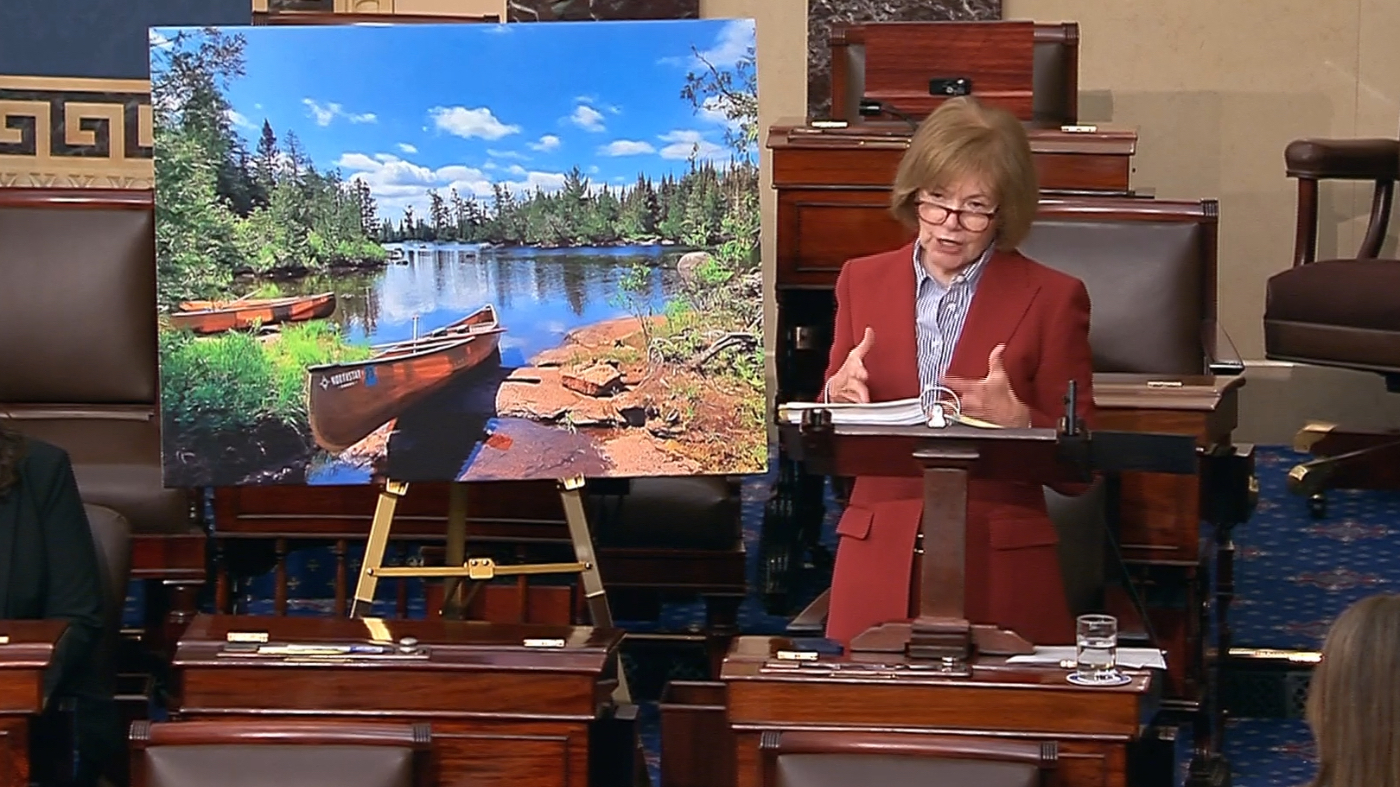
Like millions of Americans, I spent my formative years canoeing the serene lakes and flowing rivers of the Boundary Waters along the Canadian border. This vast 1.1-million-acre wilderness stretches across more than a thousand lakes . Its boreal forests are home to wolves, deer and moose, without a single trail sign imposing on nature’s design. Every year, around 150,000 people come to this magnificent place to cast a line for walleye, chart the night sky by the light of a campfire or hear the mournful call of a loon. It is the single most visited wilderness area in the country.
For more than 60 years, political leaders from both parties have wisely acted to protect the Boundary Waters from pollution and industrial development. Because of their commitment, every American today can freely share in the abundance that the Boundary Waters offers, free of charge. We are in desperate need of that wisdom now, as lawmakers consider abandoning that commitment to embrace a new political order, which prioritizes profits over people.
In 2015, Chilean mining giant Antofagasta acquired Twin Metals Minnesota and began planning an industrial copper-nickel mining complex next door to the Boundary Waters. It was able to do so after the first Trump administration made the decision to reinstate two expired federal mining leases.
The administration’s move was stopped and its leases cancelled by the Biden administration. But if the current administration gets its way , Antofagasta will soon have its mining leases again. Passing the Bipartisan American Affordability and Jobs Act will mean that no future court and no federal agency can easily right the wrongs of the second Trump administration.
The bill’s “Project Certainty” makes it exceedingly difficult for any future administration to “revoke, rescind, withdraw, terminate, suspend, amend, or alter” these types of mining leases. That means a future administration could not cancel or withdraw Twin Metals’ leases — even if they are found to be unlawful. Even efforts to add more protective conditions to the leases for water pollution or wildlife conservation would likely be foreclosed.
The bill incentivizes government agencies to play along. While project proponents like Twin Metals could sue the government for damages, including paying for substantial portions of the project, courtroom access would be limited for the public, Tribal Nations, businesses and public interest organizations. Even if groups successfully sued, the act ties the courts’ hands by barring judges from vacating or enjoining leases that violate the nation’s bedrock environmental and cultural review laws.
What Antofagasta proposes to build in the headwaters of the Boundary Waters is not like the iron-ore mines, which are long-established in northern Minnesota. Copper-nickel mining produces sulfuric acid and heavy metals, with a consistent record of devastating environmental harm that includes contaminating waters, degrading forests and catastrophic spilling of highly toxic materials. It has never been done before in Minnesota.
Pollution from a Twin Metals mine — sulfate, sulfide and heavy metals — would permanently degrade the waters that flow through the heart of the Boundary Waters and reach further downstream to Voyageurs National Park, Quetico Provincial Park and Hudson Bay. In return for devastating northeastern Minnesota’s $1.1 billion outdoor tourism economy, Antofagasta will ship its metal concentrates abroad for processing and sale in China .
President Theodore Roosevelt, who in 1909, created the Superior National Forest that encompasses the Boundary Waters, called these public lands our “sacred heritage.” Even in today’s polarized political climate, Americans overwhelmingly share this view. Recent polling shows that 74 percent of Minnesotans support a permanent ban on copper-nickel mining in the Boundary Waters watershed.
Passing the Bipartisan American Affordability and Jobs Act will make members of Congress complicit in a massive intergenerational theft. Where we once sought peace and solitude in the great outdoors, our children and grandchildren will be left with a toxic Chilean dumping ground. Lawmakers must stand strong in defense of the Boundary Waters — before it’s too late.
Mark Dayton served as a U.S. senator representing Minnesota from 2001-2007 and as the governor of Minnesota from 2011 to 2019.
Topics in this story
Gathered from external sources. Rights to this text belong to whoever originally published it.