Susan Collins vs. Troy Jackson: 5 takeaways from Maine Senate debate
Susan Collins and Troy Jackson clashed over President Trump and their records in first debate for Senate seat that could decide control of Congress.
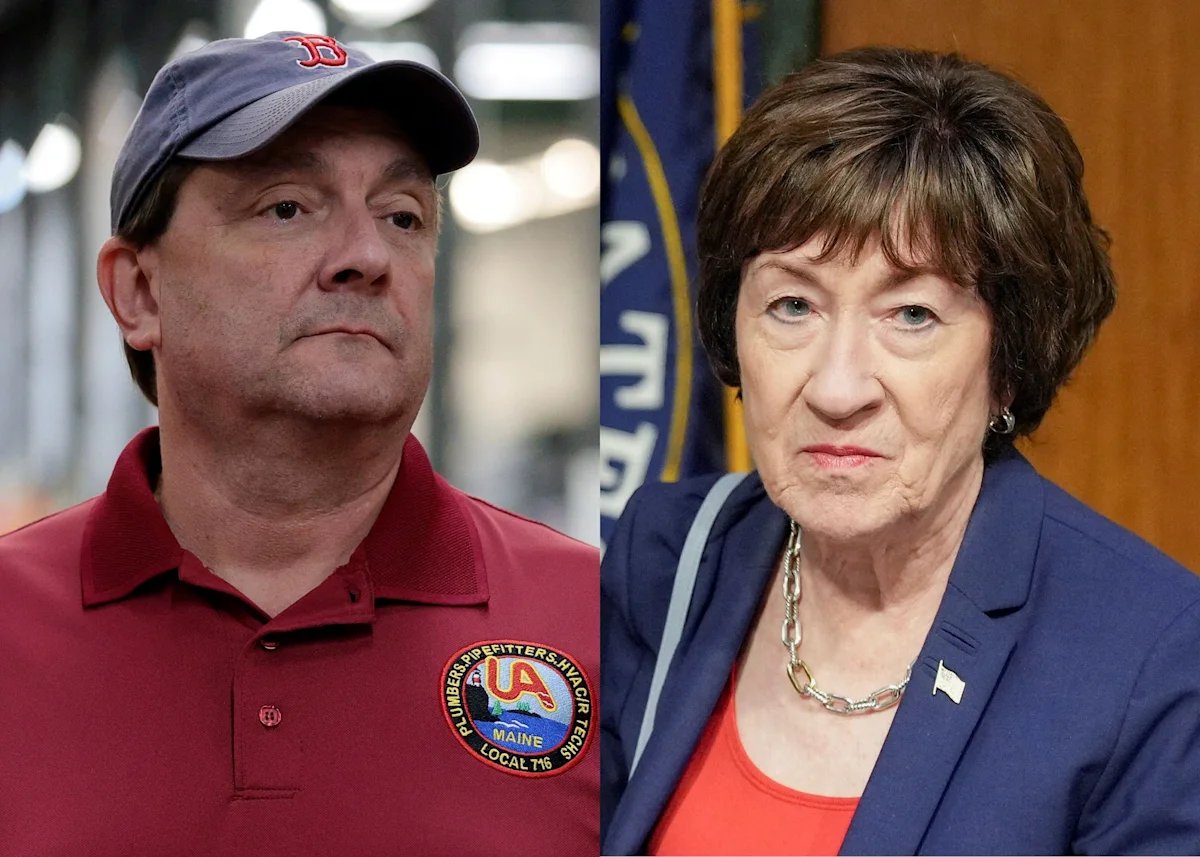
Five-term Republican Sen. Susan Collins and Democratic Senate nominee Troy Jackson clashed over President Donald Trump and their records in the first debate for the Maine U.S. Senate seat that could decide which party takes power in Washington.
The race is being closely watched nationally as it could determine control of the Senate , which is narrowly held by Republicans, 53-47. Recent polls have shown a tight race: a University of New Hampshire poll from mid-September found Jackson ahead by 4 percentage points , while a New York Times/Siena University poll from a similar time period found Collins ahead by 3 percentage points .
It's also been a race mired in scandal. Jackson, the former Maine Senate President, replaced oyster farmer Graham Platner as the Democratic nominee in July following a sexual assault allegation that Platner denies. Collins and Jackson have also both faced accusations of misconduct against their campaigns in recent weeks.
The candidates responded to these accusations and discussed a wide range of issues, from affordability to their records to Trump, in the debate broadcast on WGME . Here are five takeaways.
See Susan Collins, Troy Jackson and more campaign in Maine midterms
Troy Jackson speaks as he became the Maine Democratic Party's choice to be their U.S. Senate nominee to replace Graham Platner on the ballot in November on July 25, 2026, in Bangor, Maine. Troy Jackson will face off against Sen. Susan Collins, R-Maine, in the general election.
Jackson sought to tie Collins to Trump throughout the debate, repeatedly saying that Collins has voted with Trump 96% of the time and that her Republican colleagues have called her a "team player." He criticized Collins for advancing the One Big Beautiful Bill out of committee, voting to confirm Brett Kavanaugh to the Supreme Court and voting for a $70 billion funding package for Immigration and Customs Enforcement.
Collins, on the other hand, tried to distance herself from the president. She argued that the 96% is too high and based on only one study, while another found her voting with Trump only 72% of the time. She said that she has consistently voted against her party and that she ultimately voted against the One Big Beautiful Bill. She also highlighted other areas where she has broken with Trump, such as voting to end the war in Iran and against the tariffs in Canada.
Collins has long had a reputation as a moderate Republican, but it's been difficult to thread the needle in the Trump era. The president has floated a visit to Maine, and when asked if she would "stand with him" if he does, she didn't give a yes or no answer.
"I don't think that President Trump is going to come to Maine. He's talking about going to a lot of different states," Collins said. "I've heard nothing from his office, and I'm not exactly his favorite senator ."
Collins has long been known as someone who "brings home the bacon" to Maine, a term that means she secures federal dollars for her state. She brought it up immediately in her opening statement.
"In the past four years, I've secured $1.5 billion for 672 projects, from Madawaska to Kittery, from Eastport to Rumford," Collins said.
She also frequently cited specific policies she helped author, like a $50 billion fund to help rural healthcare and the Paycheck Protection Program, which she said saved 250,000 jobs in Maine.
This strategy of "pork barrel politics" and specific policy details is a time-honored one among incumbent politicians, but it has lately fallen by the wayside as newcomers campaign in more flashy ways. Collins may be hoping that emphasizing her loyalty to Maine will help her to overcome national headwinds against Republicans.
However, Jackson argued that the money she brings back pales in comparison to the money lost by Trump's policies. He said that Collins "is like an arsonist who helps set the fire, and she wants credit for bringing a cup of water to put it out."
Jackson said he made sure to pass progressive policies in the state Senate like lowering prescription drug and universal school meals, although he provided limited details on specific legislation.
Similarly, Collins stressed her bipartisanship and ability to get things done in Congress, areas where she said Jackson might struggle. She attacked him for not being able to get bills passed when serving in the state house.
"How do you think you're going to get things done in a mostly divided Senate as the most junior senator?" she asked. "To be effective in the Senate, you need knowledge, experience, seniority and relationships."
Jackson responded that Collins doesn't understand the legislative process in Maine and that some bills must be discarded to make progress. He suggested that what she is getting passed isn't aligned with Mainer's priorities.
"Senator Collins is saying that she's been passing more bills in Congress. I mean, I don't see it," Jackson said. "I certainly don't think that, you know, a lot of the ones that she has been fighting for has been helping us."
Collins and Jackson have faced various accusations in recent weeks. On Sept. 22, ProPublica reported that the FBI had ended an investigation into allegations that a fundraiser for Collins had participated in an illegal campaign donation scheme after the Trump administration purged the Justice Department and FBI of its teams that handle public corruption cases.
Collins called the allegations "completely false" and "very offensive."
Jackson has faced an attack from a GOP ad that accuses him of abusing his power when he was state Senate president to help out his lobbyist son. Jackson said that independent fact checkers have proved "that there was nothing there."
Collins also attacked Jackson for claiming a Federal Housing Authority loan on his Allagash home, which he claimed was his primary residence when he was living part-time in Augusta as state Senate president. However, the Maine Ethics Commission voted against investigating Jackson at the time, saying he had not violated campaign finance law.
Whose fault is it — Washington's or Maine's?
Both candidates agreed that families are struggling in Maine. But they disagreed on the cause. Collins argued that Maine's high electricity rates, housing costs and property taxes are due to failures at the state house level, while Jackson blamed policies passed under the Trump administration in Washington, including the Iran war and the One Big Beautiful Bill.
Topics in this story
Gathered from external sources. Rights to this text belong to whoever originally published it.