How a Democrat shocked the world in South Carolina
Annie Andrews turned a longshot into a real shot with money and outreach after Darline Graham replaced her late brother on the ticket.
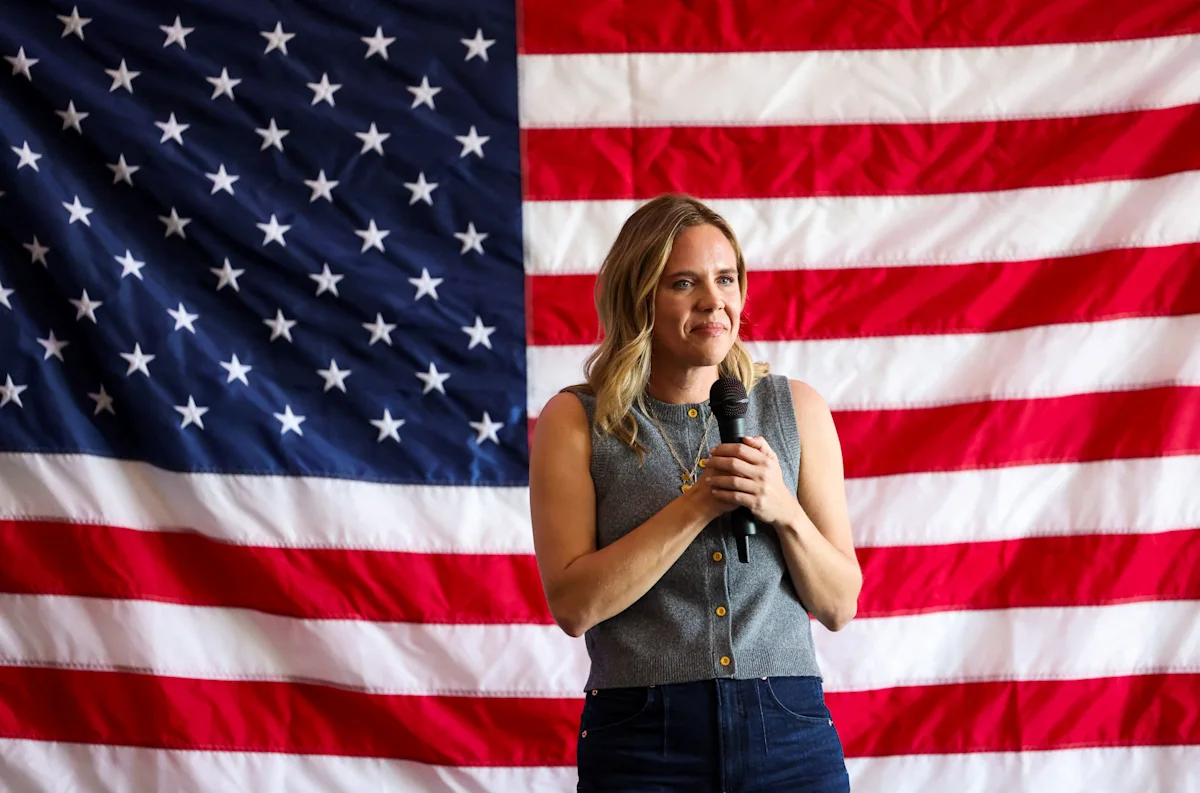
As soon as Republican Sen. Darline Graham won the GOP nomination to replace her late brother in August, Democrat Annie Andrews made her move.
Andrews immediately began spending more than $5 million on advertising in South Carolina's Senate race at a moment when she largely had the airwaves to herself as her new opponent struggled to raise money. At the time, Republicans were racing to prioritize other competitive races across the country — and most people in both parties still saw South Carolina as a pipe dream for Democrats.
But by October, when the rest of the country began tuning into South Carolina — and spending money — Andrews had quietly become the frontrunner, according to internal campaign details shared with Semafor following her victory on Tuesday.
On Oct. 5, the Andrews campaign received a poll showing her with a 3-point lead over Graham. But the Democrat's campaign decided against publicly releasing the poll — or any subsequent internal poll — showing Andrews with a lead over Graham, wary of drawing too much attention from national Republicans and jeopardizing a peak at the right time, according to Chas Goldman, a strategist for Andrews.
That Republican attention did come, but not in time to save Graham in a state where Democrats hadn't won a Senate race since 1998. On a Senate map filled with shocking GOP losses, South Carolina stands out: It's the home of the National Republican Senatorial Committee chair, Tim Scott, and territory on which Democrats tried to compete statewide in 2020 — and lost handily.
Former GOP Rep. and Gov. Mark Sanford, R-S.C., told Semafor on Wednesday that he could feel the anti-Graham sentiment building on the state's coast but that most Republicans still felt that Graham could "nose it out" elsewhere. Ultimately, though, he said President Donald Trump's backing of Graham in a crowded primary which included Sanford and Reps. Ralph Norman and Russell Fry "never sat well with folks."
Sanford said Andrews did a good job appealing to disaffected Republicans but also said the rejection of Graham amounted to "a Waterloo moment for Trump."
"The fact that a state as red as South Carolina would go the other way on his hand-picked candidate? This is a person who said: 'Close your eyes and pretend you're voting for me.' OK, they did," Sanford told Semafor. "They just didn't like Darline as a candidate and felt it had been forced down their throats by Trump. And they're like: 'We're not doing this.'"
Andrews outran her party's gubernatorial nominee by 4 percentage points, evidence of both her strength and Graham's weakness as a candidate. Graham ran behind Alan Wilson, the Republican governor-elect, by roughly 100,000 votes.
In an interview with Semafor in early September, Andrews said she welcomed help from national Democrats and "anyone who wants to help me win this race, but I am confident I can do it without investment from the national party."
"I'm on TV, she's not up yet, and that's a huge advantage," Andrews said of Graham at the time. "All of the ingredients are in place, and I've been gifted with what is frankly an incredibly weak opponent. I'm ready."
Andrews exploited divisions in the Republican Party over Trump's endorsement of Graham, reaching out to supporters of Norman and former GOP Gov. David Beasley, according to details shared with Semafor.
She ran an ad with her Republican dad to appeal to former supporters of the late Sen. Lindsey Graham R-S.C., and worked with Rep. Jim Clyburn, D-S.C., and other Black leaders in the state to juice turnout. Beasley ended up cutting a joint endorsement ad with former Democratic Gov. Jim Hodges while Norman's son, Warren, warmed publicly to Andrews.
By traditional campaign metrics, Andrews swamped Graham. She raised more than $25 million, according to her campaign, and was largely able to keep her own campaign afloat into October, when both national parties began spending in the race. Graham raised nearly $2 million, a sum that meant she would need outside support to win. Ultimately Democrats joined Andrews in the fray. The Democratic Senatorial Campaign Committee quietly spent $500,000 there and Senate Majority PAC spent $750,000. Lauren French, a spokesperson for Senate Majority PAC, said that "Graham brought significant negatives and baggage to the race, that's undeniable, but Andrews won this race as much as Graham lost it."
Sen. Raphael Warnock, from neighboring Georgia, campaigned for Andrews, but she mostly sought to keep the campaign local. Her coattails extended to a House pickup in the state's lowcountry as she targeted Republicans and independents in her campaign events.
"For 18 months, she traveled all 46 counties, earning voters' trust one conversation at a time. She worked just as hard to raise the resources to go up on TV early and stay there. Those relationships and that early investment built a lead that she never gave up," said Brexton Isaacs, Andrews's campaign manager.
I interviewed Andrews throughout this saga: Once when she launched, once earlier this year when it appeared Lindsey Graham would be her opponent, and once after Darline Graham replaced her brother on the ticket. Each time she explained to me why this wasn't like 2020, when Jaime Harrison raised gobs of money but lost to Lindsey Graham.
I was as skeptical as anyone else that South Carolina was ready to elect a Democrat to the Senate. But over the last couple weeks, the whole country tuned in as national Republicans and Democrats alike poured money in. At the moment it's the biggest surprise on the Senate map — perhaps until we find out what happens in Mississippi.
Graham began thinking about running for a full term in July after discussing it with President Trump, Semafor reported.
Topics in this story
Gathered from external sources. Rights to this text belong to whoever originally published it.